Showing posts with label Entomobrya. Show all posts

Wednesday, 16 July 2025

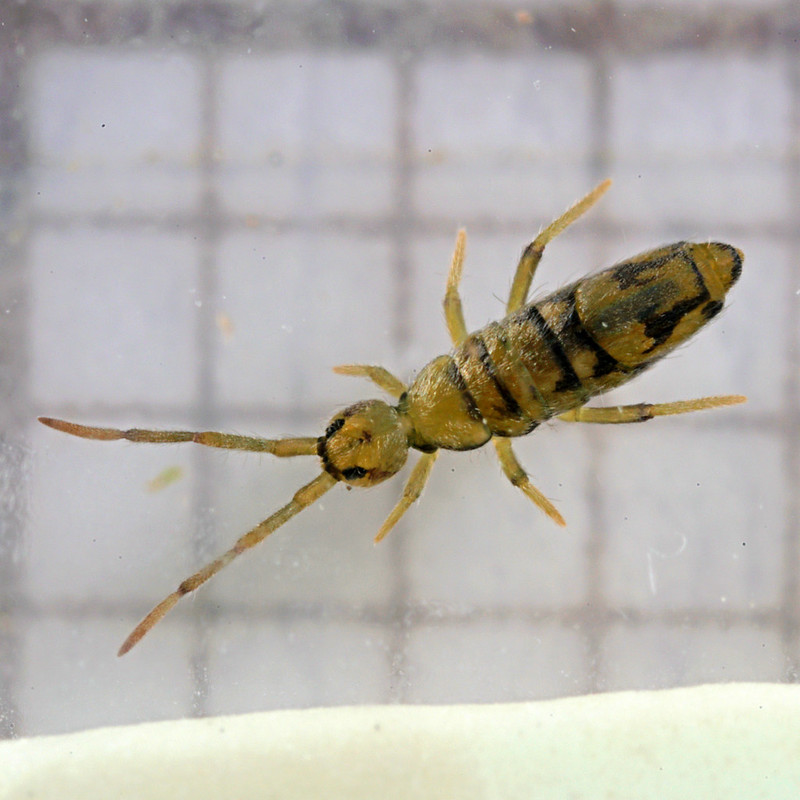
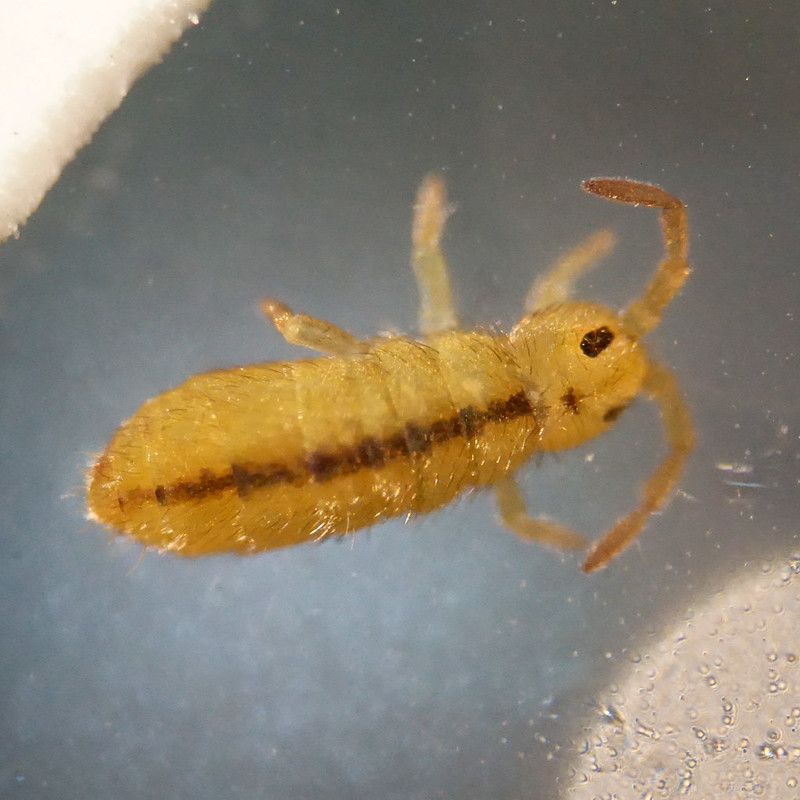
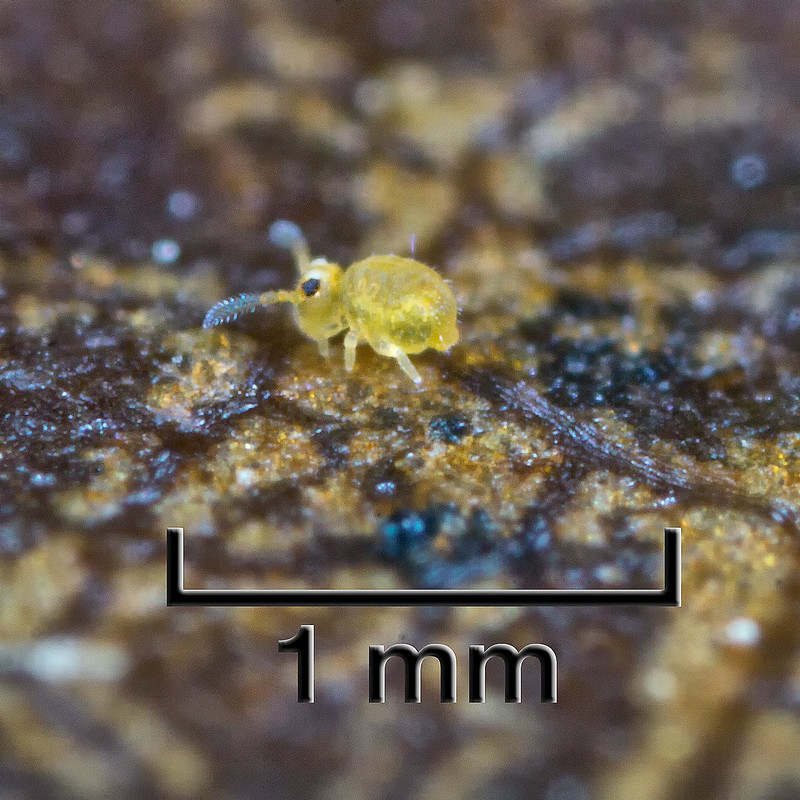
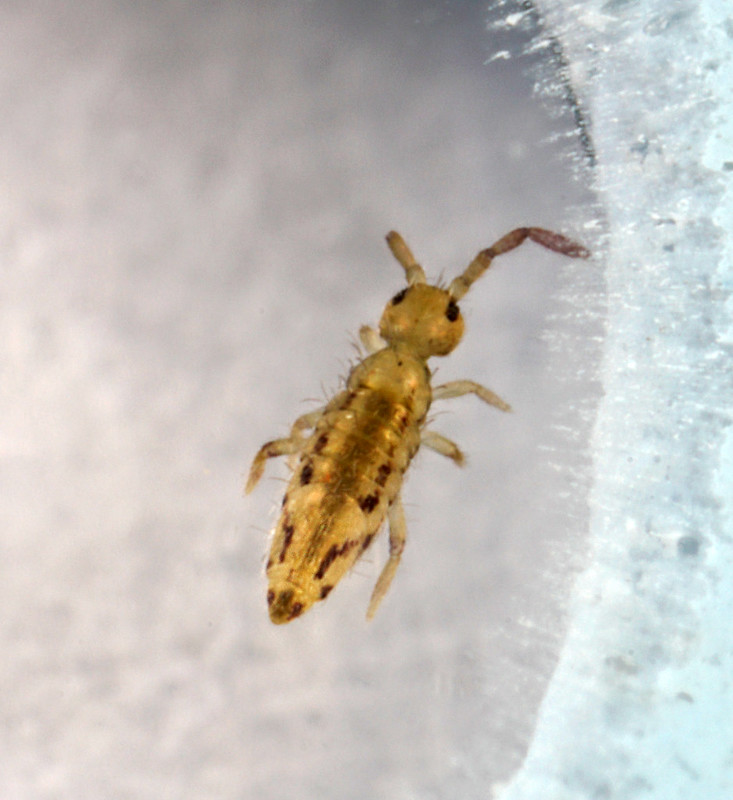
Entomobrya petri

McCulloch, J.I. (2025) Entomobrya petri sp. nov.: A new species of springtail found in the British Isles. Soil Organisms 97 (2). https://doi.org/10.25674/476

"A new species of elongate springtail (Collembola: Entomobryomorpha) is described from a churchyard in Edinburgh: Entomobrya petri sp. nov. Microscopic examination of specimens from another site in the UK supports that this new species represents the taxon previously referred to as "Entomobrya nr. imitabilis", which is widespread in the British Isles. As well as that of the examined specimens, the ecology and distribution of the morphospecies generally is discussed."


Monday, 10 June 2019

Big trouble in Lepidocyrtus

Lepidocyrtus cyaneus"Everything is everywhere but the environment selects"

Early in the twentieth century the Dutch microbiologists Beijerinck and Becking proposed the hypothesis that "Everything is everywhere but the environment selects" to explain the distribution of microorganisms. This has been much debated but it makes a lot of sense for highly mobile organisms that can be blown on the wind. At what scale it stops being true is unclear, but ecological determinism means that for all species, the environment selects which species persist. One of the most important factors in selection is climate, which determines the current distribution of species and will determine how these change in the future. The flora and fauna of Britain bear the signs of restriction by and subsequent repopulation following the last ice age. Not much survived under the ice cap but there were geothermal islands and not all of the UK was glaciated. The inability of springtails to fly limits their spread and repopulation when the ice retreats but their small size and abundance means that they are able to persist in suitable niches in otherwise adverse environments. Thus the present day distribution of springtails carries the historical signature of climate change. A recent paper examines two genera of springtails, Entomobrya and Lepidocyrtus, and reveals not only the impact of glaciation but also present day relationships (Faria, Shaw & Emerson, 2019).

Springtail samples were collected from 98 sites across Britain and the DNA sequence of a region of the mitochondrial cytochrome oxidase I gene determined and used to establish relationships. The patterns revealed indicate both geographical and genetic relationships in these two genera. Analaysis identified 12 Operational Taxonomic Units (genetic groupings) for Entomobrya and 18 for Lepidocyrtus in Great Britain. Lepidocyrtus richness was significantly lower in glaciated than unglaciated areas, whereas there was no difference for Entomobrya richness. The data reveal evidence for population persistence of Entomobrya (some of our most familiar springtails) OTUs within Great Britain, estimated to extend back at least some 77,000 years.

For me however, the most interesting aspect of this paper is what it says about present day species. For the most part, the recognised UK Entomobrya species (albocincta, intermedia, marginata, multifasciata, nicoleti, nivalis) behave themselves - colour‐pattern morphospecies were generally monophyletic but concealed two or more mtDNA OTUs. However, the correspondence between morphospecies and OTU was less clear for UK Lepidocyrtus species (curvicollis, cyaneus, lanuginosus, lignorum, ruber, violaceus) - 6 morphospecies harbour 18 distinct OTUs. Specimens assigned to the morphospecies Lepidocyrtus cyaneus featured in seven OTUs, and the dominant OTU contained a mix of morphospecies (mainly L. lignorum and L. lanuginosus). Unexpectedly high cryptic species diversity has been noted previously in this genus and together these results suggest that key taxonomic features (mainly distribution of scales, ground colour) may be unreliable indicators of species boundaries. How exactly the genetic diversity of UK Lepidocyrtus species translates into physical variability is unclear, but may go some way to explain the length of time I often spend scratching my head when examining Lepidocyrtus specimens...
 

In response to my enquires, Frans Janssens commented:  
Do not confuse OTU's with species. A species *can* map to several OTU's. ... The fact that "the dominant OTU contained a mix of morphospecies (mainly L. lignorum and L. lanuginosus)" suggests errors have been made in species identification of the specimens, given both species are easily distinguished based on morphology. Example: the specimens IDed as lanuginosus possibly were lignorum specimens with aberration in scale position on legs: such as specimens that lost all scales on legs during specimen handling. Please continue to record Lepidocyrtus based on morphology.

Matthew Shepherd also left an interesting comment: 
"It's not just Lepidocyrtus - many soil animals, especially those with parthenogenesis (females giving birth to more clone females without fertilisation), don't really fit into the concept of a species... One of our commonest mites worldwide, Platynothrus peltifer, has been shown by Alfried Vogler and co-workers to have evolved into 12 global clades whose genes suggest that this species has been reproducing in this way, producing morphologically identical creatures, since the death of the dinosaurs. A 60 million year old species that is effectively actually just one cloned individual! I think that we can still learn a lot from lumping these morpho-types together for recording purposes, whether they're clusters of radiating species or ancient clones. It's still valid and ecologically useful to record brambles, dandelions and eyebrights, even though these are radiating aggregations of species. I think that we will have to just be a bit flexible with the data when we come to analyse it."
  

O’Malley, M.A. (2008) ‘Everything is everywhere: but the environment selects’: ubiquitous distribution and ecological determinism in microbial biogeography. Studies in History and Philosophy of Science Part C: Studies in History and Philosophy of Biological and Biomedical Sciences, 39(3), 314-325. https://www.sciencedirect.com/science/article/pii/S136984860800040X

Faria CMA, Shaw P, Emerson BC. (2019) Evidence for the Pleistocene persistence of Collembola in Great Britain. J Biogeogr. 46: 1–15. https://doi.org/10.1111/jbi.13610
Abstract: Using two genera of springtail, Lepidocyrtus and Entomobrya (Collembola), we test for genetic signatures of Pleistocene persistence of soil arthropods in Great Britain. A region of the mitochondrial cytochrome oxidase I (COI) gene was sequenced for 1,150 Collembola specimens from the genera Lepidocyrtus and Entomobrya across Great Britain. Individuals were clustered into Operational Taxonomic Units (OTUs), and both OTU richness and geographical patterns of genetic variation within OTUs were compared between glaciated and unglaciated areas to identify signatures of OTU persistence through Pleistocene glacial events. Our analyses identified 12 Entomobrya and 18 Lepidocyrtus OTUs in Great Britain. Lepidocyrtus OTU richness was significantly lower in glaciated than unglaciated areas, whereas there was no difference for Entomobrya OTU richness. However, both genera presented clear patterns of geographically disjunct genetic variation and geographically localized diversification of OTUs. Estimated dates for the onset of in situ diversification events indicate population persistence that pre‐dates the Last Glacial Maximum. Patterns of genetic diversity within Collembola OTUs in Great Britain add to a growing body of evidence that elements of the invertebrate fauna have persisted in situ through Pleistocene glacial cycles. Genetic signatures of population persistence in more northern glaciated areas of Great Britain support a hypothesis of geothermal glacial refugia that call for further investigation with other soil mesofaunal taxa.

Saturday, 17 November 2018

Fascination and Frustration in Leicester

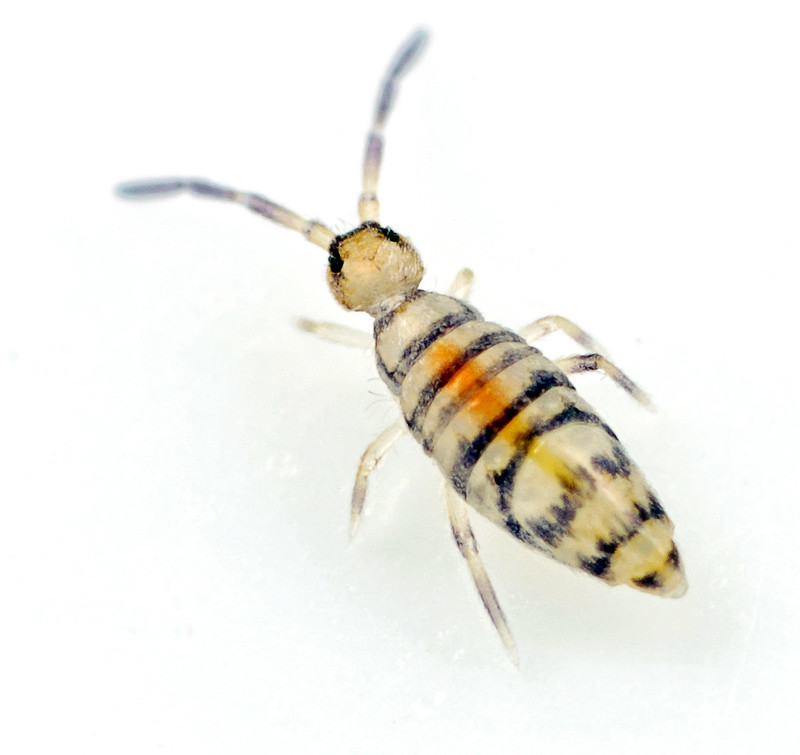
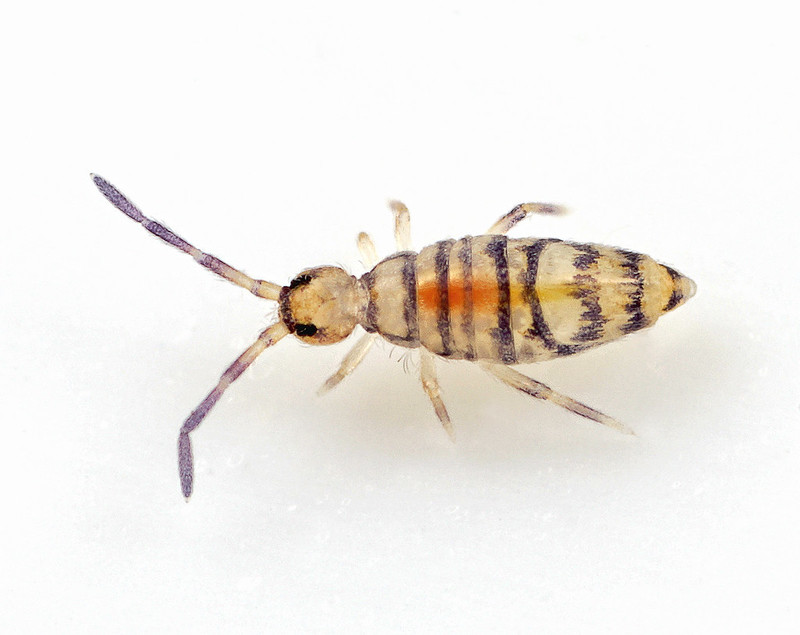
I was recently sampling at the Leicester Botanical Garden when I found a springtail which has turned out to be equally fascinating and frustrating. I was sweeping Ivy (Hedera helix) and this was producing large numbers of Entomobrya intermedia, but as soon as I saw this banded springtail in the tray I immediately thought Entomobrya multifasciata. However, after getting it home and looking more closely, it didn't look right:

Entomobrya nigrocincta?

Entomobrya nigrocincta?

Identification of Entomobrya is based on dorsal pigmentation patterns, and this has been shown to be generally reliable for UK species, although there is some variation from juvenile stages to adult forms, and the occasional worn specimen can be rather pale and difficult to determine. This one seems to be an adult female Entomobrya nigrocincta, and that's where the problem lies. There are currently no UK records for this species. Male E. nigrocincta are unmistakable - ginger with a wide dark transverse band, but females to look similar to E. multifasciata except that the band on abd5 is split into two spots (continuous in multifasciata and th2 is paler than the other segments. I think this is E. nigrocincta but the possibility remains that it could be a variant E. multifasciata. There are two solutions to this problem, DNA barcoding, which is beyond my means - or find a male! I've been back to resample twice so far and have not been able to find any more specimens, male or female. The Ivy bush continues to produce large numbers of Entomobrya intermedia but I have not found and Entomobrya multifasciata there, although they are present elsewhere in the Garden. I'm convinced to that this is Entomobrya nigrocincta but I can't prove it, which is fascinating and frustrating.

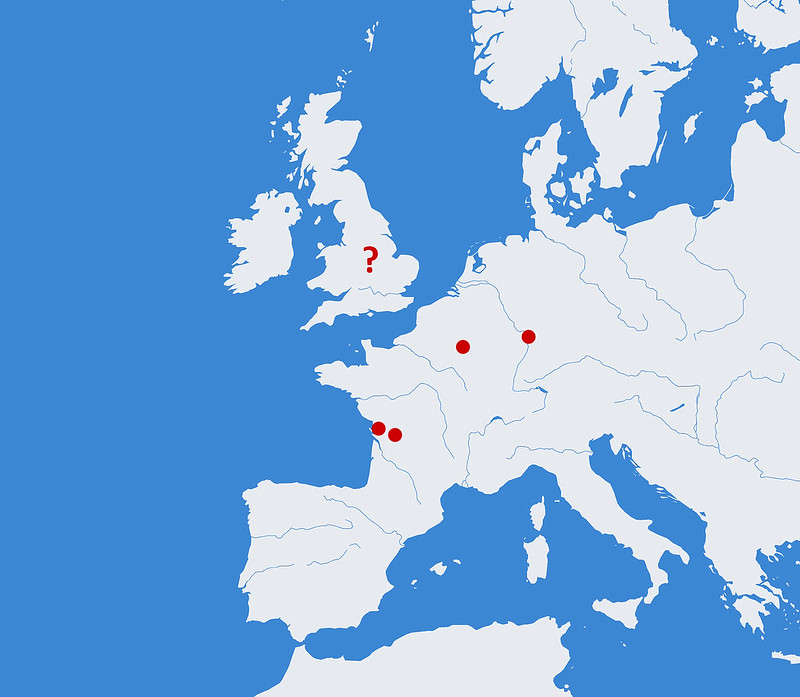
So what's going on? Originally from the Canary Isles, Entomobrya nigrocincta has been turning up across Europe over the last decade (GBIF data):

Entomobrya nigrocincta GBIF

This is a Mediterranean species which is moving north. The Leicester Botanical Garden has a large collection of Mediterranean plants so it's not hard to guess how this species arrived. It's not the only springtail which is headed our way - Entomobrya unostrigata is also coming. As we lose montane species as the mountain tops get too warm for them and they run out of altitude we gain species adapter to warmer climates. It's all change in the springtail world - but then, it always has been, with species moving north and south in response to warmer and cooler climate interludes.


My thanks to Peter Shaw for his help with this specimen.

Thursday, 26 April 2018

Entomobrya Identification Guide

The genus Entomobrya are arboreal species with four antennal segments and elongated abd4. Entomobrya species are identified from dorsal pigmentation patterns. Unlike other groups, e.g. Tomoceridae, Entomobrya species are unscaled, so pigmentation patterns are more reliable.


Entomobrya albocincta has a broad pale band on the thorax:
Entomobrya albocincta


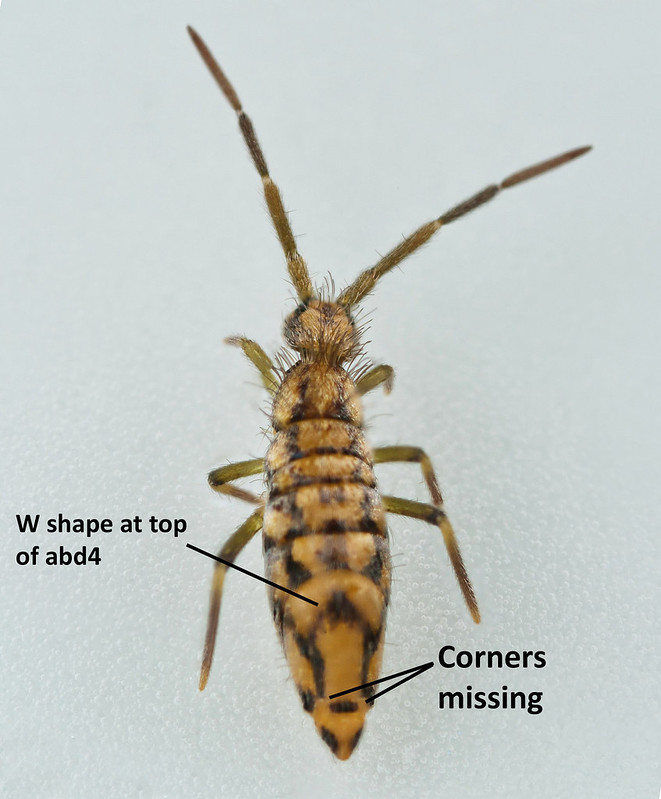
Entomobrya intermedia has a characteristic broken “U” (the corners are missing) on abd.5/6 and a “W” across the top of abd.4.
Entomobrya intermedia


Entomobrya multifasciata:
Entomobrya multifasciata


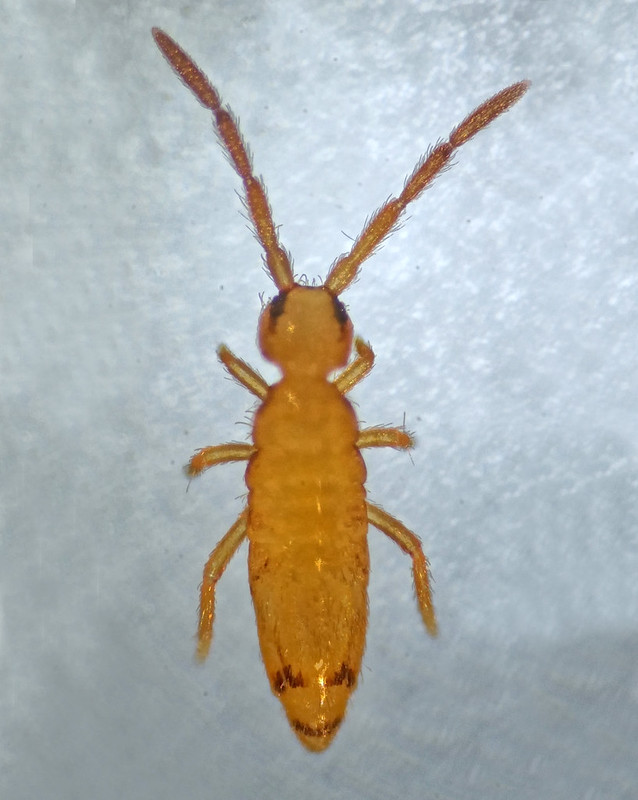
Entomobrya nicoleti has only two dark spots on the sides of abd4:
Entomobrya nicoleti


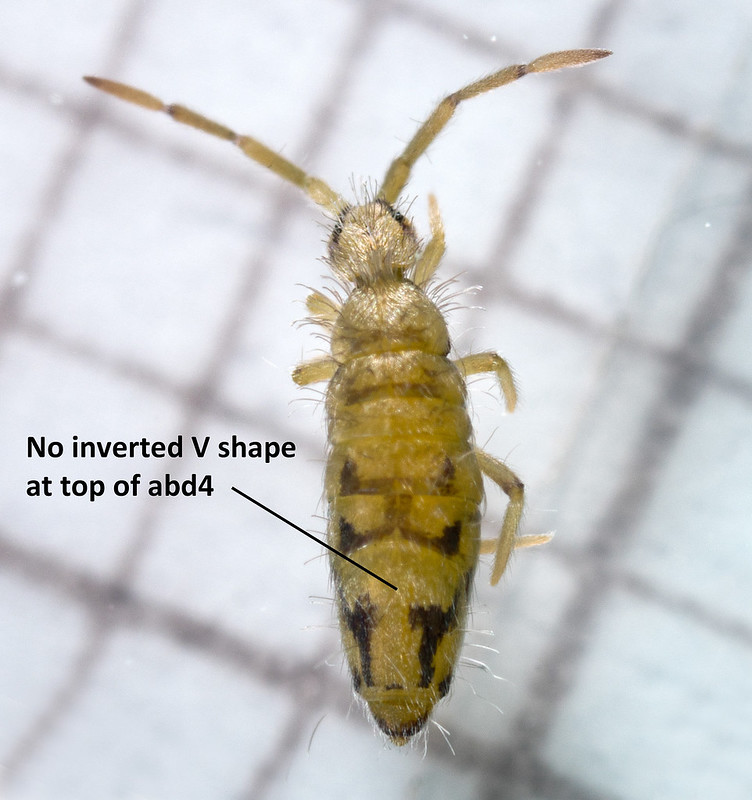
Entomobrya nivalis has no inverted V shape (the central part of the W pattern in E. intermedia) at the top of abd4:
Entomobrya nivalis


Other Identification Guides: https://collembolla.blogspot.co.uk/p/identification-guides.html

Monday, 16 April 2018

08.04.18 - Burroughs Wood

Entomobrya nivalis

This trip was my first to a new site which consists of two parts, half ancient woodland and the other newly planted areas approximately 20 years old. This visit only covered the old part, which was interesting. Although there are few large old trees there is a very good mixture of species, nearly all of which have been coppiced repeatedly, with some coppice of the stools several metres across. Importantly, there was lots of old dead wood on the ground! I mostly sampled under logs and was delighted to find Diplura and Symphyla abundant. Springtails were also abundant, mainly Lepidocyrtus lignorum and Pogonognathellus longicornis. Of most interest were a few Entomobrya nivalis (above), shaken from terrestrial moss. Nivalis means "of the snow", so having looked for this species all winter, I find it both amusing and ironic that the first time I find it is when the snow is gone.

Saturday, 31 March 2018

25.03.18: Launde Park Wood

We had planned to visit a woodland site I've never been to before, but when we got close it was clear that it simply wasn't safe to proceed - far too wet. Although we had a little rain overnight I couldn't understand why the land was so wet - until several hours later when I figured out that the snow melt of the last month has saturated the ground in the east of the county and the steep clay slopes will take several months to dry out. So it was time for Plan B, which was a short diversion to a Launde Park Wood which has better access. We focussed on a steep east-facing slope covered in a mixture of Beech, Ash and Oak, sampling in the litter, under logs and brushing tree trunks.

The predominant species in the leaf litter was Tomocerus minor. Orchesella cincta was by far the most dominant arboreal species with a few Entomobrya intermedia present, but we also turned up a single Isotomurus unifasciatus:
Isotomurus unifasciatus

The distinction between Isotomurus palustris and I. unifasciatus is that unifasciatus has a continuous dark line down its midline but is otherwise uniformly pale, while palustris has a slightly discontinuous dorsal line and mottled patterning on the sides of its abdomen.

Nothing terribly exciting, but given that no-one has ever recorded any springtails at all from this nature reserve, it's a start.

Wednesday, 28 March 2018

The Mysteries of Migration

Some species of springtail can be reliably found in certain locations, e.g. Podura aquatica on the surface of ponds and puddles, Entombrya nivalis on tree trunks, etc. But most species can turn up anywhere where there is a suitable environment, e.g. enough moisture to prevent desiccation. For these species, "Everything is everywhere but the environment selects" seems to apply. But considering how small springtails are, how do they get everywhere?

Steve Hopkin (Hopkin, S.P. (1997) Biology of the springtails: (Insecta: Collembola) OUP Oxford) quotes examples of Hypogastrura socialis migrating more than 300 m in a single day using the sun as a navigation aid, and species of Entomobrya, Onychiurus, Sminthurus and others being captured on sticky traps or nets towed from aircraft at heights of over 3000 m. At certain times of year some species are known to ascend to the tree canopy and can then presumably be blown considerable distances on the wind, easily crossing barriers such as roads and rivers.

Never underestimate a springtail!


Monday, 19 March 2018

Field Trip 17.03.18

The weather was so bad at the weekend that I didn't venture too far afield. By Saturday afternoon I had cabin fever and had to get out, so we walked over to the local churchyard to look for springtails. I'd had some quite good finds here in autumn looking under fallen leaves, such as Sminthurinus aureus:
Sminthurinus aureus


On Saturday things were much more hard going. For 20 minutes we couldn't find any springtails at all. I put this down to sub-zero temperatures and the very low humidity. Based on this, I decided that the best bet was to look for arboreal species which tend to be a bit more resistant to low humidity. This worked and we found some springtails by beating Ivy. There were lots of Orchesella cincta and quite a few Entomobrya. I was particularly interested in these as I am still looking for Entomobrya nivalis without success - even though it is regarded as "common" and has been recorded in the area.

Entomobrya species are identified by dorsal pigmentation patterns but by this point it was starting to snow again, so we beat a hasty retreat and took specimens home for identification (getting back just before a complete whiteout descended). Not surprisingly, most of the specimens were Entomobrya intermedia, but there was one juvenile I wasn't sure about as it was without the bottom of the "broken U" with the corners missing which signifies E. intermedia:

Entomobrya intermedia

However, this turns out to be merely a juvenile E. intermedia, so the quest for Entomobrya nivalis continues!

Saturday, 10 March 2018

The Brush Off

Brushes Some species of springtail can reliably be found in certain environments, e.g. Anurida maritima on the seashore, Entomobrya nivalis climbing up vegetation and grazing algae from tree trunks. Entomobrya nivalis is a bogey species for me. Although it is "very common", I've never found it! So I armed myself with my trusty paintbrush and a pot of invisible paint and went off to give the fruit trees in the garden a couple of coats of nothing but air. Getting into all the cracks and under bark flakes I could see the springtails raining down into the white plastic tub I was holding against the tree, and then, since it was flipping cold, I took them indoors to search for the elusive nivalis (more on paintbrushes here).


The first thing I found, fairly predictably, were lots of Entomobrya intermedia. Unlike E. nivalis, E. intermedia is truly common in these parts, but this was an encouraging start.
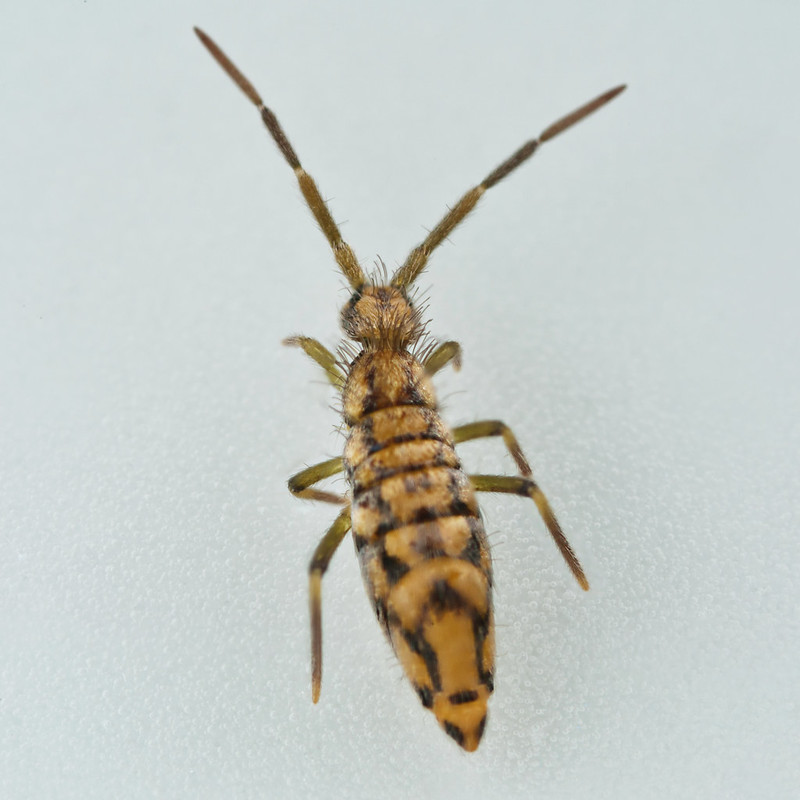
Entomobrya intermedia

One of the nice things about Entomobrya species is that they can fairly easily be identified from dorsal pigmentation patterns, and thus from photographs. E. intermedia has a characteristic broken “U” (the corners are missing) on abd.5/6 and a “W” across the top of abd.4. So far so good. After wading through all the intermedia, next up was a single specimen of Entomobrya multifasciata:

Entomobrya multifasciata

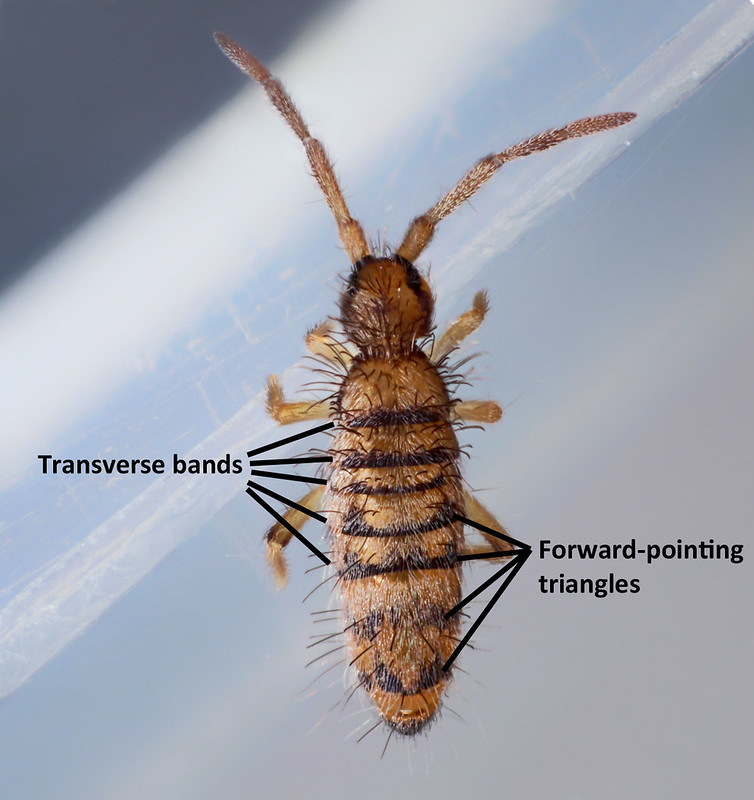
This species is characterised by the pair of triangular patches of pigment pointing forwards on the posterior margin of abd.4. Unfortunately it can be confused with female Entomobrya nigrocincta (a sexually dimorphic springtail), but I'm confident about this one and also very pleased as this is a new record for my garden. Sadly, at this point it all went a bit pear shaped. Sorting through the smaller specimens, I started to find a lot of these:
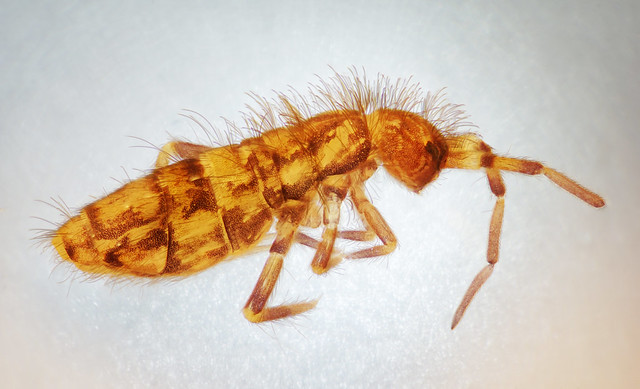
Orchesella cincta juvenile Orchesella cincta subadult

This tripped me up and caused a lot of head scratching trying to match up abdominal pigmentation patters with, well anything really. I'd become fixated on Entomobrya and failed to consider the other possibilities - rookie error. It wasn't until I found an adult and with assistance from Frans Janssens that the penny dropped:
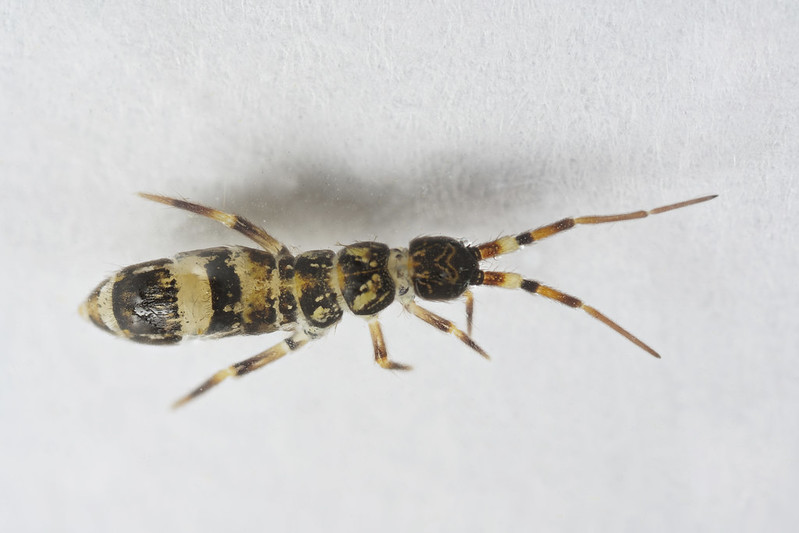
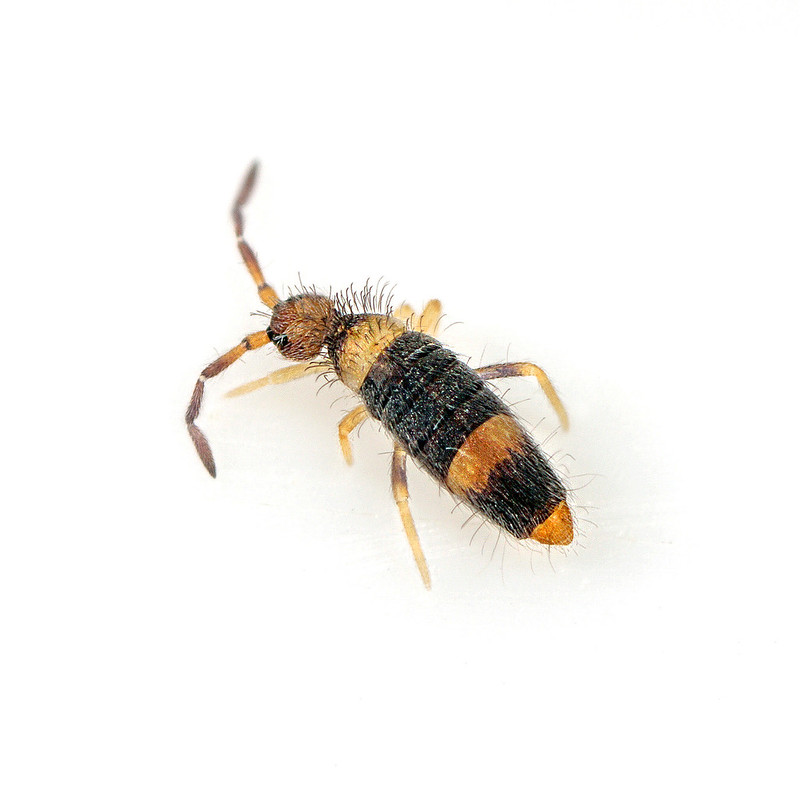
Orchesella cincta
Orchesella cincta

Unlike the juveniles I'd been finding, adult O. cincta are much darker - males are completely black (except for the white bands), females are less black and more spotted/patterned. This male is a bit battered and has lost quite a few scales and hairs so it's not a typical specimen but still quite recognisable. What I'd overlooked was that Entomobrya have 4 antennal segments, in Orchesella ant.1 and ant.2 appear to be divided so there appear to be 6 antennal segments (have another look at the juveniles above). The other problem is that all the instars of O. cincta appear different to each other - the first one above is a juvenile, the second one (with more dark pigment) is a subadult, but if you look at the antennae, you can see that they are not Entomobrya. Once again thanks to Frans Janssens for sorting me out.


Not a bad return on a pot of invisible paint! I may apply for Sky Arts Invisible Artist of the Year.