We went up to Kelham Bridge hoping for dragonflies but didn't see a single one, only lots of Common Blue Damselflies, which was somewhat underwhelming. While I was there I was also going to sample springtails (obviously). However, the results of this were also somewhat underwhelming. I put a fair amount of effort into sweeping vegetation and didn't find a single specimen. I found a nice puddle in a ditch and swept around the edges of that, also scooping from the water surface. Not. A. Sausage. The only place I found any springtails were on a big clump of Juncus in a ditch. (Juncus seems to be a good source at the moment). This yielded lots of Entomobrya nicoleti of varying stages of maturity, but also several Dicyrtomina minuta.
Showing posts with label Dicyrtomina. Show all posts
Showing posts with label Dicyrtomina. Show all posts
Saturday, 8 September 2018

Wednesday, 9 May 2018
Dicyrtomidae Identification Guide
Members of the Dicyrtomidae are characterised by having a very short fourth antennal segment. Key identification features for each species are described below.
Family Dicyrtomidae
Genus Dicyrtoma
Dicyrtoma fusca
Genus Dicyrtomina: In Europe three distinct species are currently recognized: D. minuta, D. ornata and D. saundersi. In the USA, these are lumped into one species, D. minuta with the variants as subspecies forms:
Dicyrtomina minuta
Dicyrtomina ornata
Dicyrtomina saundersi
Dicyrtomina violacea
Family Dicyrtomidae
Genus Dicyrtoma
Dicyrtoma fusca
Genus Dicyrtomina: In Europe three distinct species are currently recognized: D. minuta, D. ornata and D. saundersi. In the USA, these are lumped into one species, D. minuta with the variants as subspecies forms:
Dicyrtomina minuta
Dicyrtomina ornata
Dicyrtomina saundersi
Dicyrtomina violacea
Dicyrtomina signata (recently identified in the UK): can be distinguished from D. saundersi and D. ornata by the combination of having very little pigment/fine barring on the "posterior patch", except for occasionally a dark spot just above the small abdomen (abd 6), plus the lack of a colour change between antennal segments 2 & 3.
Genus Jordanathrix
Jordanathrix nr superba
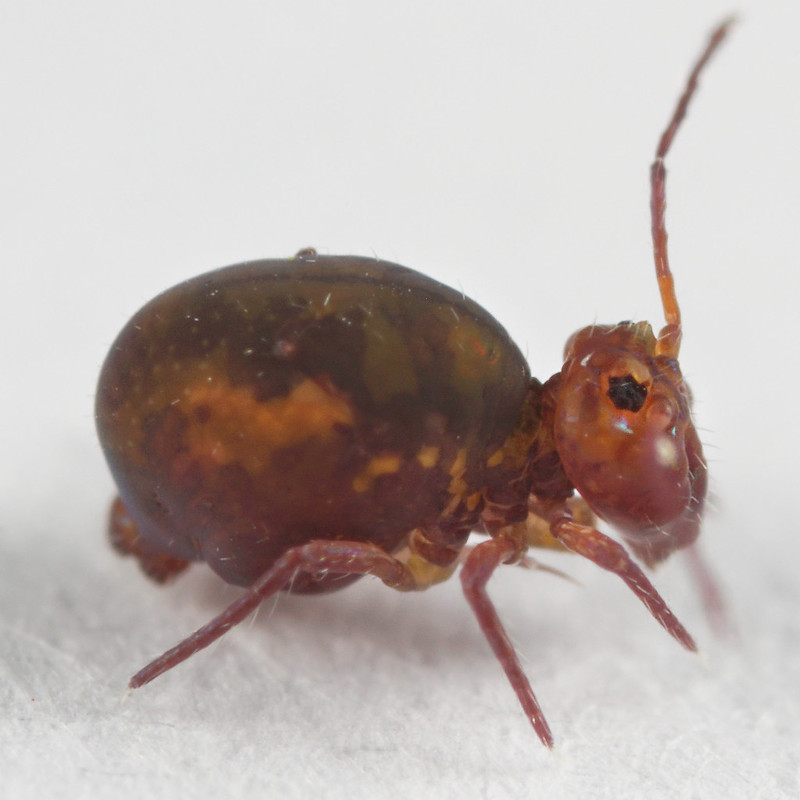
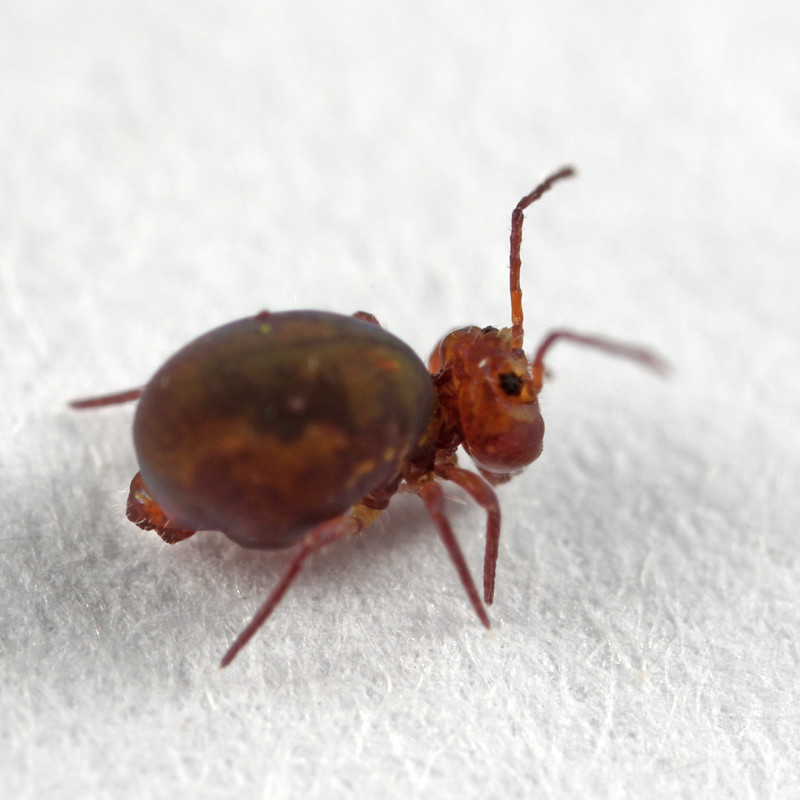
Dicyrtoma fusca is a small globular springtail (1-2mm) which varies considerably in colour from a dark maroon red to a paler yellow form, the mottled patterning also varies. The head and the body are always the same colour:
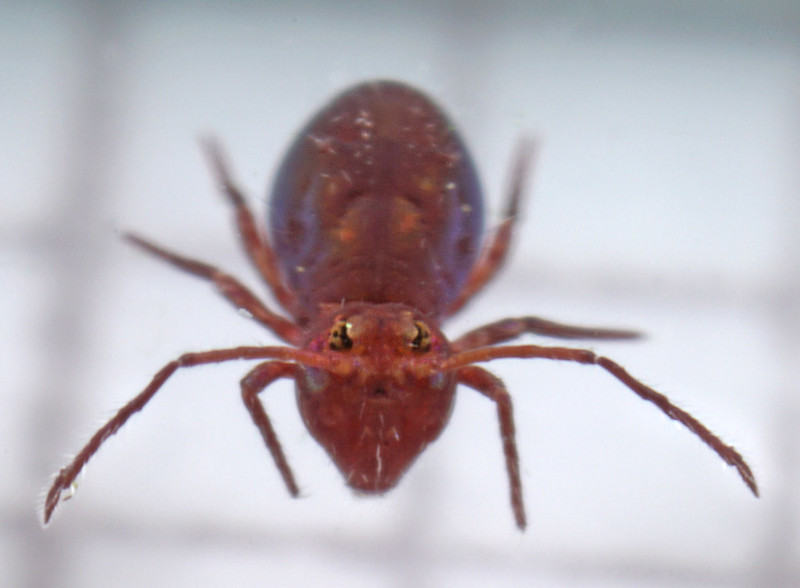
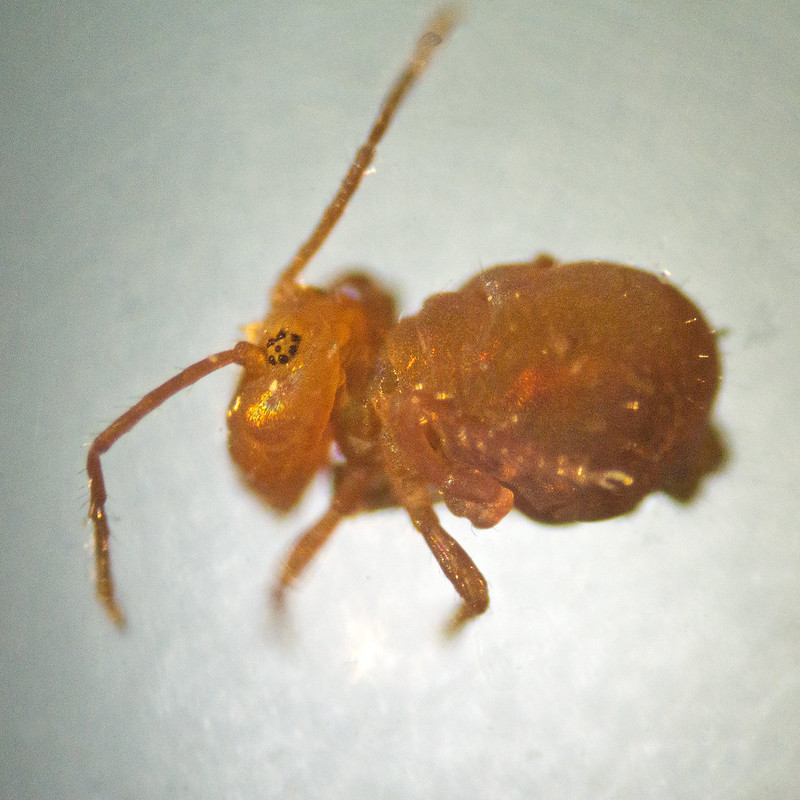
The above (commonest) forms are known as Dicyrtoma fusca var.1. There is also a much rarer melanistic dark (almost black) form, Dicyrtoma fusca var.2 (not known from VC55), and a leucistic form with dark ocelli on a pale eyepatch, Dicyrtoma fusca var. rufescens:
Dicyrtomina minuta
A common species found throughout Britain. The name is of this species is confusing - some D. minuta specimens grow bigger than D. ornata. Typically pale gold and less pigmented than D. ornata (dorso-anterior pigmentation lacking in particular). Similar to D. ornata, there is a long, narrow pigment streak on the rear of the abdomen.
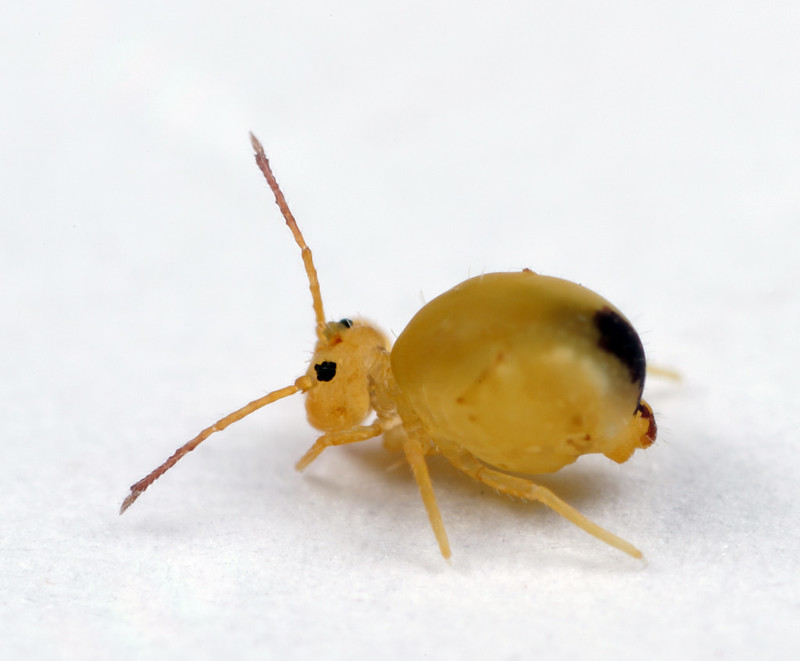
Frans Jannsens says that a diagnostic character to distinguish D. minuta from pale D. ornata is the colouration of the interocular+interantennal area:
D. ornata: a distinct midfacial pigmented band.
D. minuta: this band indistinct to absent (often only 2 pigmented dots remaining, 1 interocular + 1 interantennal):
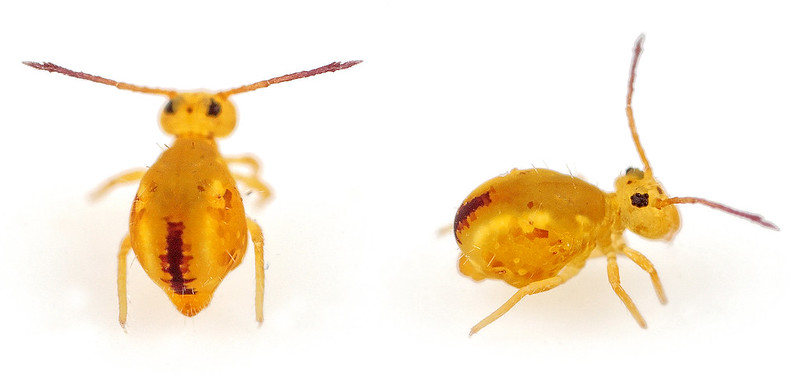
Dicyrtomina ornata
The historical records for a number of groups of springtail are hopelessly confused. These include Entomobrya intermedia/nivalis and also Dicyrtomina ornata/saundersi. This species has been frequently identified by the large rectangular patch of dark pigment on the abdomen, but this species is very variable in pattern and colour. Pale juvenile specimens (<1.5mm) are difficult to separate from D. minuta (see above). Key features:
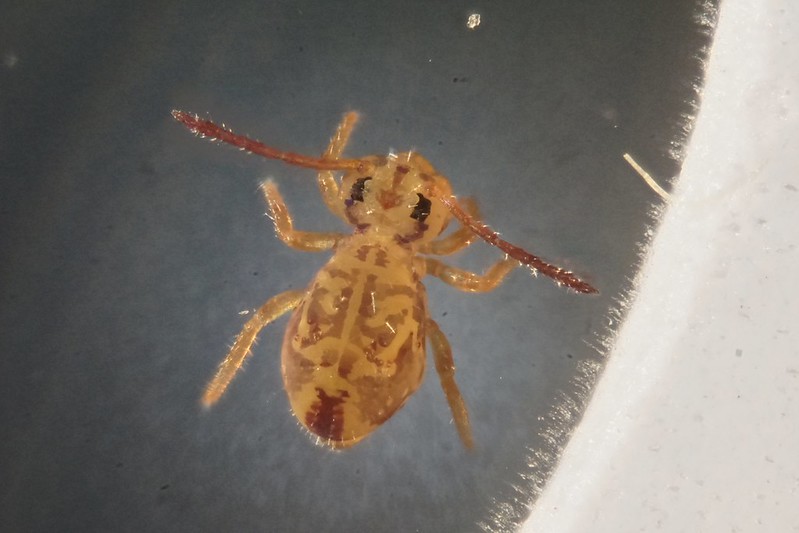
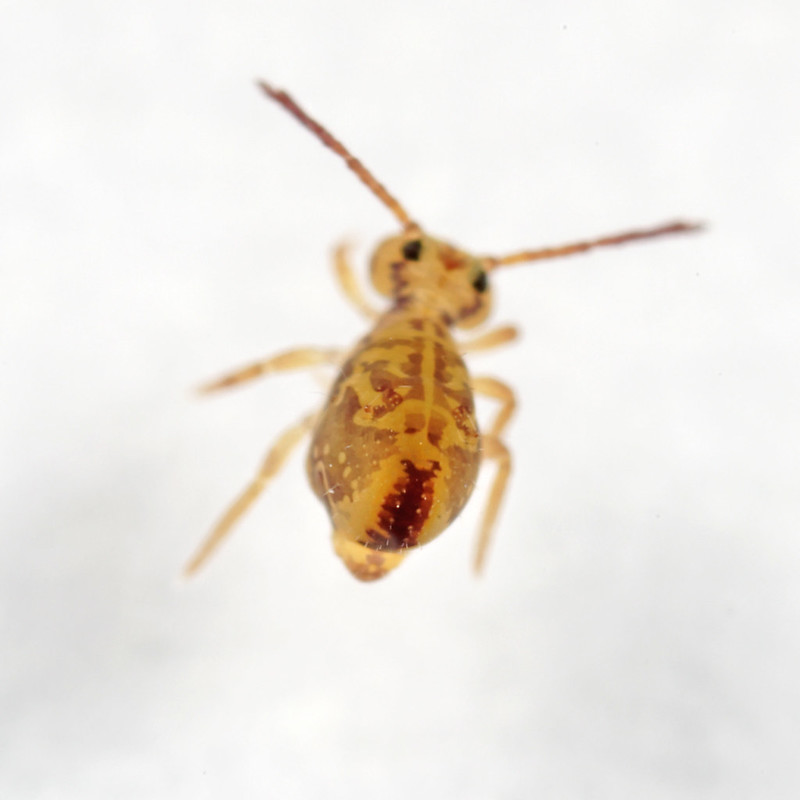
Dicyrtomina saundersi
Key features:
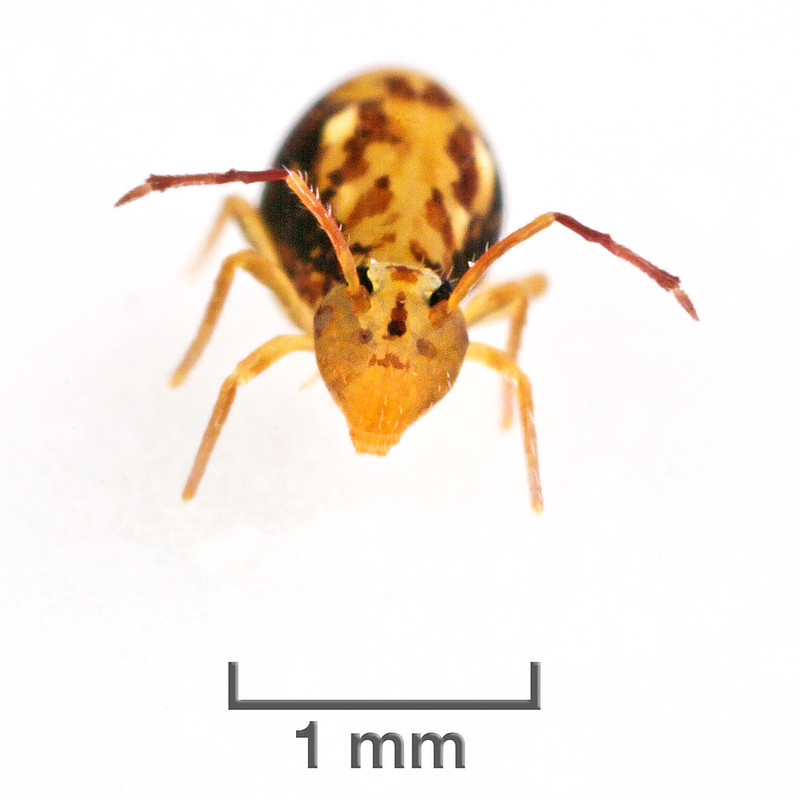
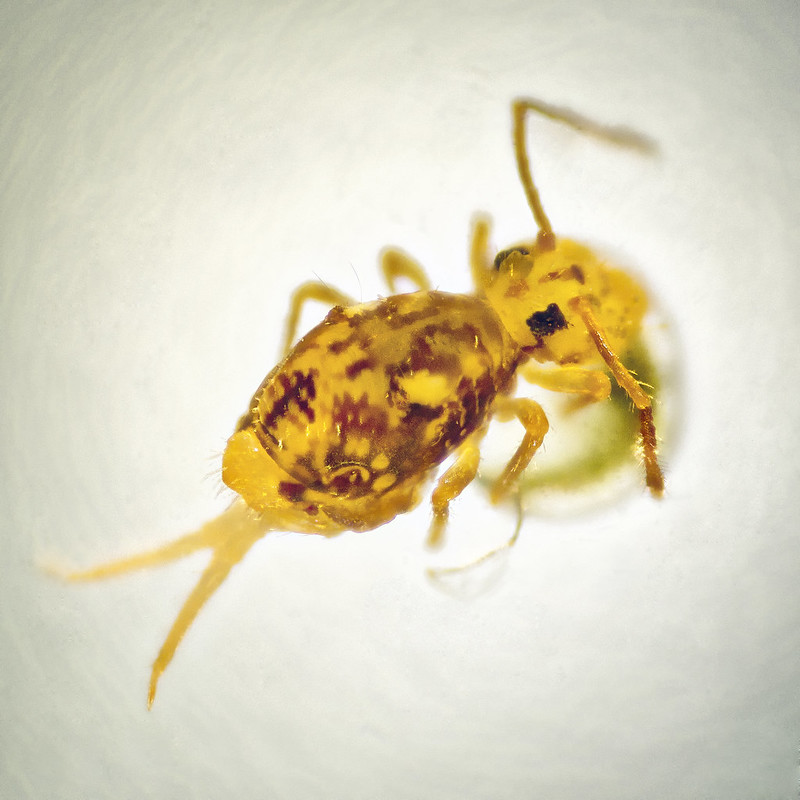
Dicyrtomina violacea
Resembles Dicyrtomina ornata with a solid patch of dark pigment at the posterior end of the abdomen, but unlike D. ornata the abdomen has an entirely purple ground colour with lighter orange reticulations. In D. violacea the head is lighter than the body, whereas in Dicyrtoma fusca the color of the head is similar to the body. Seemingly rare in the UK with very few records.
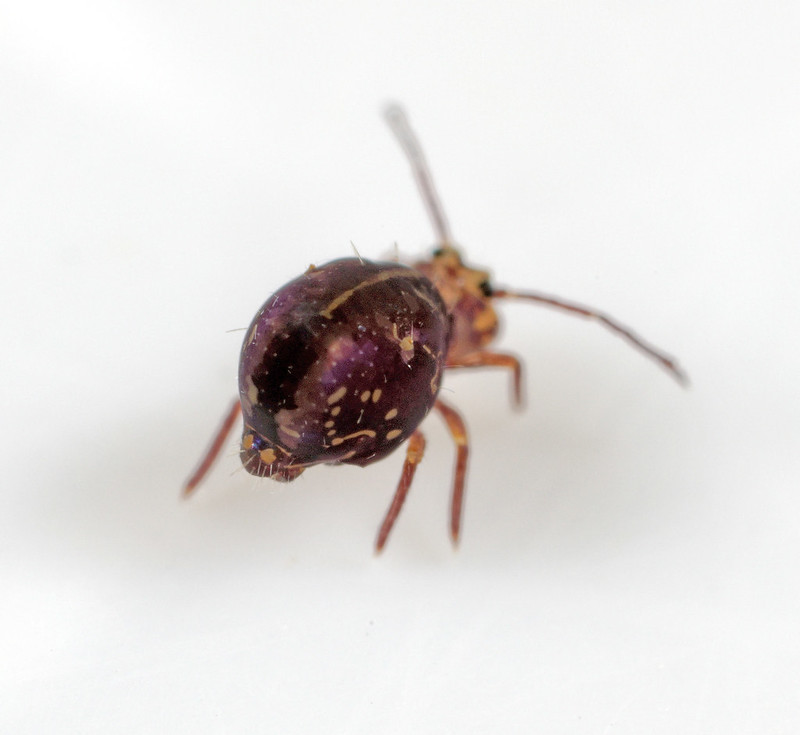

Jordanathrix nr. superba
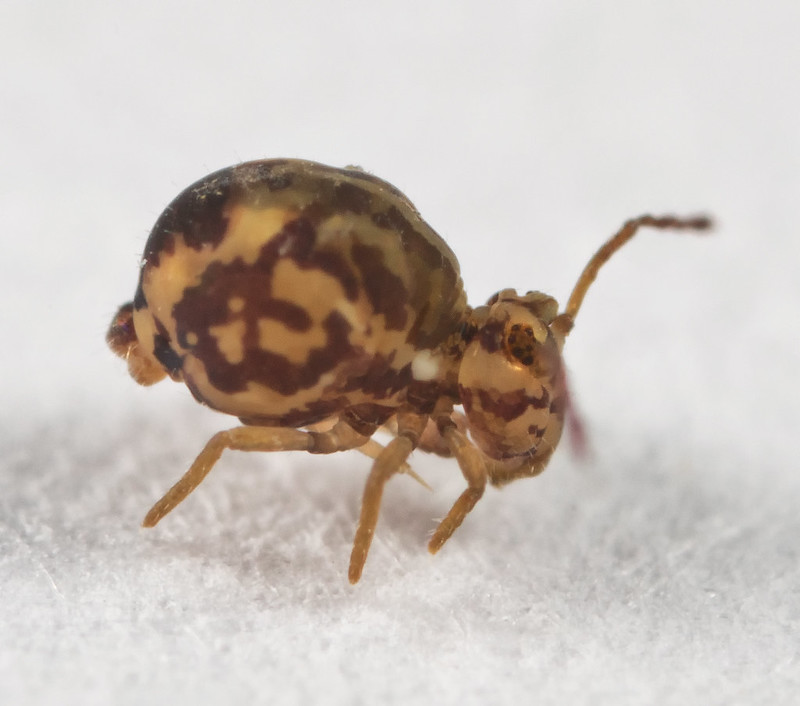
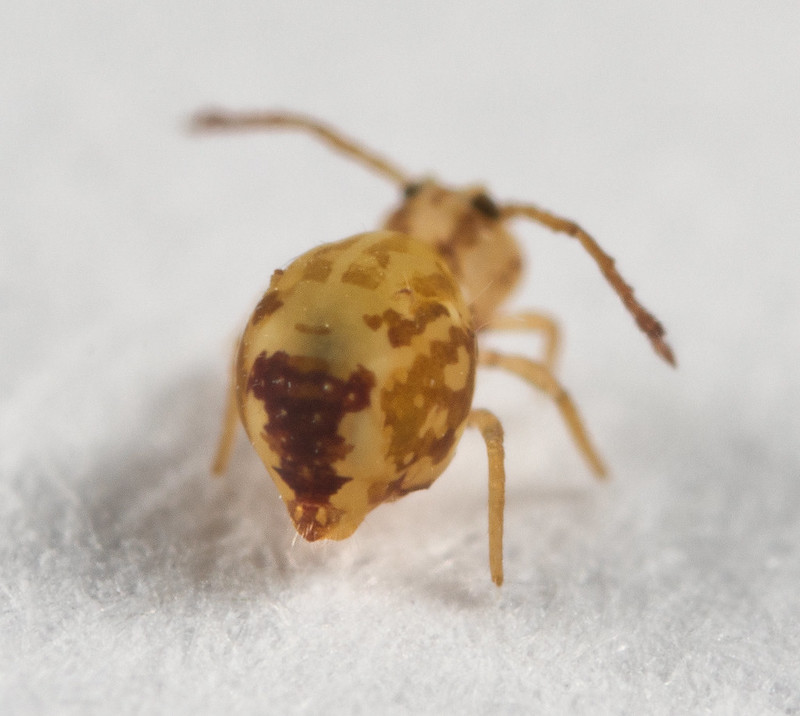
This species resembles but is distinct from Dicyrtomina superba from New Zealand. Thought to be a relatively recent introduction to the UK, first recorded about 10 years ago. This species has a patch of dark pigment on the abdomen and is similar in appearance to D. ornata but the colour of the eyepatch is much paler (with dark ocelli) than the all-dark eyepatch of D. ornata:
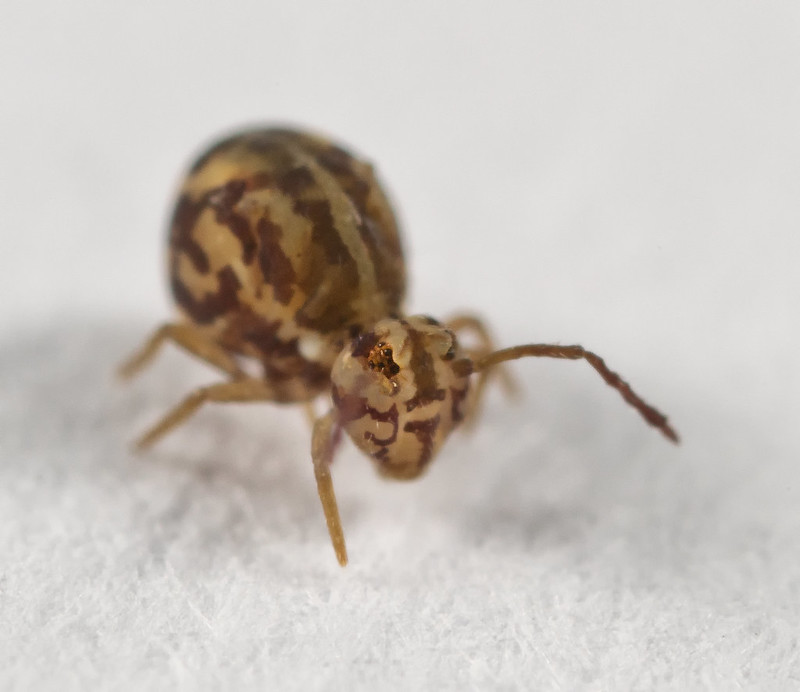
Genus Jordanathrix
Jordanathrix nr superba
Dicyrtoma fusca is a small globular springtail (1-2mm) which varies considerably in colour from a dark maroon red to a paler yellow form, the mottled patterning also varies. The head and the body are always the same colour:
The above (commonest) forms are known as Dicyrtoma fusca var.1. There is also a much rarer melanistic dark (almost black) form, Dicyrtoma fusca var.2 (not known from VC55), and a leucistic form with dark ocelli on a pale eyepatch, Dicyrtoma fusca var. rufescens:
Dicyrtomina minuta
A common species found throughout Britain. The name is of this species is confusing - some D. minuta specimens grow bigger than D. ornata. Typically pale gold and less pigmented than D. ornata (dorso-anterior pigmentation lacking in particular). Similar to D. ornata, there is a long, narrow pigment streak on the rear of the abdomen.
Frans Jannsens says that a diagnostic character to distinguish D. minuta from pale D. ornata is the colouration of the interocular+interantennal area:
D. ornata: a distinct midfacial pigmented band.
D. minuta: this band indistinct to absent (often only 2 pigmented dots remaining, 1 interocular + 1 interantennal):
Dicyrtomina ornata
The historical records for a number of groups of springtail are hopelessly confused. These include Entomobrya intermedia/nivalis and also Dicyrtomina ornata/saundersi. This species has been frequently identified by the large rectangular patch of dark pigment on the abdomen, but this species is very variable in pattern and colour. Pale juvenile specimens (<1.5mm) are difficult to separate from D. minuta (see above). Key features:
- Dorsal (in addition to lateral) abdominal pigmentation
- No sharp colour change along the length of the antennae
- Dorsal colour of the 6th abdominal segment (the dorsal anal valve) is dark (c.f. Dicyrtomina saundersi, below):
Dicyrtomina saundersi
Key features:
- Distinct colour change at the joint of sections 2 and 3 of the antennae
- Dorsal colour of the 6th abdominal segment (the dorsal anal valve) is light:
Dicyrtomina violacea
Resembles Dicyrtomina ornata with a solid patch of dark pigment at the posterior end of the abdomen, but unlike D. ornata the abdomen has an entirely purple ground colour with lighter orange reticulations. In D. violacea the head is lighter than the body, whereas in Dicyrtoma fusca the color of the head is similar to the body. Seemingly rare in the UK with very few records.
Jordanathrix nr. superba
This species resembles but is distinct from Dicyrtomina superba from New Zealand. Thought to be a relatively recent introduction to the UK, first recorded about 10 years ago. This species has a patch of dark pigment on the abdomen and is similar in appearance to D. ornata but the colour of the eyepatch is much paler (with dark ocelli) than the all-dark eyepatch of D. ornata:
Friday, 1 January 2010
Practice Quiz: Dicyrtomina ornata versus Dicyrtomina saundersi
This is a difficult species pair to separate and they are frequently confused. Try answering the following questions:
Photo 1:

Q1a) Is this Dicyrtomina ornata or Dicyrtomina saundersi?
Q1b) Explain your reasoning - what features lead you to your conclusion?
Photo 2:

Q2a) Is this Dicyrtomina ornata or Dicyrtomina saundersi?
Q2b) Explain your reasoning - what features lead you to your conclusion?
Photo 3:

Q3a) Is this Dicyrtomina ornata or Dicyrtomina saundersi?
Q3b) Explain your reasoning - what features lead you to your conclusion?
Photo 1:

Q1a) Is this Dicyrtomina ornata or Dicyrtomina saundersi?
Q1b) Explain your reasoning - what features lead you to your conclusion?
Photo 2:

Q2a) Is this Dicyrtomina ornata or Dicyrtomina saundersi?
Q2b) Explain your reasoning - what features lead you to your conclusion?
Photo 3:

Q3a) Is this Dicyrtomina ornata or Dicyrtomina saundersi?
Q3b) Explain your reasoning - what features lead you to your conclusion?
Click for: ANSWERS
Subscribe to:
Posts (Atom)