Showing posts with label colour. Show all posts

Thursday, 1 March 2018

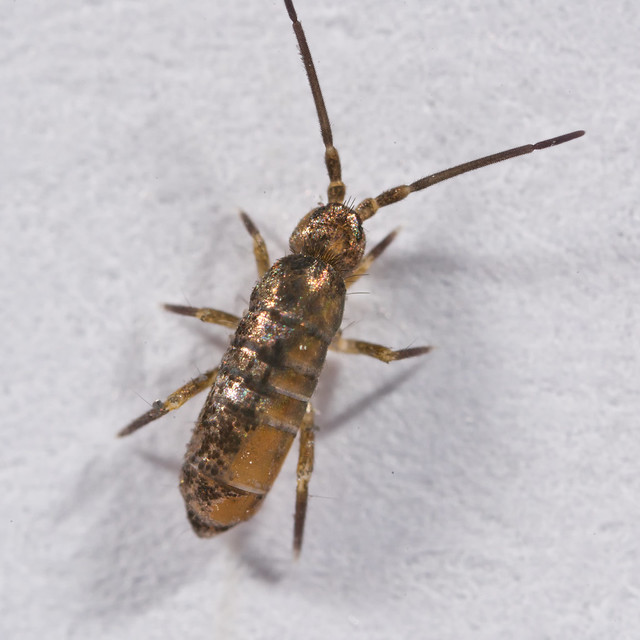
Tomocerus minor

Tomocerus minor

Tomocerus minor is an extremely common and widespread species, up to ~4.5mm long. As will all all Tomocerus species, the body is heavily covered in dark scales, but these can be easily lost in preserved specimens, changing the appearance to a golden colour:
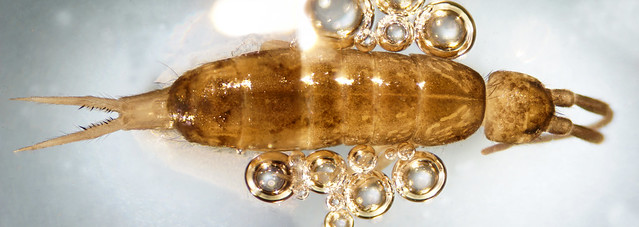
Tomocerus minor

In T. minor, the empodium of the foot is about two-thirds the length of the claw:
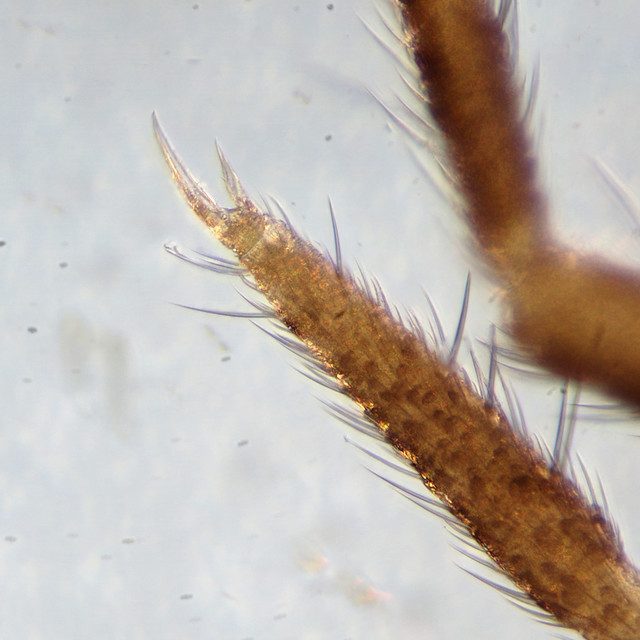
Tomocerus minor - Claw

The spines on the inner side of the dens are tridentate, a highly characteristic feature which makes it impossible to confuse with any other species:
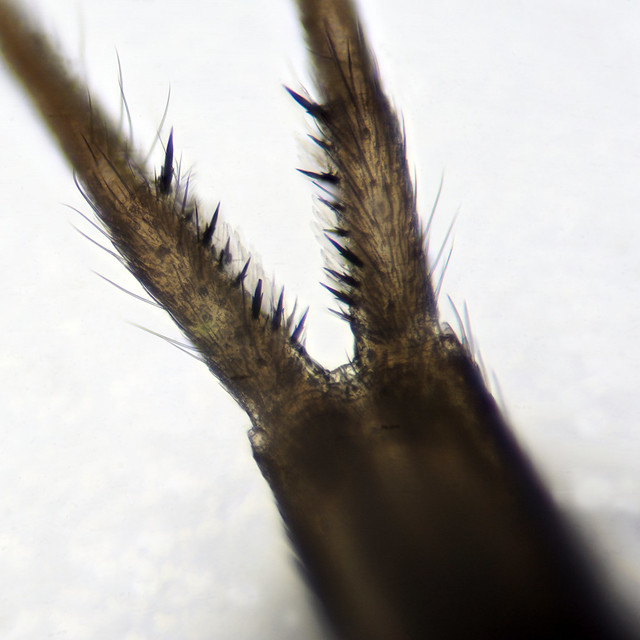
Tomocerus minor - Dens

Males can be recognized by the presence of a genital plate with circumgenital setae, absent in females, as seen here.

Tuesday, 27 February 2018

The problem with scales

Scales are often used as an identification feature for springtails. The problem is, scales are easily lost. Take this specimen of Tomocerus minor:

Tomocerus minor

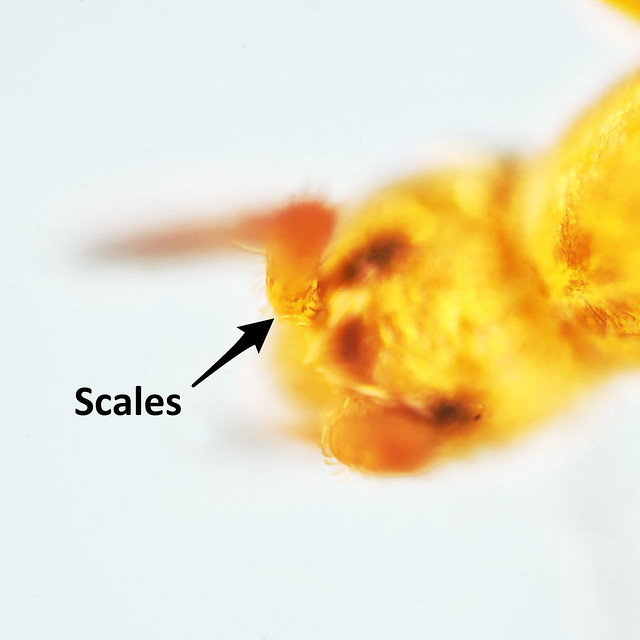
Tomocerus species are heavily scaled and this gives them their characteristic dark colour. But the scales are easily lost - the left side of the abdomen of this specimen shows the dark scales, but on the right side it looks like a golden coloured animal. Scales in specific locations are a diagnostic feature for many species, e.g. Lepidocyrtus lignorum has scales on the basal segments of the antennae:

Lepidocyrtus lignorum

I use a small paintbrush to manipulate springtails - I find the easiest way to pick them up is with a moist brush. This often dislodges scales, but using a pooter to move springtails is also quite rough. Scales are also commonly lost from specimens preserved in 70% isopropanol. So the answer to the missing scales problem is:

  • If scales are an important identification feature and you can see them, you're a winner.
  • But if you can't see any scales, it doesn't mean they weren't there originally - keep this in mind.