Showing posts with label identification. Show all posts

Saturday, 2 March 2019

Competition time!

Competition time


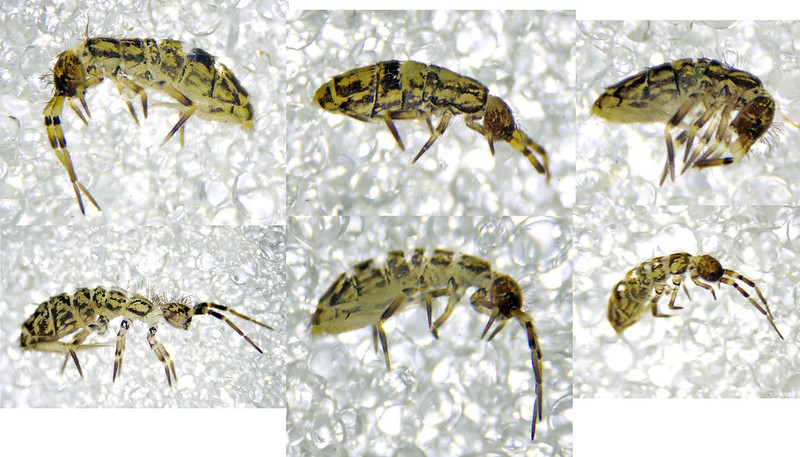
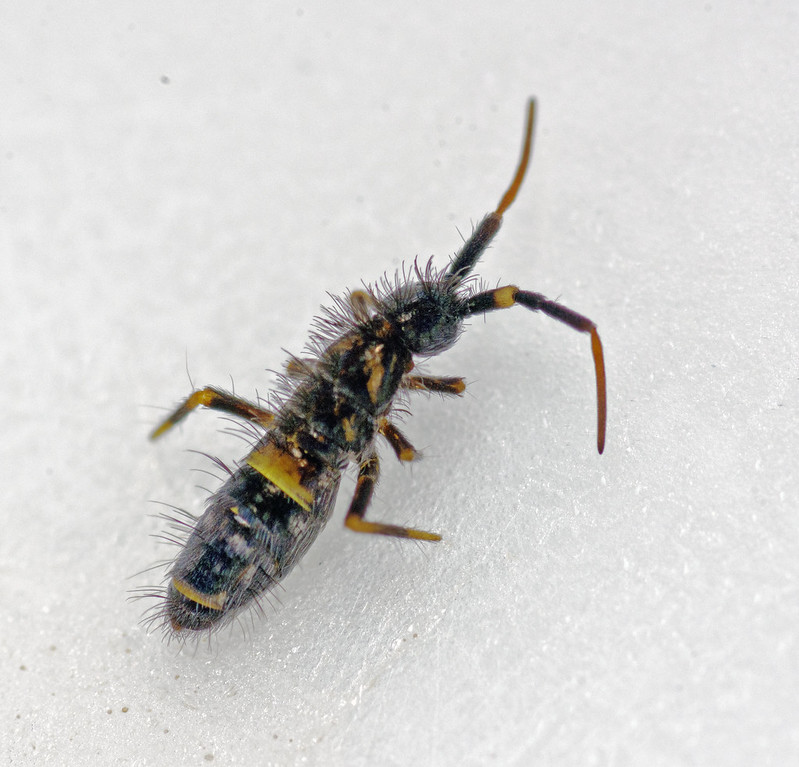
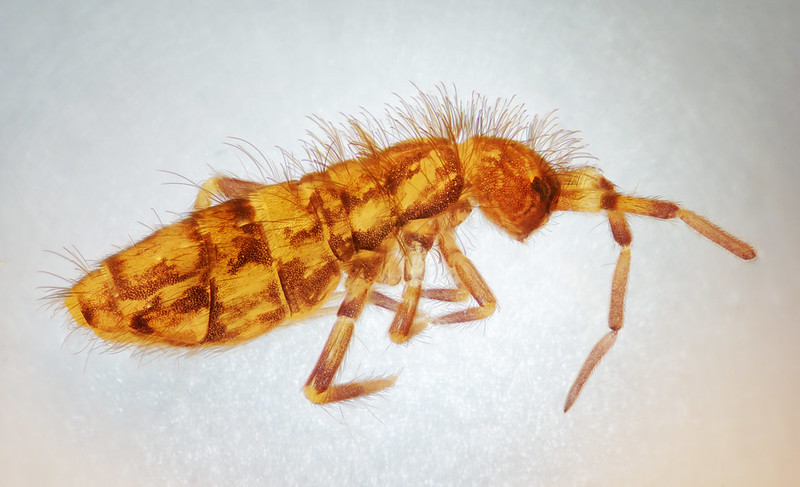
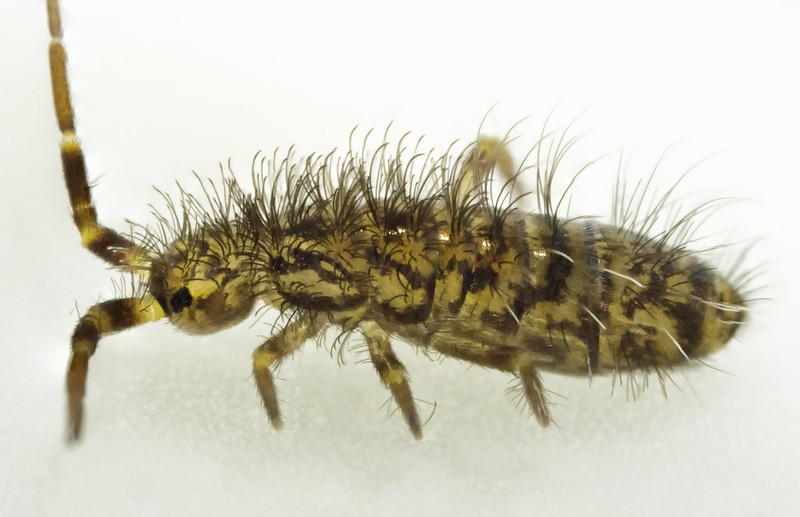
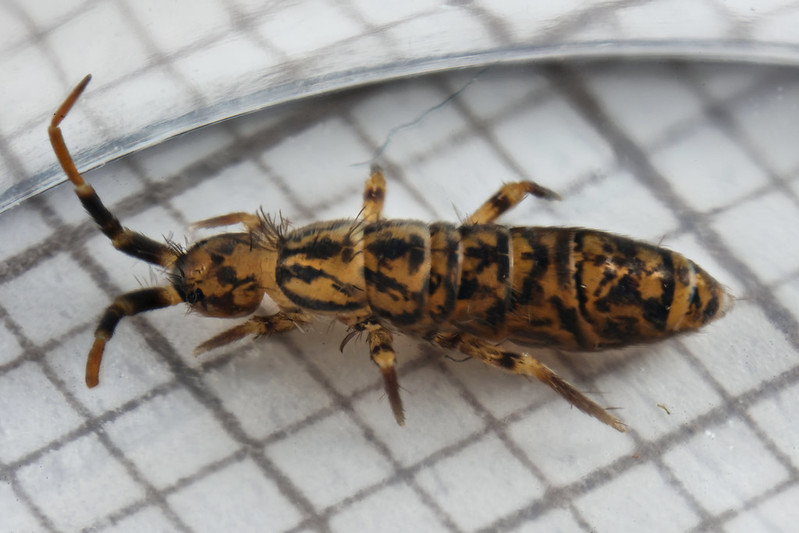
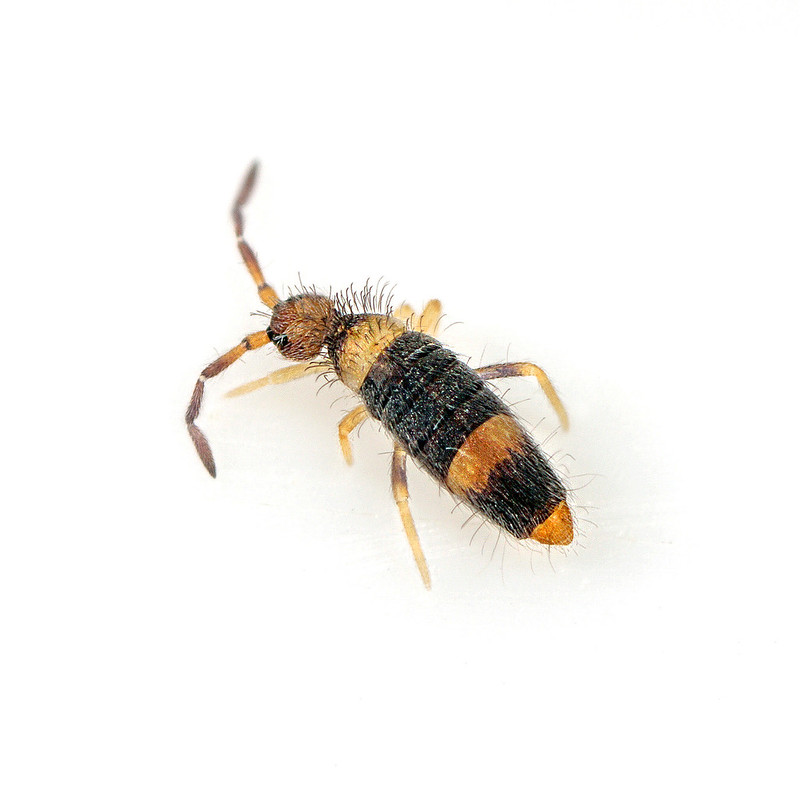
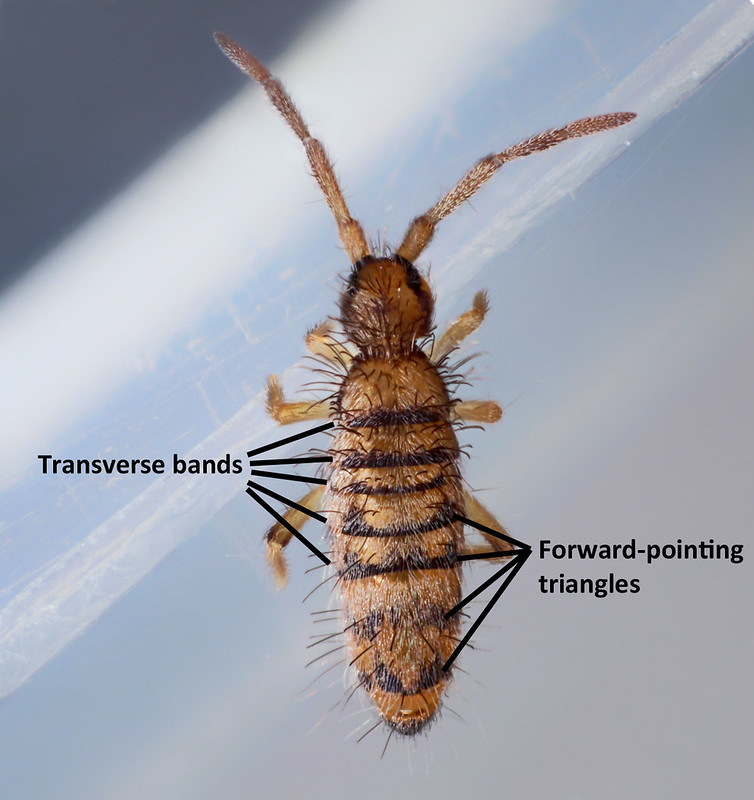
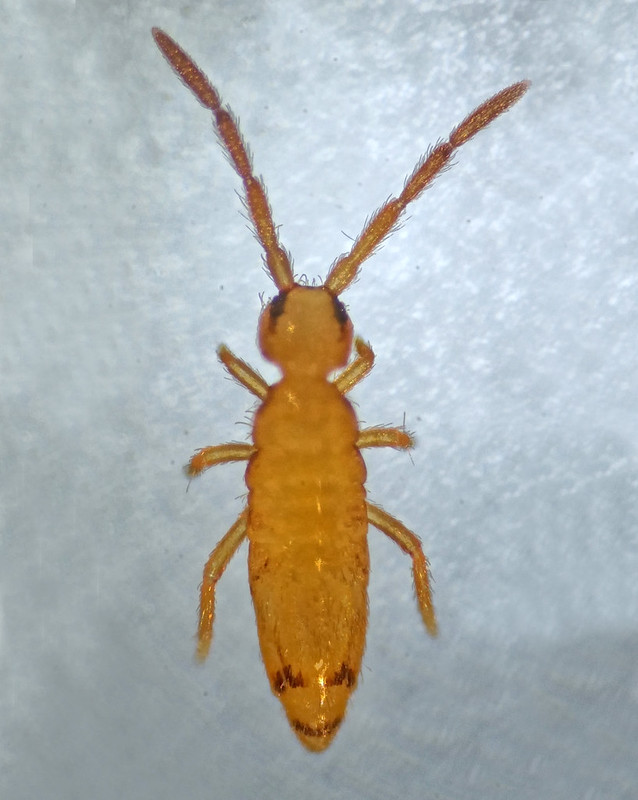
I find Orchesella can be quite difficult to identify in preserved specimens - much harder than live specimens. So two questions:

  1. Spot the odd one out!
  2. What features allow you to identify the two species in this picture?
 

Wednesday, 26 September 2018

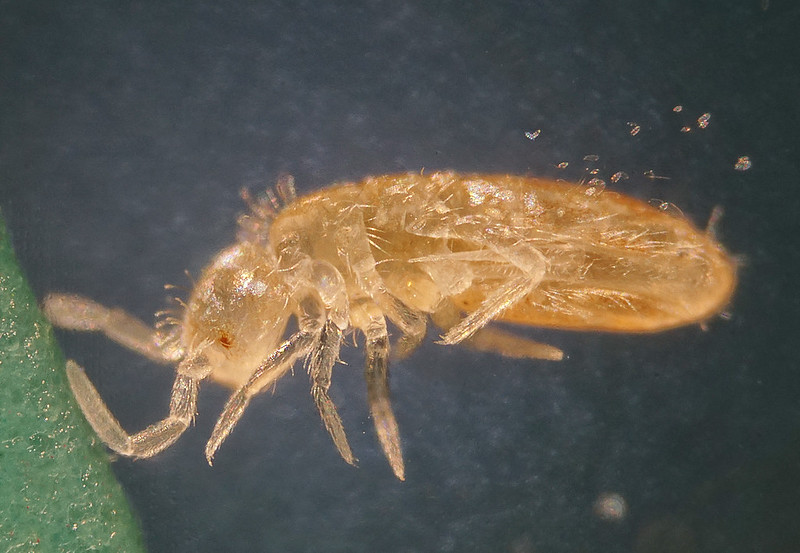
Heteromurus nitidus

A distinctive pale springtail, common in areas rich in organic matter.

Abd4 less than twice as long as abd3, body covered in roundish scales:

Heteromurus nitidus

Heteromurus nitidus

Antennae divided into 5 sections (ant1a/b division difficult to see), ant5 annulated; empodium 80% as long as the claw:

Heteromurus nitidus

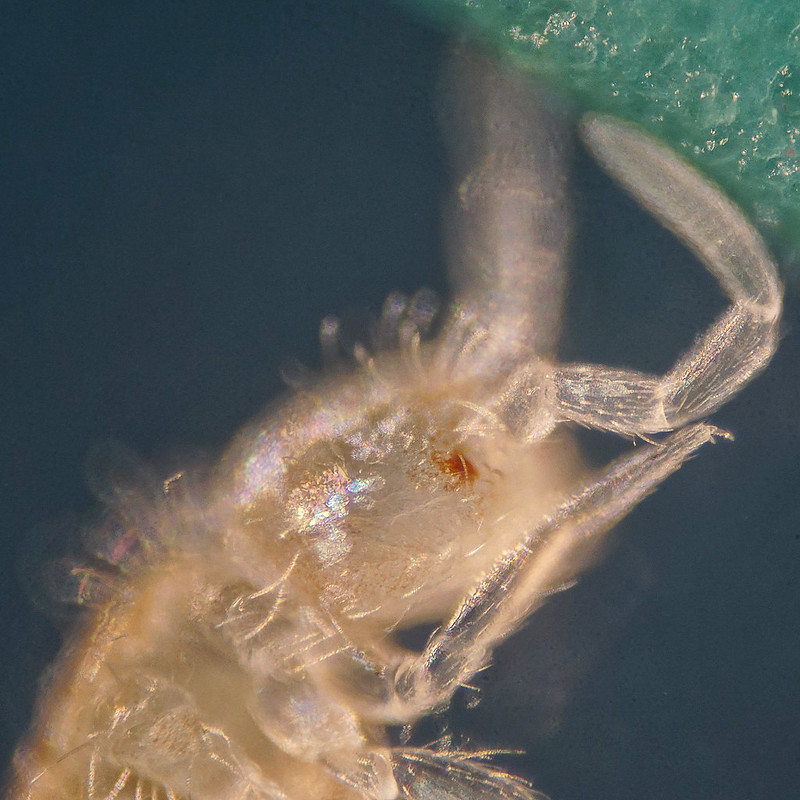
Single reddish-brown ocellus:

Heteromurus nitidus


Tuesday, 10 July 2018

Lepidocyrtus

General characteristics:
Adb4 more twice as long as abd3; most species have blue pigmentation but this is only clearly visible in natural light and easily lost in alcohol-preserved specimens. Presence or absence of scales on legs and antennae are an important character in this group but these can be very difficult to see (especially confirming their absence) so exercise caution. 
Lepidocyrtus Key

Pale species; Th2 not prominent:
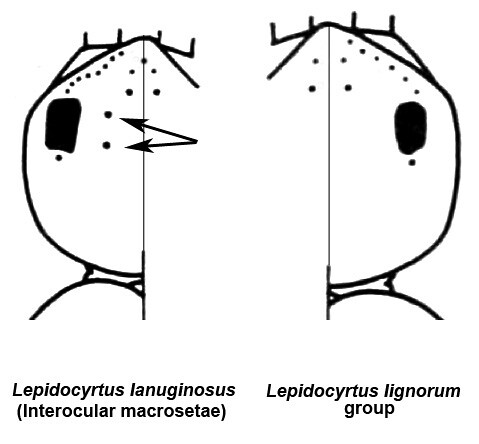
  • Lepidocyrtus lanuginosus: predominantly pale with traces of blue pigment on the head, thorax and legs; no scales on the legs or antennae; interocular macrosetae present.
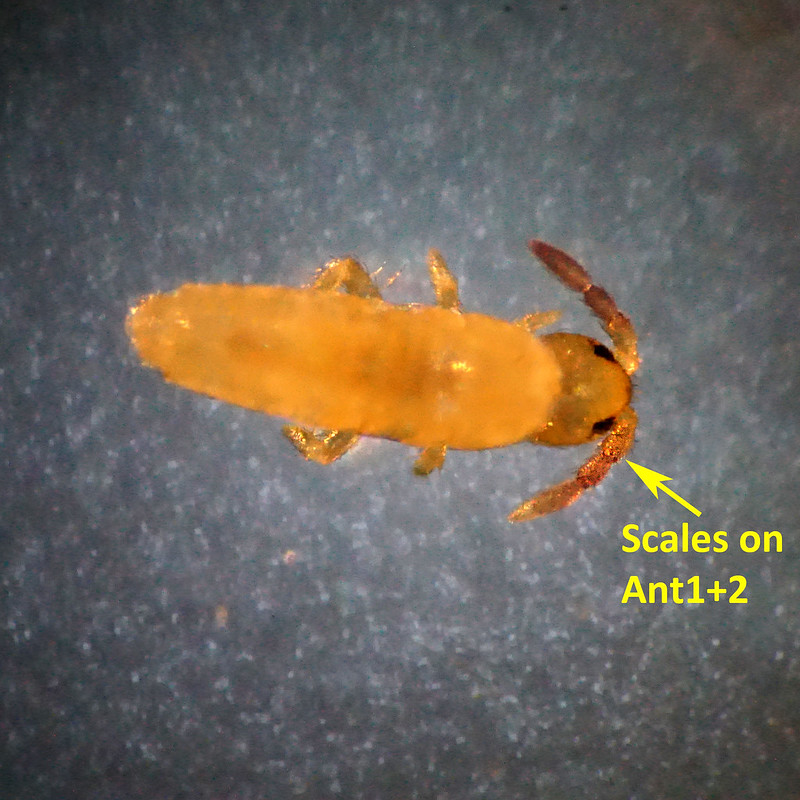
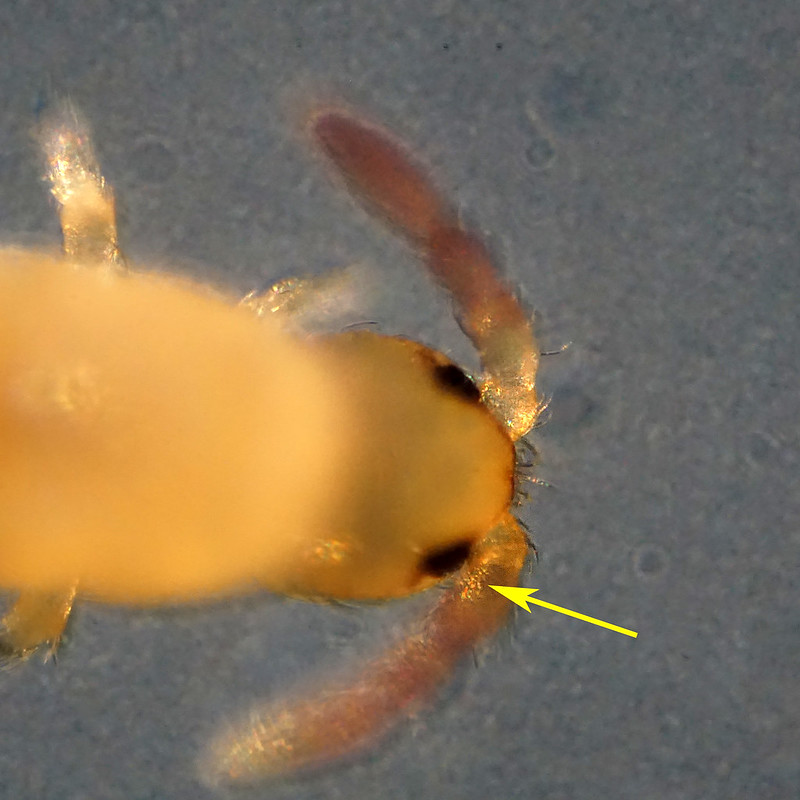
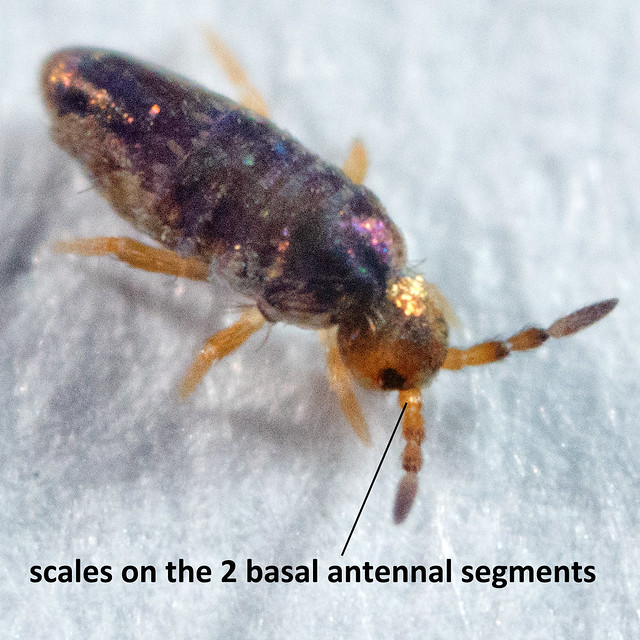
  • Lepidocyrtus lignorum: predominantly pale with faint traces of blue pigment on the head, thorax and legs; scales present on the legs and ant1+ant2, no scales on ant3+ant4 (c.f. L. curvicollis); eyepatch roundish (less elongate than other species); no interocular macrosetae:

Lepidocyrtus

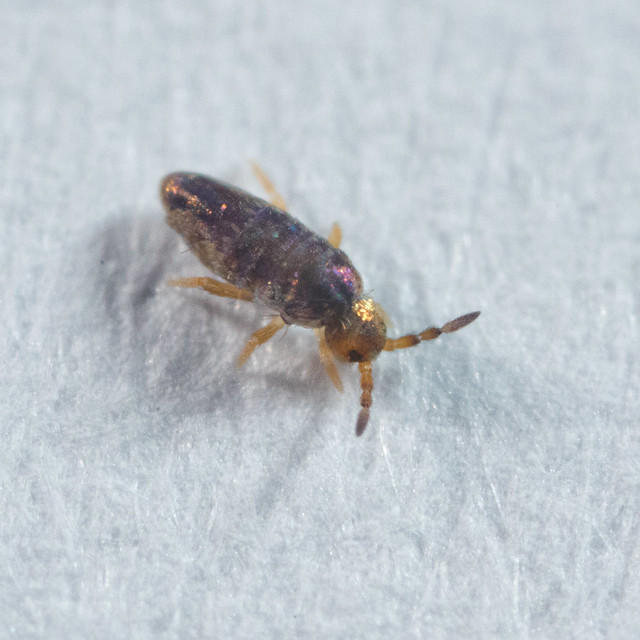
Lepidocyrtus lignorum: angle between head and body relatively straight, >=90 degrees, scales on the 2 basal antennal segments and legs, no scales on ant3 and ant4, eyepatch roundish (less elongate than other species):

Lepidocyrtus lignorum

Lepidocyrtus lignorum antennae


Blue/violet pigmented species; Th2 prominent to varying degrees:

  • Lepidocyrtus curvicollis: a pale species with traces of pigment on the head, thorax and legs; Th2 overhangs the head dorsally - head tucked under thorax; scales are present on the legs, and on ant1-4 (like L. paradoxus).
  • Lepidocyrtus cyaneus: blue pigment on the head, thorax, abdomen and legs (less obvious in artificial light), no scales on legs or antennae. Note that the blue pigment of L. cyaneus can only be seen in descaled specimens as the blue is not an iridisation colour of the scales but an intrinsic colour of the naked (descaled) skin. Interocular macrosetae present.
  • Lepidocyrtus violaceus: strong blue pigment on the head, thorax, abdomen and legs; scales on the legs and ant1+ant2, no scales on ant3+ant4; no interocular macrosetae.
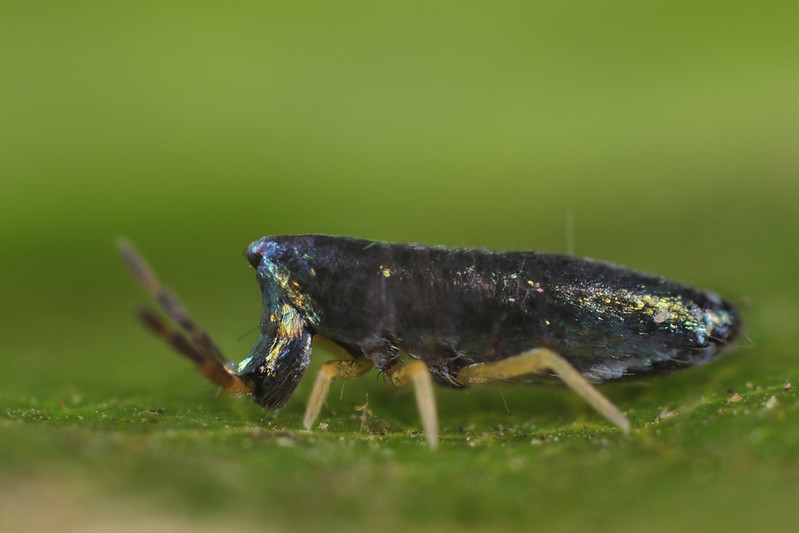
  • Lepidocyrtus paradoxus (absent from UK?): dark body, pale legs; Th2 very prominent, angle between head and body <90 degrees and scales on the 2 basal antennal segments and legs.


Lepidocyrtus cyaneus: blue pigment on the head, thorax, abdomen and legs (less obvious in artificial light), no scales on legs or antennae. Note that the blue pigment of L. cyaneus can only be seen in descaled specimens as the blue is not an iridisation colour of the scales but an intrinsic colour of the naked (descaled) skin. Interocular macrosetae present:

Lepidocyrtus cyaneus


Lepidocyrtus violaceus: strong blue pigment on the head, thorax, abdomen and legs, scales on the legs and on the first (ant1) and second (ant2) segments of the antennae, but NOT on ant3 and ant4:

Lepidocyrtus violaceus

Lepidocyrtus violaceus


Lepidocyrtus paradoxus: angle between head and body < 90 degrees, scales on the 2 basal antennal segments and legs. Photo by Marie Huskens:
Lepidocyrtus paradoxus

Tuesday, 22 May 2018

Heterosminthurus

Genus Heterosminthurus

  • Heterosminthurus bilineatus - moderately common (see below).
  • Heterosminthurus claviger - rare, a montane species found in pennine grasslands (similar in appearance to H. bilineatus, see below).
  • Heterosminthurus insignis - moderately common (a uniform yellow colour).
  • Heterosminthurus novemlineatus - very rare (yellow in colour with several (usually nine hence novemlineatus) longitudinal bands of dark pigment).

I am not currently aware of any Heterosminthurus records other than Heterosminthurus bilineatus from VC55.


Heterosminthurus bilineatus:
Heterosminthurus bilineatus


In H. claviger the lateral stripes are connected posteriorly unlike H. bilineatus (here) which has separate lateral stripes:
Heterosminthurus bilineatus
H. claviger males (but not females) have peculiar paddle-shaped interocular setae.


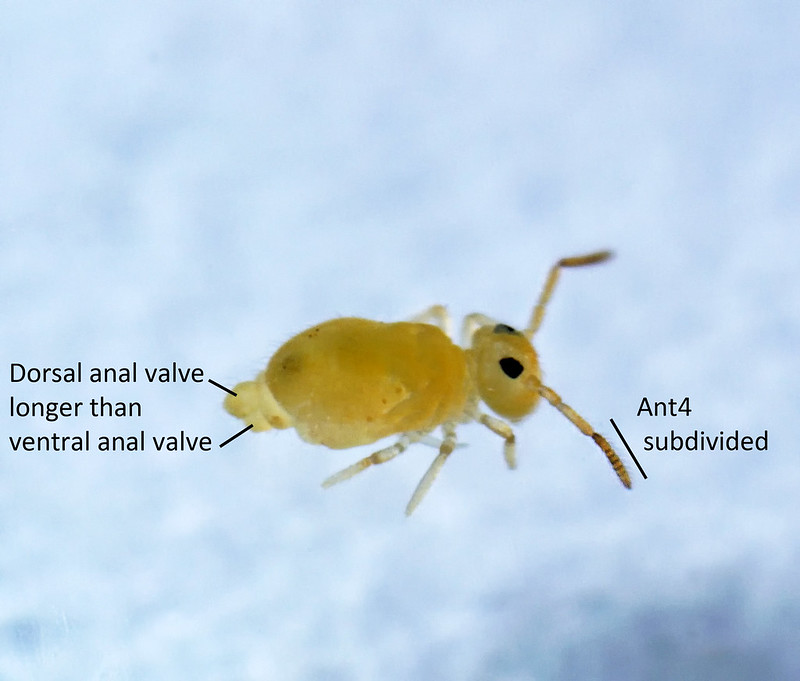
The fourth antennal segment (ant4) is subdivided into about six subsegments:
Heterosminthurus bilineatus


Ocelli:
Heterosminthurus bilineatus

Sunday, 20 May 2018

Deuterosminthurus

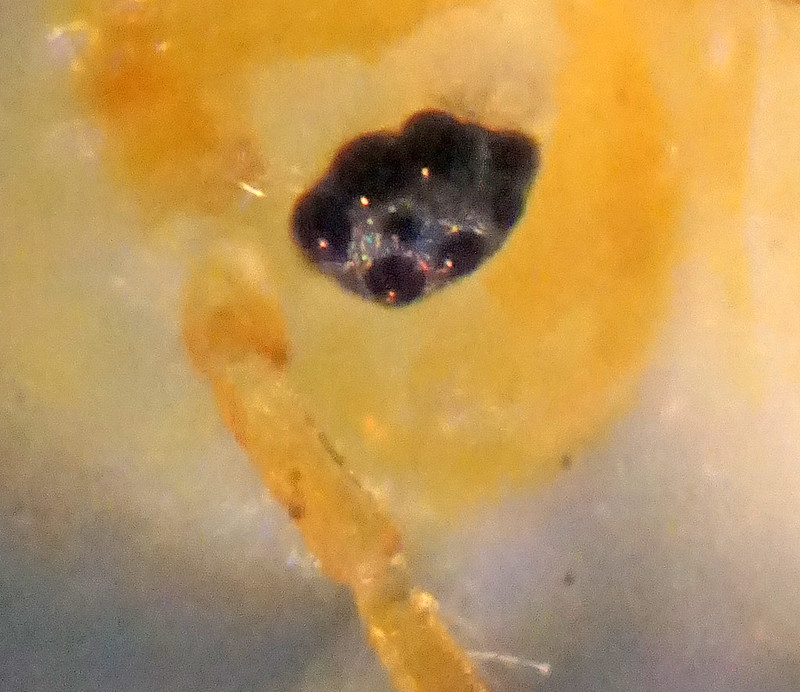
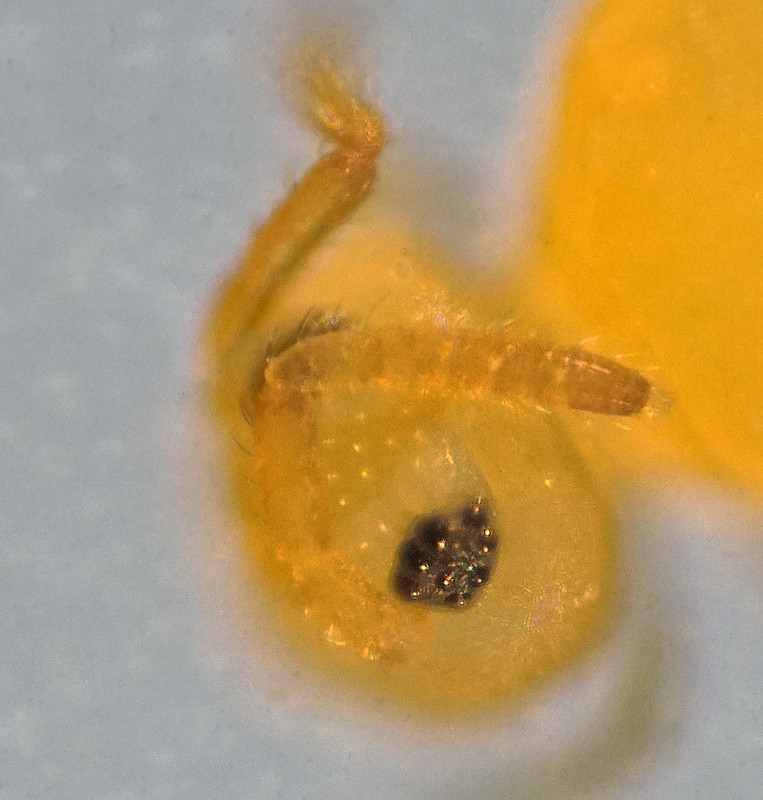
Deuterosminthurus species all have a distinctive arrangement of ocelli on the eyespot:
  • 3 large ocelli in upper row
  • 1 small central ocellus
  • 4 lower "normal" ocelli:

  • Deuterosminthurus bicinctus (moderately common) - yellow with two large patches of violet pigment on the dorsal side. 
  • - All setae on the outer side of the tibiotarsus of the third leg (leg3) are about the same length. - In males, long specialised backward-pointing setae are not present at the posterior end of the sixth abdominal segment. - In females, the setae surrounding the anus are all of similar thickness.
  • Deuterosminthurus pallipes (common, widespread).
  • - All setae on the outer side of the tibiotarsus of the third leg (leg3) are about the same length. - In males, long specialised backward-pointing setae are not present at the posterior end of the sixth abdominal segment.  - In females, the setae surrounding the anus are all of similar thickness (c.f. Bourletiella hortensis). 
  • Deuterosminthurus sulphureus (moderately common) - uniformly yellow.
  • - Some of the setae on the outer side of the tibiotarsus of the third leg (leg3) are longer than others. - In males, long specialised backward-pointing setae are present at the posterior end of the sixth abdominal segment. - In females, the setae surrounding the anus are of different thickness. - The mucro is spoon-shaped.


Deuterosminthurus bicinctus:
The nominate form of D. bicinctus is easy to recognize, but there is also a yellow form, Deuterosminthurus bicinctus form flavus (N.B. head is paler than the body).

Possible(?) candidates:
Deuterosminthurus bicinctus forma flavus

Deuterosminthurus bicinctus forma flavus

Characteristic arrangement of ocelli:
Ocelli - Deuterosminthurus bicinctus


Deuterosminthurus pallipes:
Deuterosminthurus pallipes

Bourletiella hortensis is very similar to Deuterosminthurus pallipes but can be distinguished based on the location of the apical filament of the inner claw (unguiculus or empodium) (Bretfeld, 1999):
  • Bourletiella hortensis - filament is subapical (also, body shape is quite globular)
  • Deuterosminthurus pallipes - filament is apical (body shape tends to be more elongated)


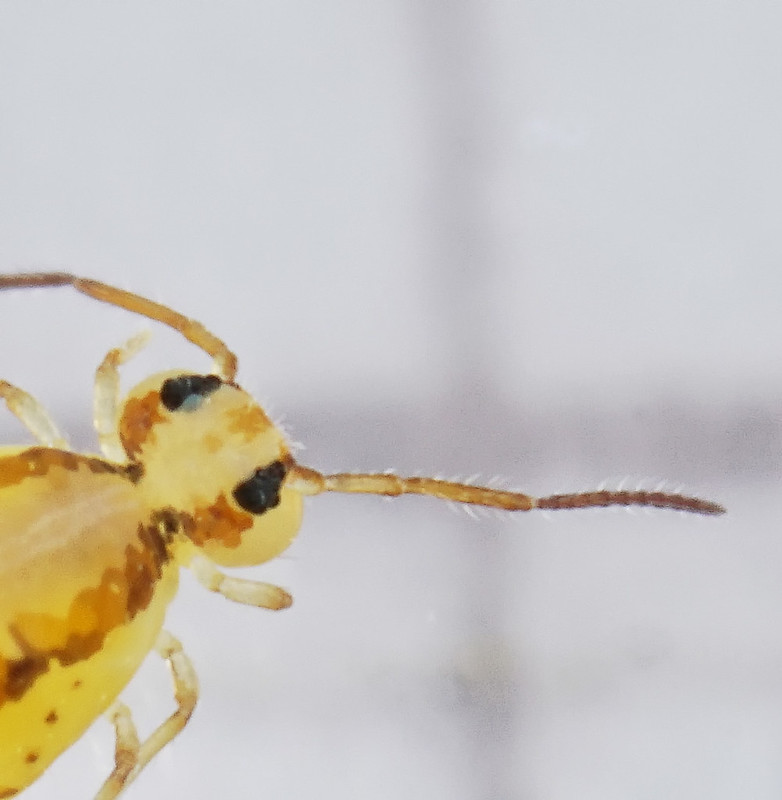
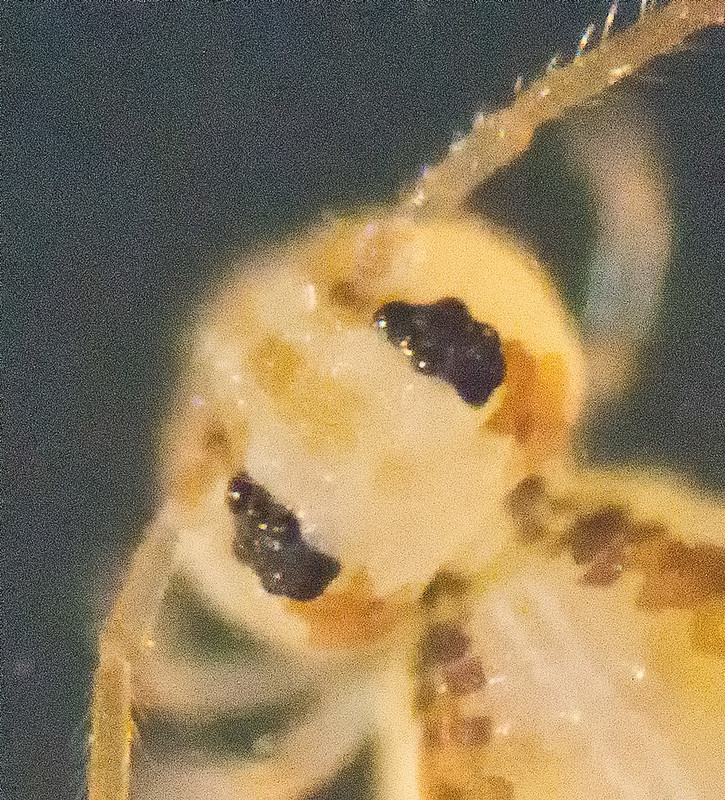
Deuterosminthurus pallipes is a small gobular springtail noted for appearing on vegetation from spring to autumn. These individuals represent mature adults looking to perform their mating dance on a leaf. The distinctive features of this springtail are the long length of the antennae (nearly as long as the body) and the distinctive arrangement of ocelli on the eyespot:
Deuterosminthurus pallipes Ocelli

Deuterosminthurus pallipes

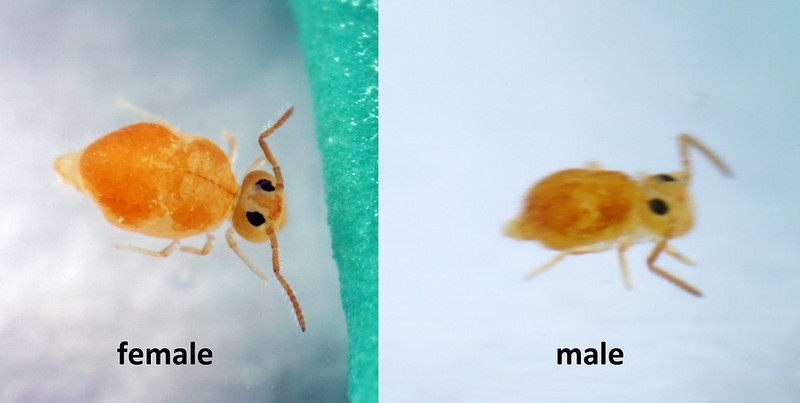
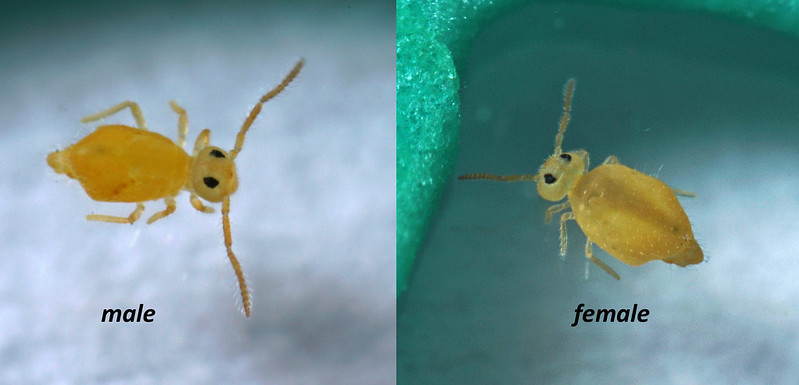
Male antennae distinctly longer (relative to body length) than females:
Deuterosminthurus pallipes


Deuterosminthurus pallipes

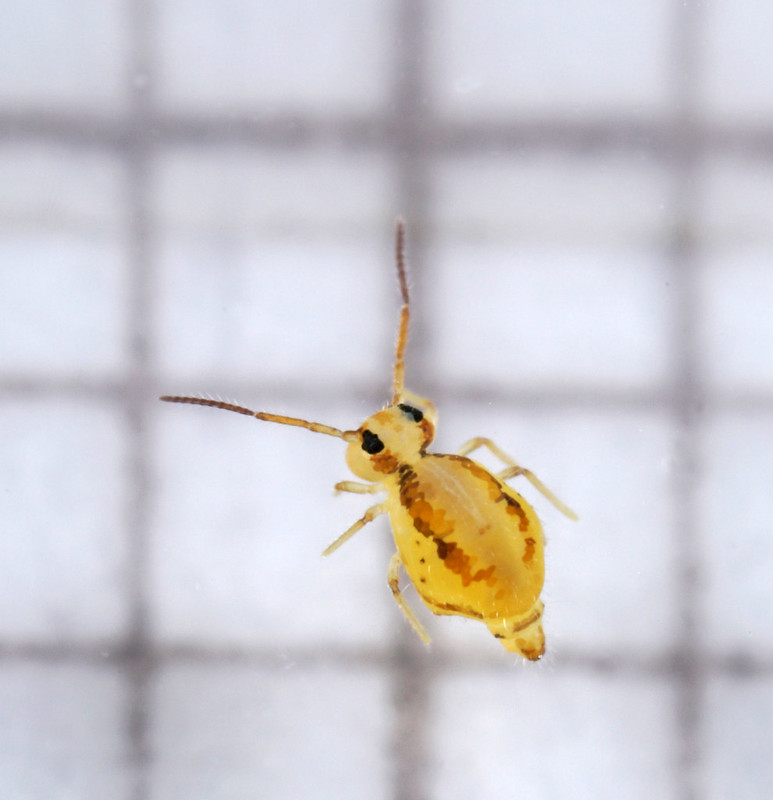
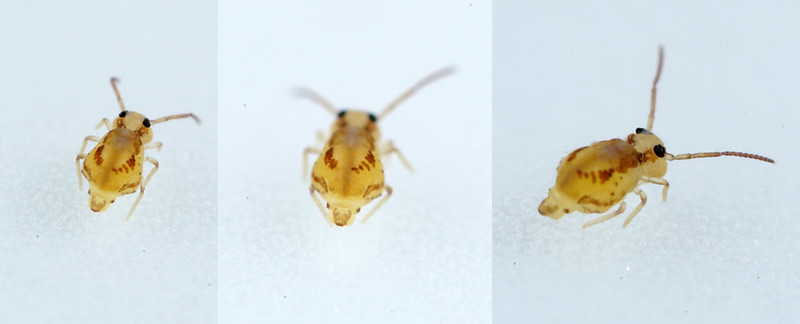
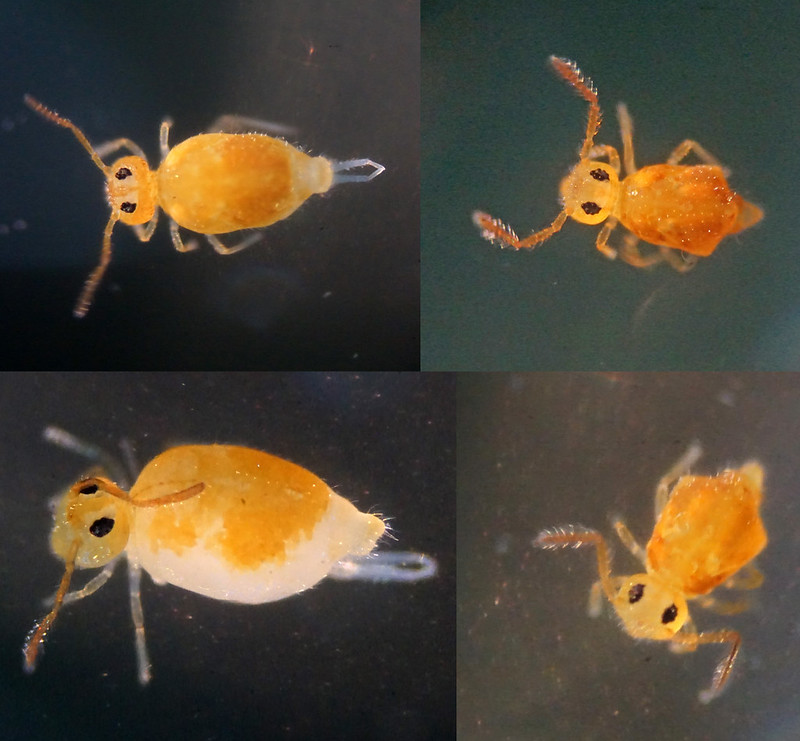
The other notable thing about this species is that it occurs in two colour forms, purple and a yellow form called Deuterosminthurus pallipes form repandus. This form is easy to confuse with Sminthurinus aureus (which has somewhat shorter antennae, different arrangement of ocelli). Males and females occur in both colour forms, frequently in mixed populations, and freely interbreed:

Deuterosminthurus pallipes


Deuterosminthurus pallipes form repandus

Frans Janssens says that the angular body shape seen in the specimen above represents an immature individual where the gonads are not fully mature.

All setae on the outer side of the tibiotarsus of the third leg (leg3) are about the same length:

Deuterosminthurus pallipes


In females, the setae surrounding the anus are all of similar thickness:

Deuterosminthurus pallipes

Wednesday, 9 May 2018

Dicyrtomidae Identification Guide

Members of the Dicyrtomidae are characterised by having a very short fourth antennal segment. Key identification features for each species are described below.

Family Dicyrtomidae
Genus Dicyrtoma
Dicyrtoma fusca

Genus Dicyrtomina: In Europe three distinct species are currently recognized: D. minuta, D. ornata and D. saundersi. In the USA, these are lumped into one species, D. minuta with the variants as subspecies forms:
Dicyrtomina minuta
Dicyrtomina ornata
Dicyrtomina saundersi
Dicyrtomina violacea
Dicyrtomina signata (recently identified in the UK): can be distinguished from D. saundersi and D. ornata by the combination of having very little pigment/fine barring on the "posterior patch", except for occasionally a dark spot just above the small abdomen (abd 6), plus the lack of a colour change between antennal segments 2 & 3.

Genus Jordanathrix
Jordanathrix nr superba


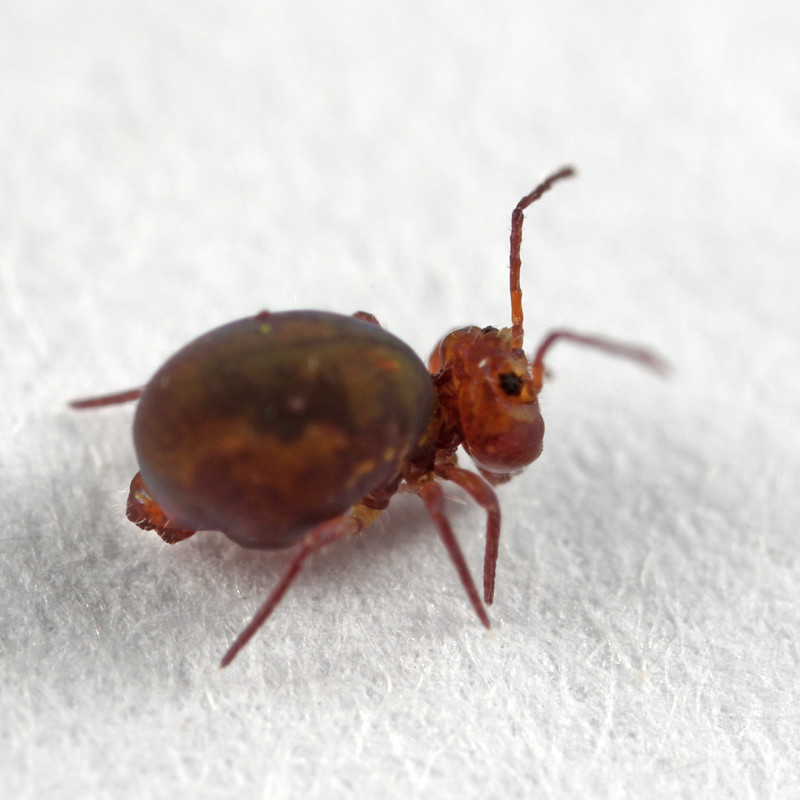
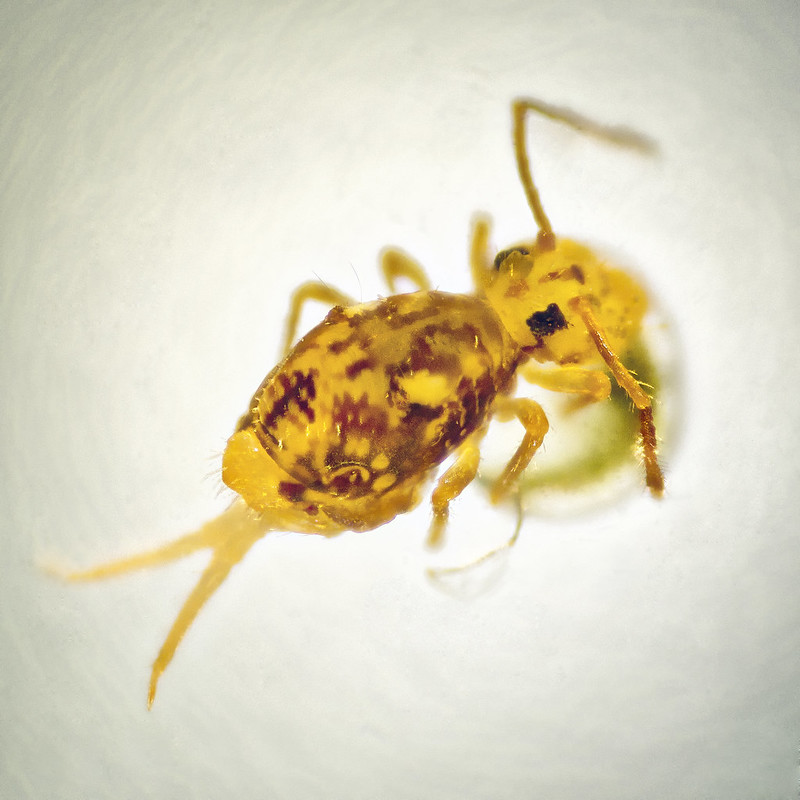
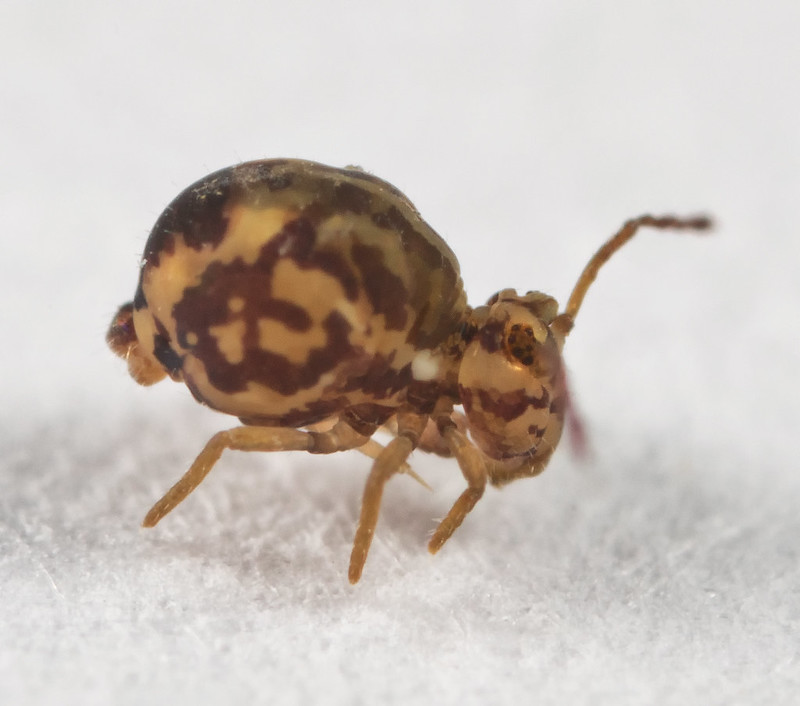
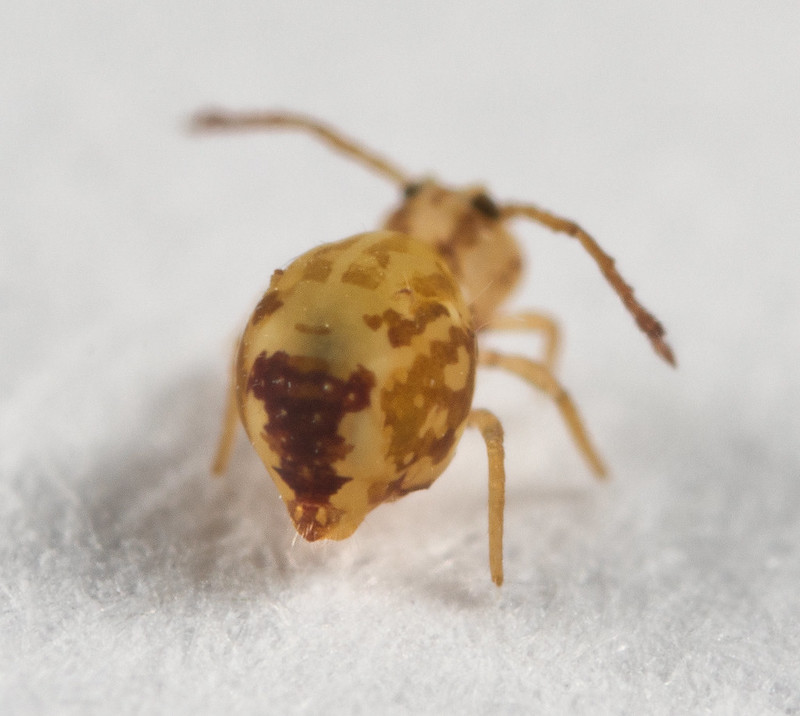
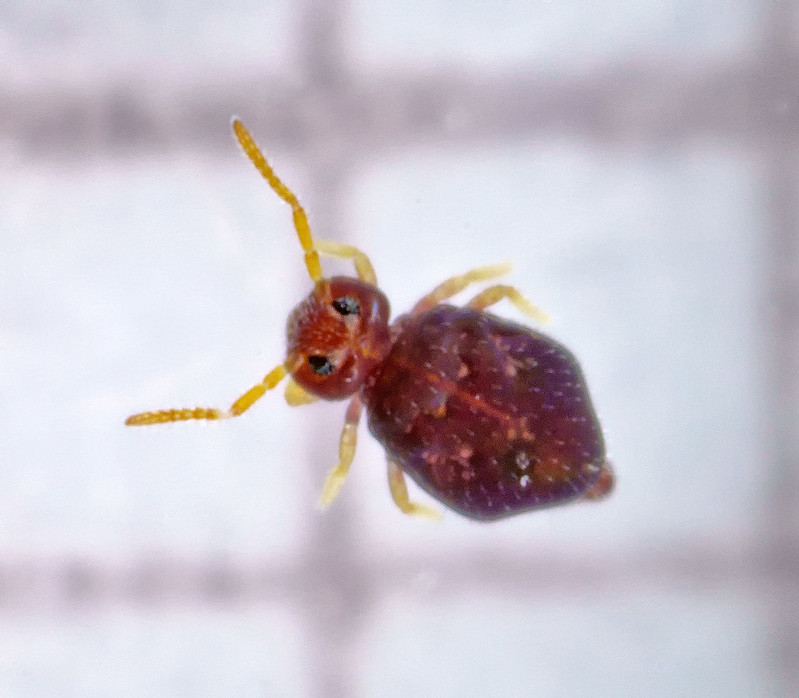
Dicyrtoma fusca is a small globular springtail (1-2mm) which varies considerably in colour from a dark maroon red to a paler yellow form, the mottled patterning also varies. The head and the body are always the same colour:
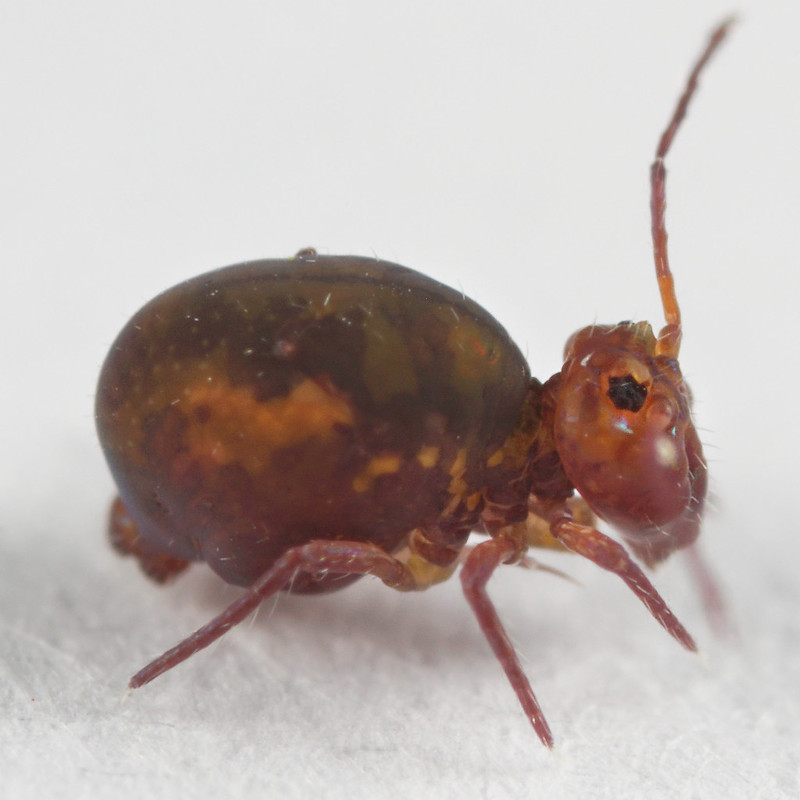
Dicyrtoma fusca

Dicyrtoma fusca

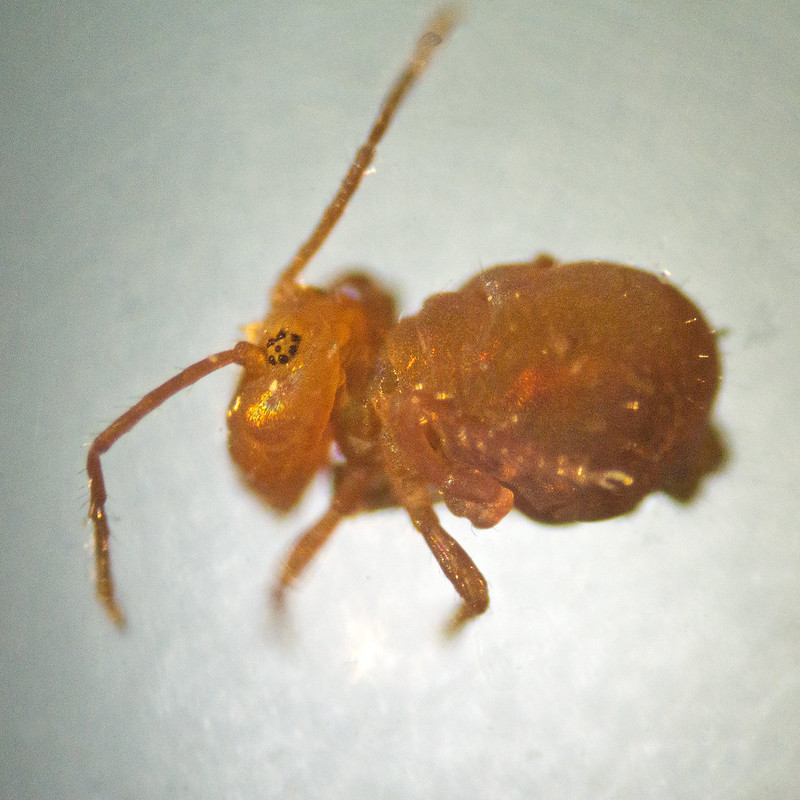
The above (commonest) forms are known as Dicyrtoma fusca var.1. There is also a much rarer melanistic dark (almost black) form, Dicyrtoma fusca var.2 (not known from VC55), and a leucistic form with dark ocelli on a pale eyepatch, Dicyrtoma fusca var. rufescens:
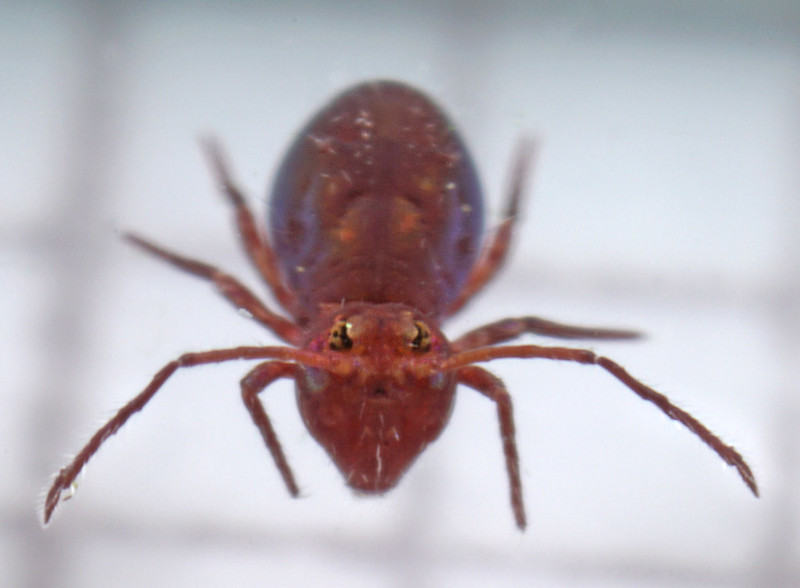
Dicyrtoma fusca var. rufescens

Dicyrtoma fusca var. rufescens


Dicyrtomina minuta
A common species found throughout Britain. The name is of this species is confusing - some D. minuta specimens grow bigger than D. ornata. Typically pale gold and less pigmented than D. ornata (dorso-anterior pigmentation lacking in particular). Similar to D. ornata, there is a long, narrow pigment streak on the rear of the abdomen.
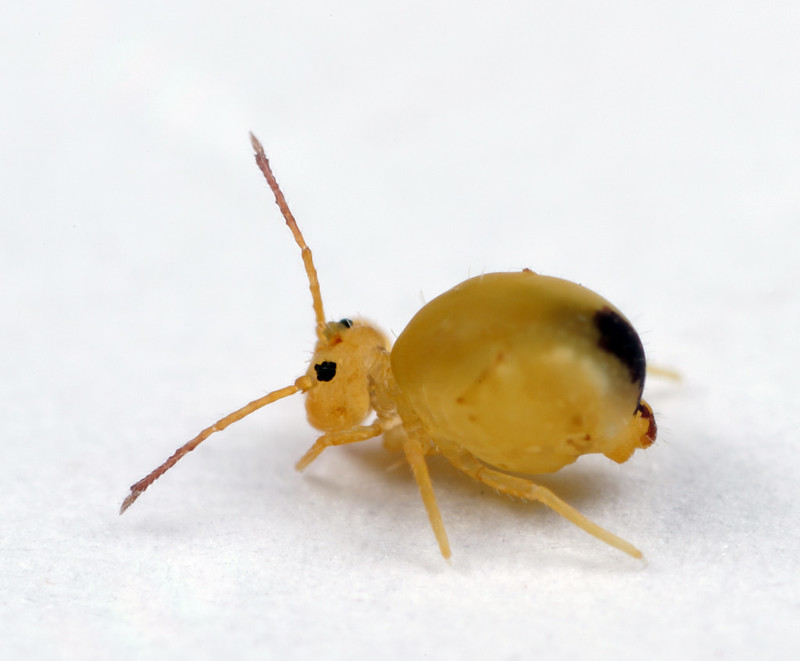
Dicyrtomina minuta

Frans Jannsens says that a diagnostic character to distinguish D. minuta from pale D. ornata is the colouration of the interocular+interantennal area:
D. ornata: a distinct midfacial pigmented band.
D. minuta: this band indistinct to absent (often only 2 pigmented dots remaining, 1 interocular + 1 interantennal):
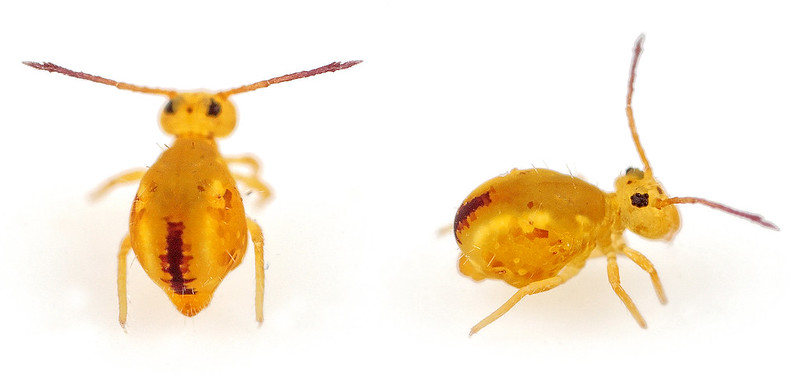
Dodgy Dicyrtomina


Dicyrtomina ornata
The historical records for a number of groups of springtail are hopelessly confused. These include Entomobrya intermedia/nivalis and also Dicyrtomina ornata/saundersi. This species has been frequently identified by the large rectangular patch of dark pigment on the abdomen, but this species is very variable in pattern and colour. Pale juvenile specimens (<1.5mm) are difficult to separate from D. minuta (see above). Key features:
  • Dorsal (in addition to lateral) abdominal pigmentation
  • No sharp colour change along the length of the antennae
  • Dorsal colour of the 6th abdominal segment (the dorsal anal valve) is dark (c.f. Dicyrtomina saundersi, below):
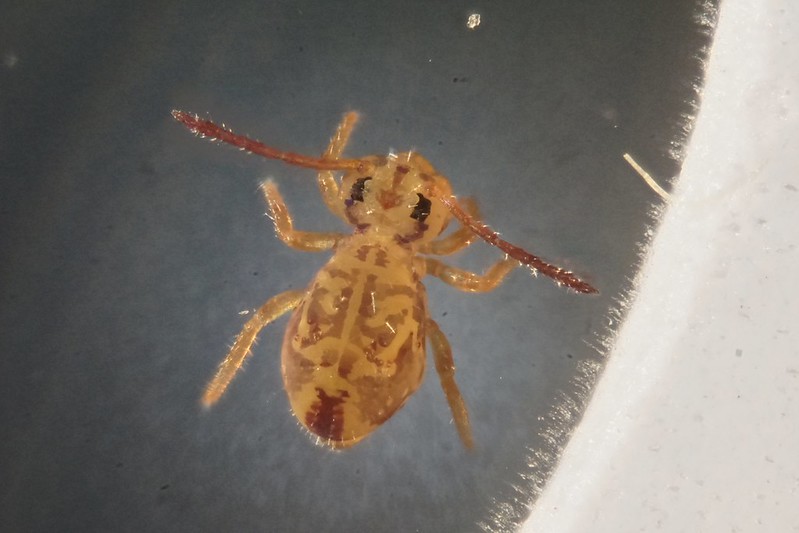
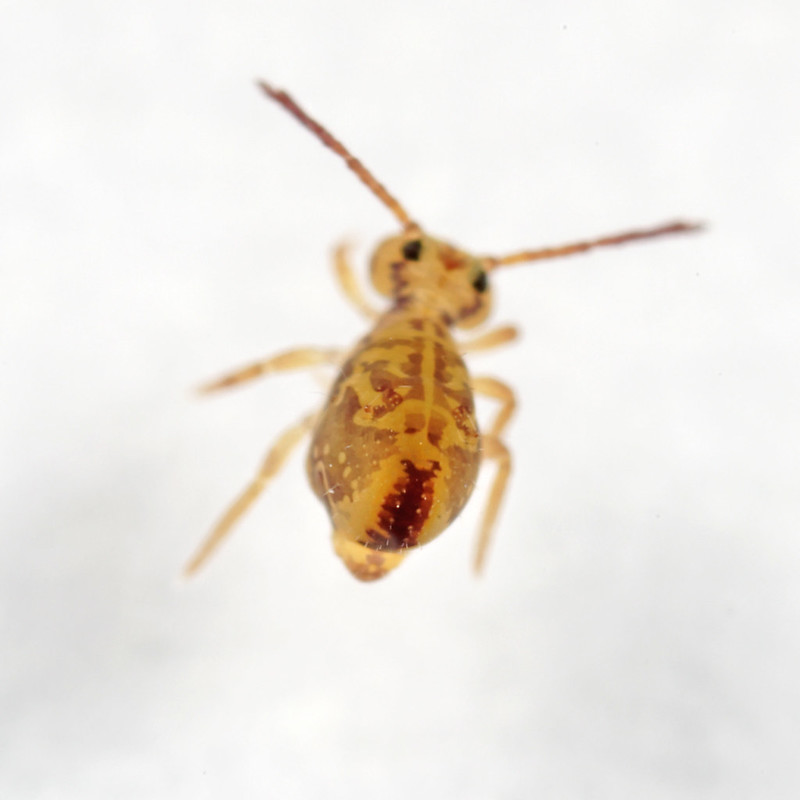
Dicyrtomina ornata

Dicyrtomina ornata


Dicyrtomina saundersi
Key features:
  • Distinct colour change at the joint of sections 2 and 3 of the antennae
  • Dorsal colour of the 6th abdominal segment (the dorsal anal valve) is light:
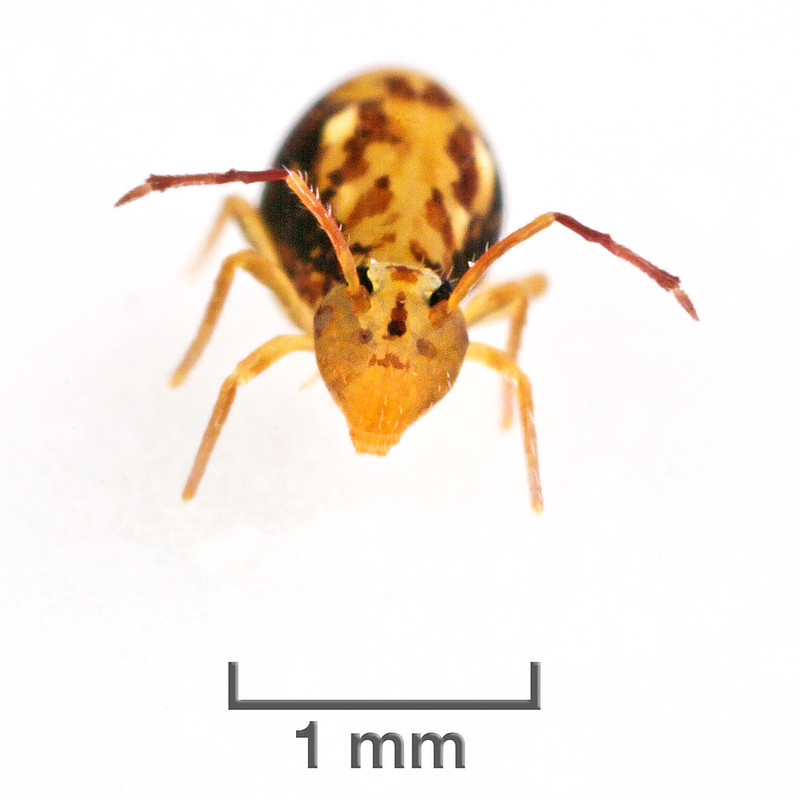
Dicyrtomina saundersi

Dicyrtomina saundersi


Dicyrtomina violacea
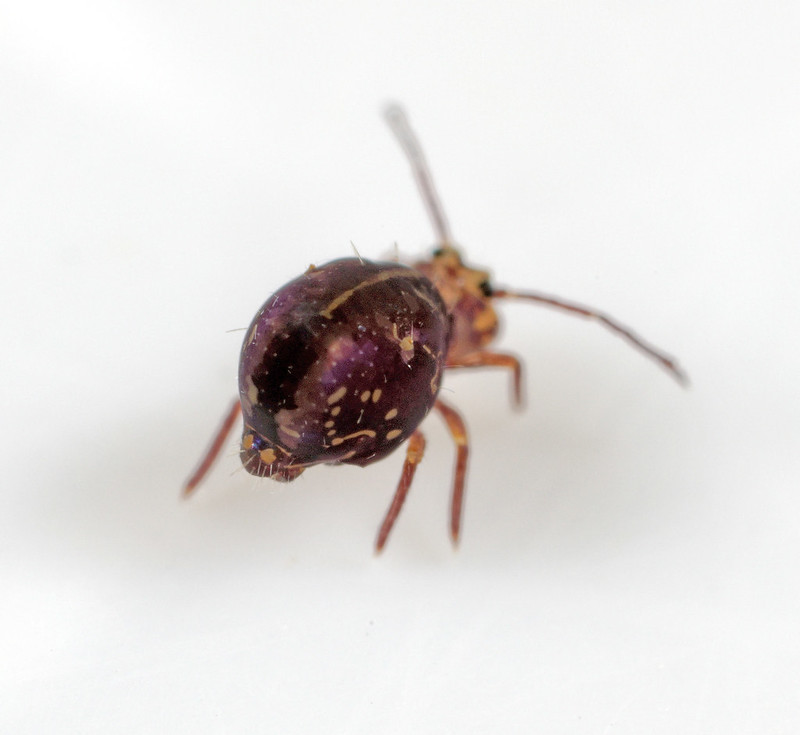
Resembles Dicyrtomina ornata with a solid patch of dark pigment at the posterior end of the abdomen, but unlike D. ornata the abdomen has an entirely purple ground colour with lighter orange reticulations. In D. violacea the head is lighter than the body, whereas in Dicyrtoma fusca the color of the head is similar to the body. Seemingly rare in the UK with very few records.
Dicyrtomina violacea

Dicyrtomina violacea


Jordanathrix nr. superba
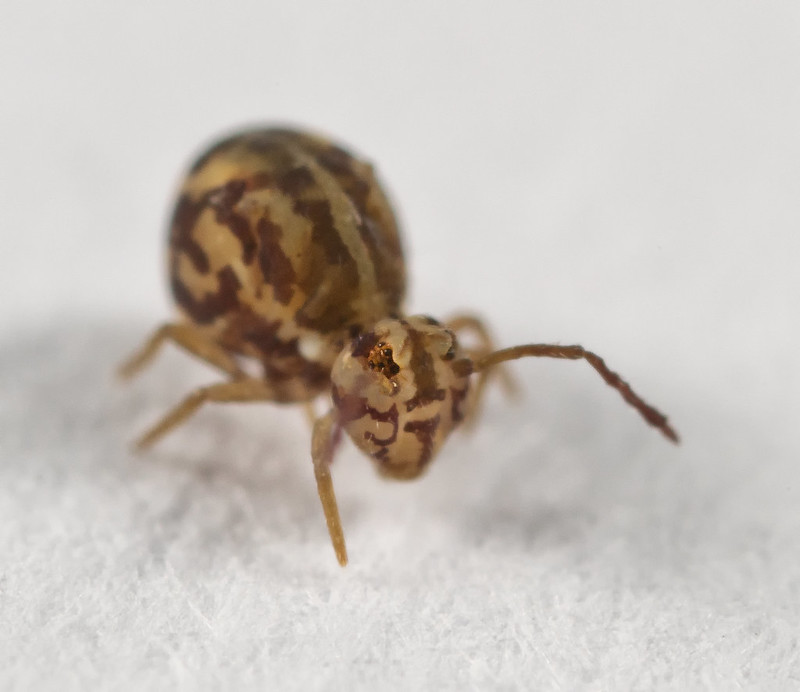
This species resembles but is distinct from Dicyrtomina superba from New Zealand. Thought to be a relatively recent introduction to the UK, first recorded about 10 years ago. This species has a patch of dark pigment on the abdomen and is similar in appearance to D. ornata but the colour of the eyepatch is much paler (with dark ocelli) than the all-dark eyepatch of D. ornata:
Jordanathrix nr. superba

Jordanathrix nr. superba

Jordanathrix nr. superba - male

Tuesday, 1 May 2018

Orchesella Identification Guide

The genus Orchesella is characterized by:
  • Body scales absent.
  • 6 antennal segments with ant1+2 both subdivided. However: one or both antennae may be reduced in length due to damage, and the first instars have only 4 antennal segments hence fail to key out.
  • Head with 7 + 7 or more eyes, postantennal organ absent.

There are five species on the UK checklist but only two are commonly encountered:

Orchesella cincta "Belted Springtail"
One of the commonest springtails in Britain, reaching ~4mm. Key feature: dorsal surface of abd3 fully pigmented (this can be important in preserved specimens).

Orchesella cincta

Juvenile (<6 antennal segments):
Orchesella cincta juvenile


Orchesella villosa "Shaggy Springtail"
Common and widespread, one of the largest springtails reaching ~5mm length. Pigmentation patterns on the body in patches and are variable but ant2-ant4 mostly dark(c.f. O. cincta). Long, backward curved macrosetae on abdomen (although these can be lost):
Orchesella villosa

Bald specimen:
Orchesella villosa

Orange/yellow "knees":
Orchesella villosa
 
 
Orchesella flavescens (rare) looks similar to O. cincta but the broad transverse bar is on abd3 rather than abd4 as in O. cincta. In addition, O. flavescens has two lateral longitudinal stripes (c.f. O. quinquefasciata - 5 longitudinal stripes). 


Thursday, 26 April 2018

Entomobrya Identification Guide

The genus Entomobrya are arboreal species with four antennal segments and elongated abd4. Entomobrya species are identified from dorsal pigmentation patterns. Unlike other groups, e.g. Tomoceridae, Entomobrya species are unscaled, so pigmentation patterns are more reliable.


Entomobrya albocincta has a broad pale band on the thorax:
Entomobrya albocincta


Entomobrya intermedia has a characteristic broken “U” (the corners are missing) on abd.5/6 and a “W” across the top of abd.4.
Entomobrya intermedia


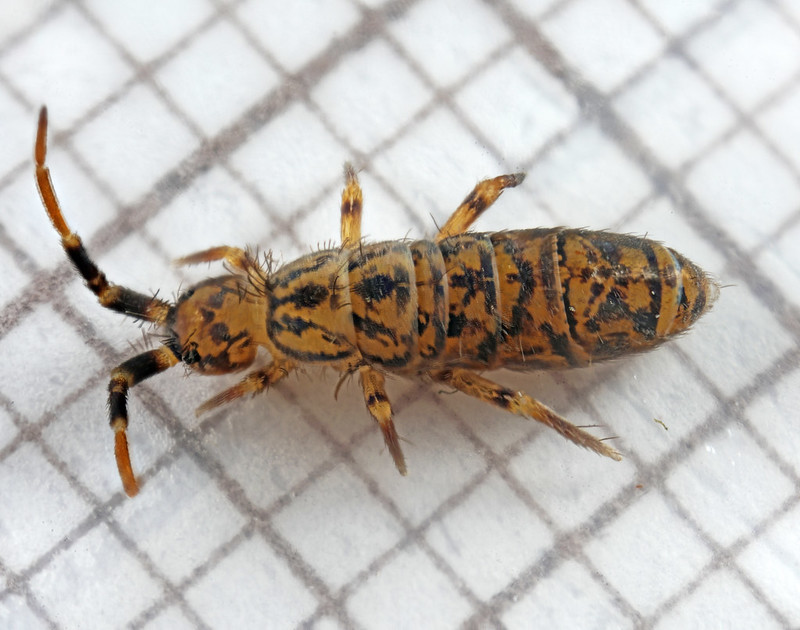
Entomobrya multifasciata:
Entomobrya multifasciata


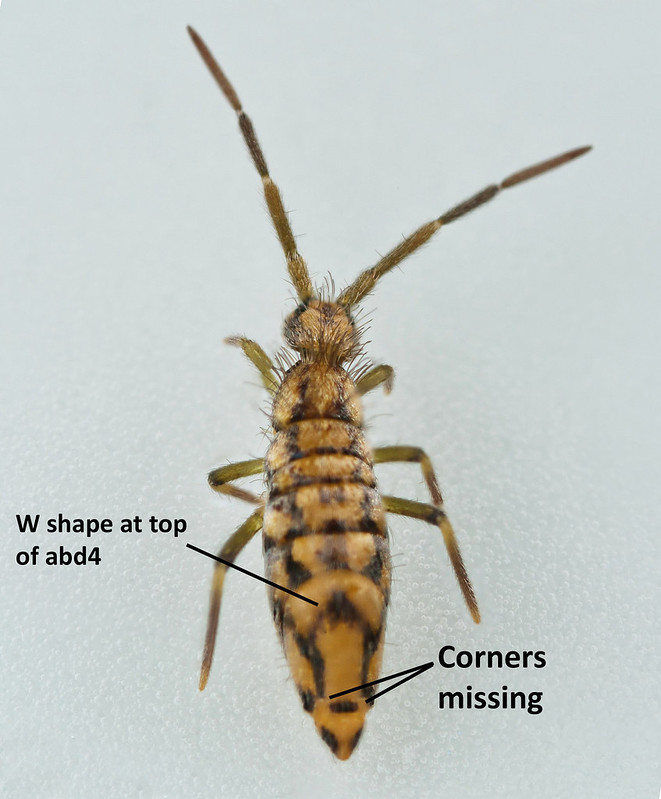
Entomobrya nicoleti has only two dark spots on the sides of abd4:
Entomobrya nicoleti


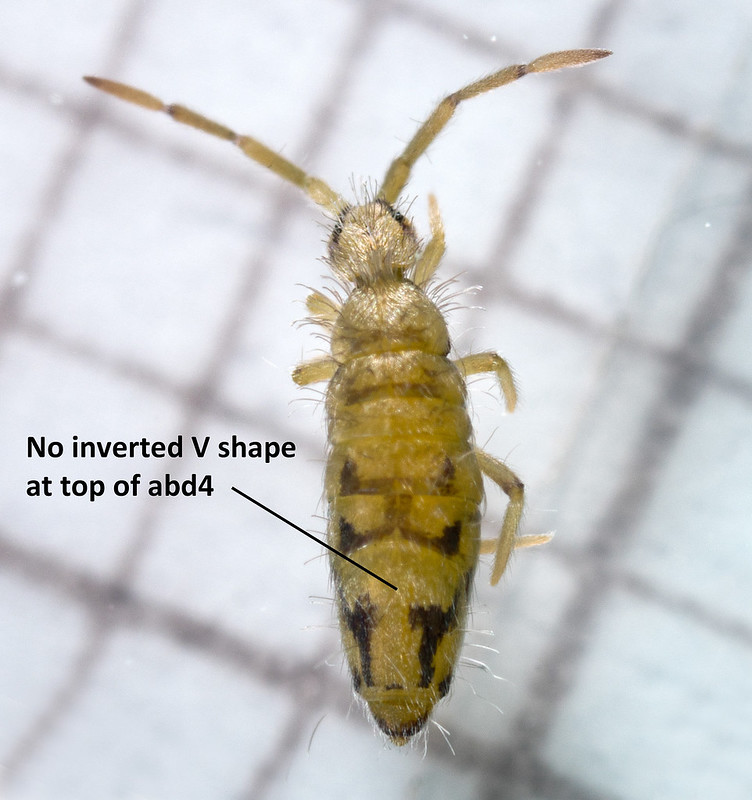
Entomobrya nivalis has no inverted V shape (the central part of the W pattern in E. intermedia) at the top of abd4:
Entomobrya nivalis


Other Identification Guides: https://collembolla.blogspot.co.uk/p/identification-guides.html