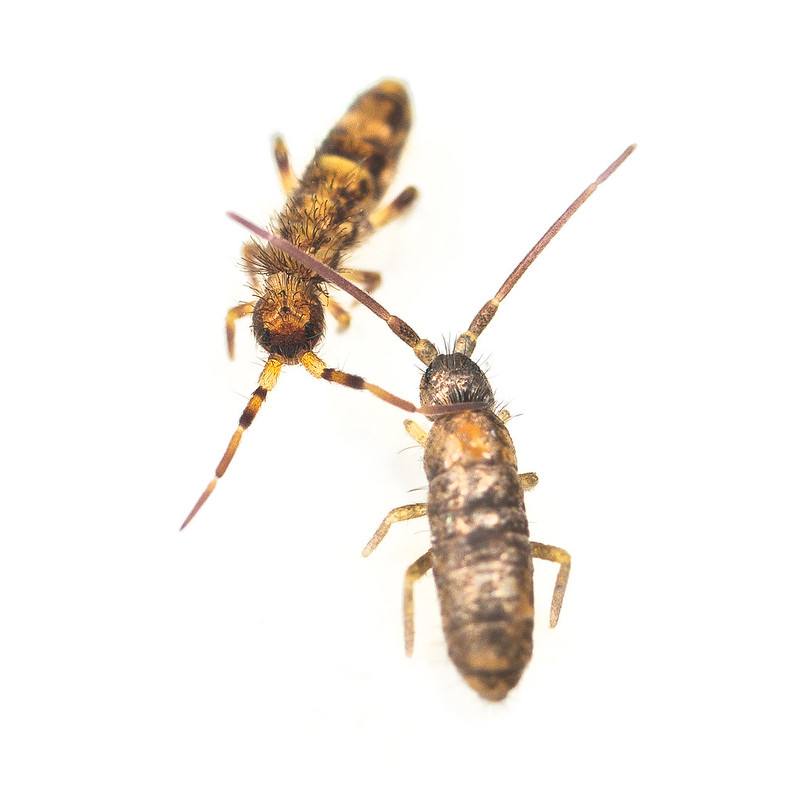
Fossil amber reveals springtails longstanding dispersal by social insects. (2019) BMC Evol Biol 19, 213 https://doi.org/10.1186/s12862-019-1529-6
Springtails (Collembola) are reported since the Lower Devonian and are thought to have originally been subterranean. The order Symphypleona is known since the early Cretaceous with genera distributed on every continent. This implies an ability to disperse over oceans, however symphypleonan Collembola have never been reported in marine water contrary to other springtail orders. Despite being highly widespread, modern springtails are rarely reported in any kind of biotic association. Interestingly, the fossil record has provided occasional occurrences of Symphypleona attached by the antennae onto the bodies of larger arthropods. Here we document the case of a ~ 16 Ma old fossil association: a winged termite and ant displaying not some, but 25 springtails attached or in close proximity to the body. By comparing the general constraints applying to the other wingless soil-dwelling arthropods known to disperse through phoresy, we suggest biases in the collection and observation of phoretic Symphypleona related to their reflexive detachment and infer that this behaviour continues today. The specific case of tree resin entrapment represents the (so far) only condition uncovering the phoretic dispersal mechanism of springtails - one of the oldest terrestrial arthropod lineages living today.