Showing posts with label Vertagopus. Show all posts

Saturday, 12 January 2019

Family Isotomidae

Isotomid characteristics:
  • unscaled
  • elongated body and body segments of approximately equal length (c.f. Entomobryidae, abd4 more than twice as long as abd3)
  • antennae with 4 segments of similar length
  • 8+8 ocelli
  • furca & PAO present
  • no anal spines
The presence and positioning of macrosetae (long hairs) and bothriotricha (mechanoreceptive hairs) are important in separating these genera. However, these are easily lost and may be missing. In this case you have to check whether or not empty sockets of macrosetae are present on the skin surface (difficult). Bothriotricha are often difficult to see even if present, but the pits in which they sit may be visible.

Ocelli:


Desoria - covered in short setae (hairs); ocelli B-D-E in straight line; mucro has four teeth but does not possess a lateral seta, apical tooth is large (c.f. Isotomurus); no teeth on manubrium (c.f. Isotoma); Hopkin key #224

Isotoma - long macrosetae on all body segments; ocelli C-D-E in straight line; mucro has three teeth; bothriotricha absent; Hopkin key #220

Isotomurus - long macrosetae on abd4-6 only; ocelli B-D-E in straight line; mucro has four teeth, apical tooth smaller than the others (c.f. Desoria); bothriotricha present; Hopkin key #209 (pigmentation patterns).

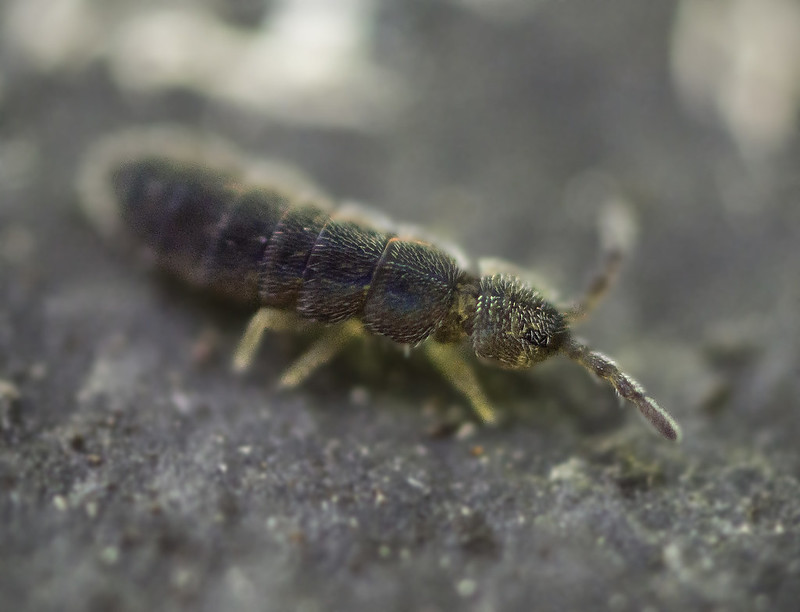
Vertagopus - no long macrosetae but a fuzzy cover of short setae; mucro has four teeth; tibiotarsi (adjacent to claws) have clavate tenant (knobbed) setae; only two British species; Hopkin key #215

Wednesday, 19 December 2018

Vertagopus Identification Guide

This is a very common genus of arboreal springtails with only two British species. They have no macrosetae but a fuzzy cover of short setae; clavate (forked) setae by the feet (for climbing trees).


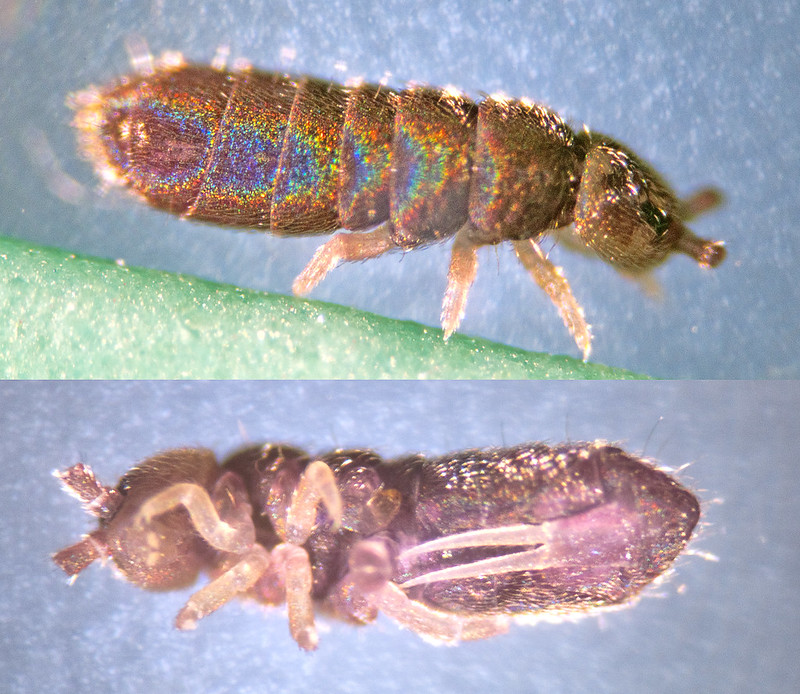
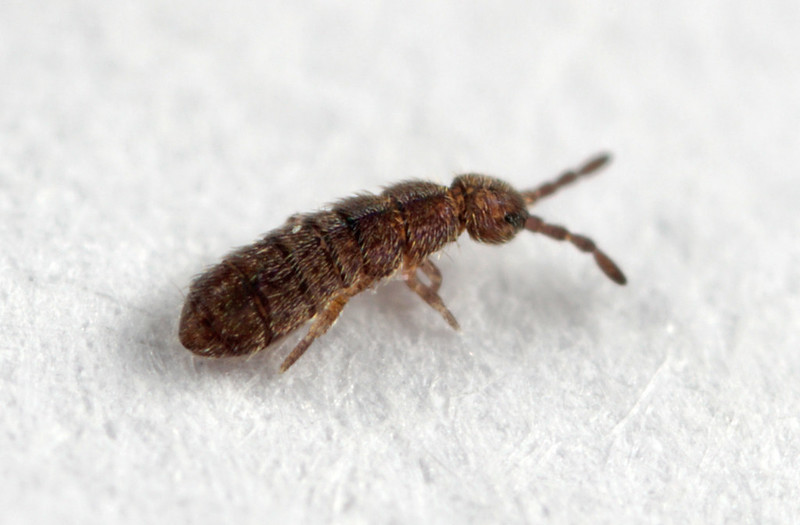
Vertagopus arboreus:
- blus iridescence (in natural light, can be hard to see in artificial light)
- pale legs
- relatively short furca
- juveniles are violet in colour:

Vertagopus arboreus

Vertagopus arboreus

Specimen with damaged antennae:
Vertagopus arboreus


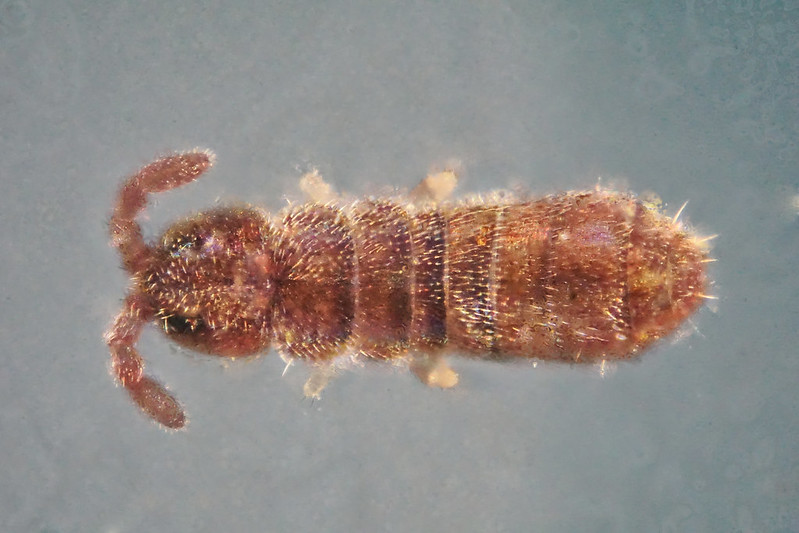
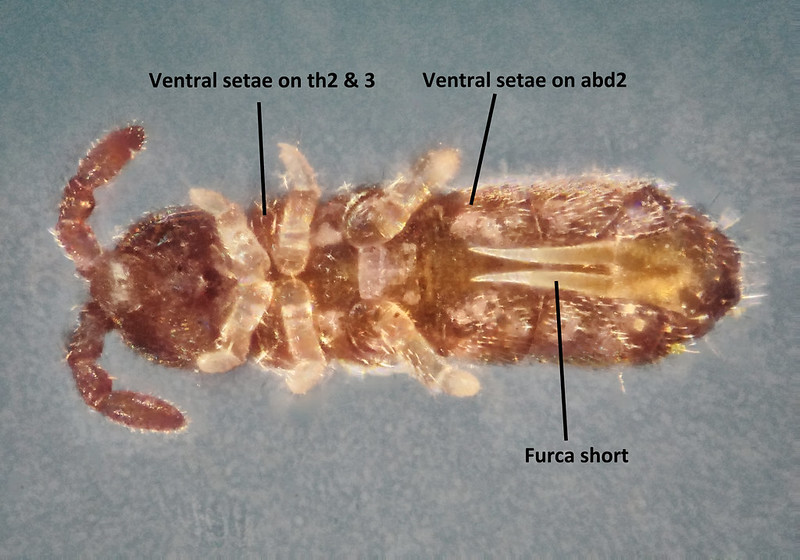
Vertagopus cinereus:
- legs darker than Vertagopus arboreus and lacks blue iridescence
- shorter furcula than V. arboreus.
- On the ventral side of the thorax, 3-10 + 3-10 setae on each of th2 and th3, and a group of 5-12 ventral setae on the second abdominal segment (abd2). V. arboreus does NOT possess ventral setae on th2, th3 or abd2:

Vertagopus cinereus

Vertagopus cinnereus - dorsal

Vertagopus cinnereus