Identified by a prominent Th1 segment, this group is common and widespread but most species are difficult to identify, hence they are mostly under recorded. Their small size means they are frequently overlooked:
Superfamily Hypogastruroidea
Family Hypogastruridae
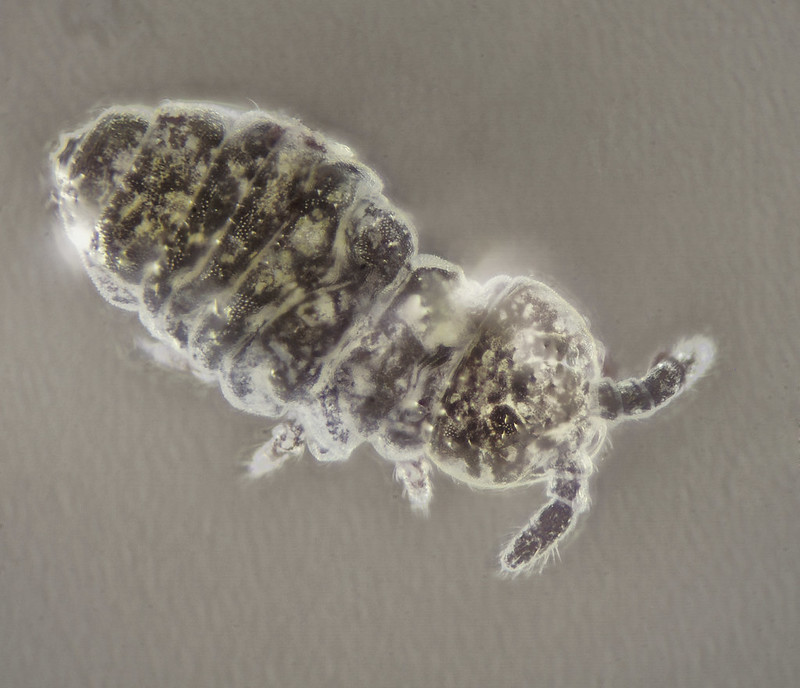
Species in this family are difficult to identify, relying on features such as the internal structure of the mouthparts and anal spines. For this reason most people do not bother with them and I have so far made no positive identifications:
11.03.18 ~1mm in Beech leaf litter, roundish mouthcone, 2 anal spines:
 Genus Hypogastrura
 - very short anal spines (c.f.
Ceratophysella spp.) plus four-lobed post-antennal organ.
More that 20 British "species" have been described in this genus, most of which are not valid as they are synonyms, misidentifications or based on a single historic specimen. In the 2007 AIDGAP key, Steve Hopkin recognized nine UK species, three relatively common and the others rare. Unless microscopic evidence confirming the species is available they should be recorded as Hypogastrura spp. Separating these species is a two step process, first examining the numbers of clavate tenant seta on each tibiotarsus, followed by examination of the mucro, claw and empodium to confirm the species (the AIDGAP key has excellent comparative drawings of these features). The three common species are:
H.manubrialis: 111, empodium tapers gradually and does not possess a lamella.
H. purpurescens: 232, mucro with bulge and empodium with lamella.
H. viatica: 233, mucro with large bulge and empodium with lamella.
Hypogastrura manubrialis
Hypogastrura manubrialis leg 3 - one clavate tenant seta
Hypogastrura manubrialis mucro
Superfamily Neanuroidea
Family Brachystomellidae
Genus
Neanura - no furca - springless springtails:
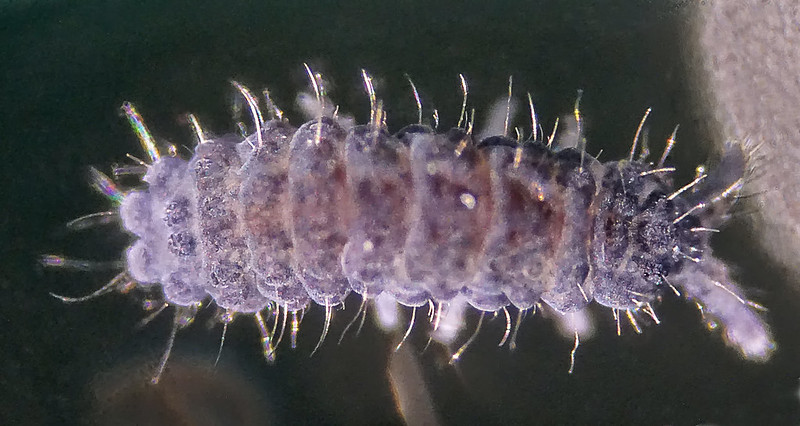
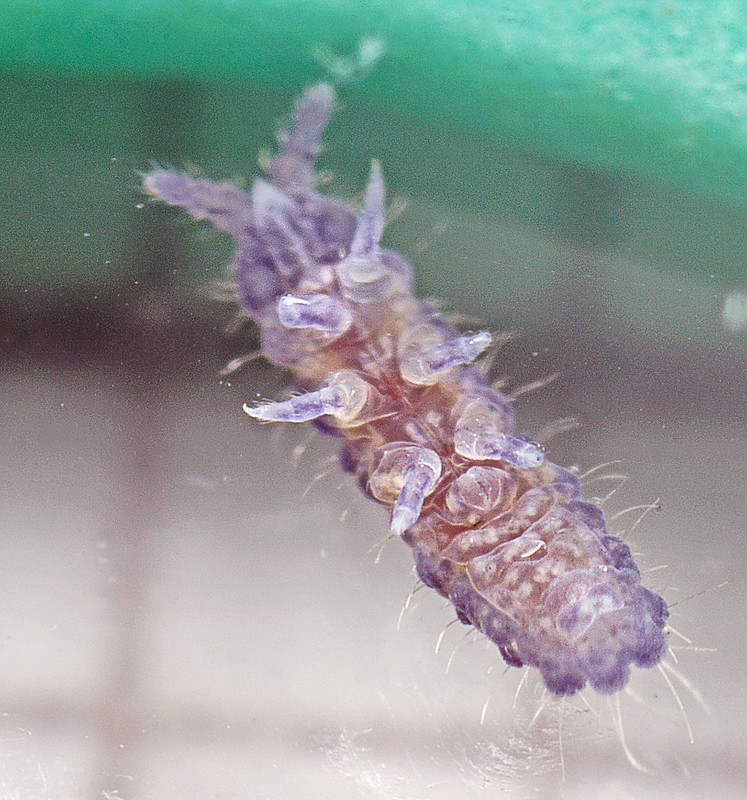
Neanura muscorum. A very common blueish-purple springtail, usually found under bark on decaying wood. The eyes are highly distinctive with 3+3 ocelli. Pointed mouthcone, it lacks a furca. Easy to identify - the only UK species in this genus.
Genus
Monobella
Monobella is a contraction of mono+lobella and refers to the single (transverse) lobe of the last body segment - c.f.
Bilobella (2 posterior lobes).
Monobella grassei. A distinctive orange springtail with long body setae:

 Family Poduridae
Genus
Podura -
Podura aquatica.
To follow.