Tuesday, 6 November 2018

27.10.18 - Leicester Botanical Garden

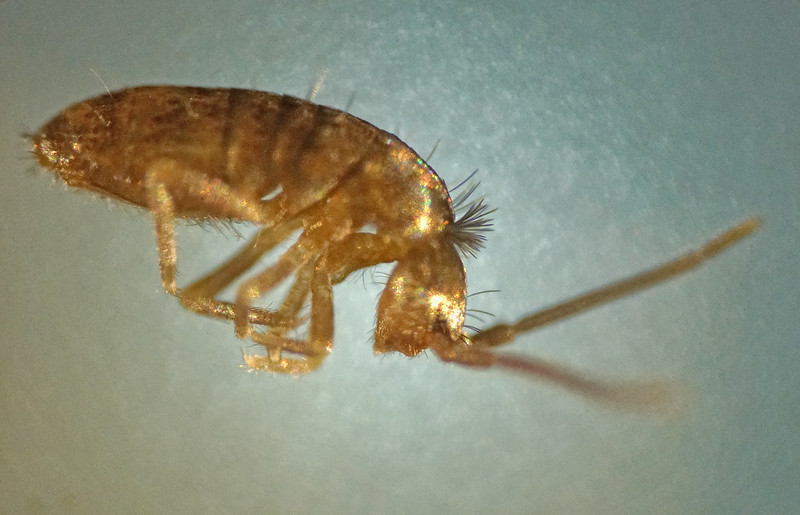
On a fairly inclement day I decided not to venture far afield but just pop down the road to the Leicester Botanical Garden. This site has surprisingly (to me) high biodiversity and not overlooking my local patch turned out to be a very good decision. I started by looking under fallen leaves, something which has been very productive in recent weeks. Surprisingly, all the leaves lying on grass turned out to be springtail-free, but when I started looking at leaves lying on a clay soil border I hit the jackpot. Dicyrtomina saundersi was abundant:
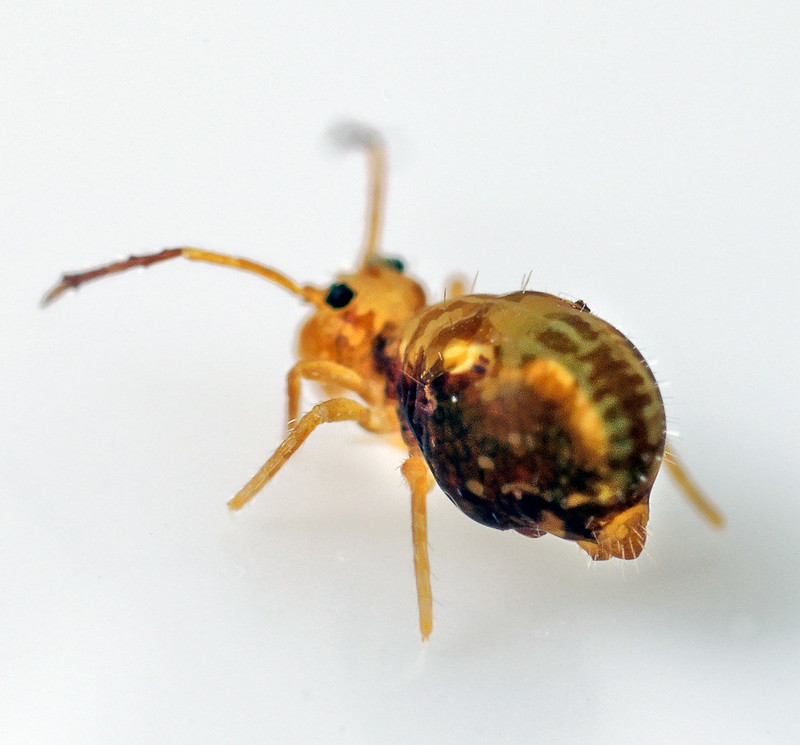
Dicyrtomina saundersi

but interestingly, I also found several Jordanathrix nr superba. This is significant as this is only the second locatiion I have found this species at, so now we have two dots on the map!
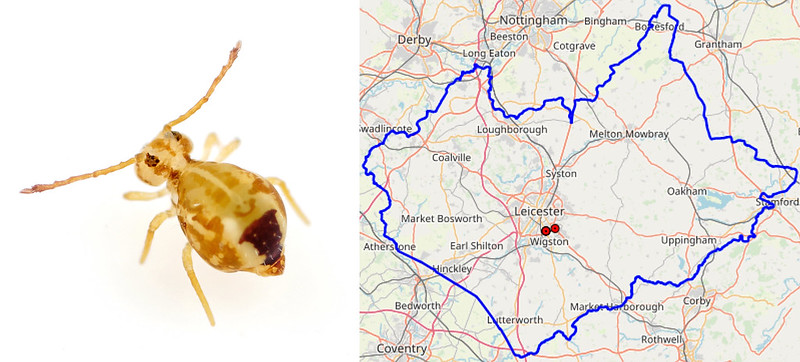
Jordanathrix nr superba


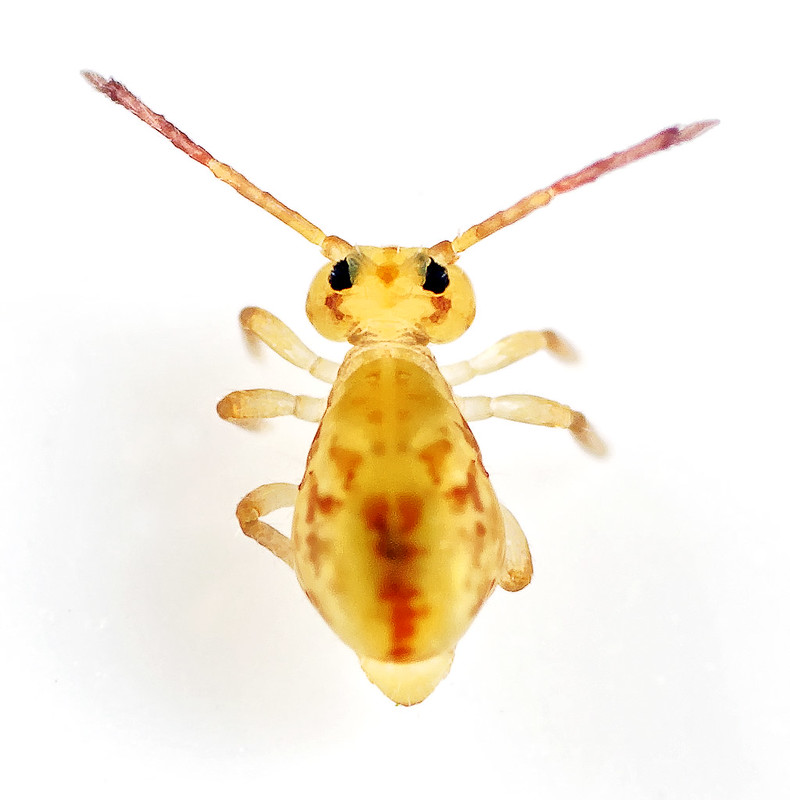
At that point it rained hard, so we retreated to the tropical greenhouse (where we found some interesting spiders, but that's a whole other story). Beating Ivy yielded abundant Entomobrya intermedia, but also something very interesting (new species alert!), which I plan to write about in future after the record has been confirmed.

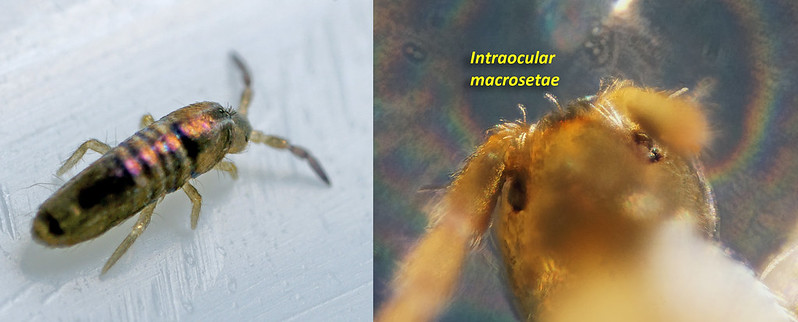
Thursday, 25 October 2018

21.10.18 - Tugby Wood

I was able to visit this private site on a trip organized by the Leicestershire Fungus Study Group (during which we recorded a very respectable list of nearly 50 species). While I was there, I had a few minutes to look for springtails, so I focussed on the underside of fallen leaves.This yielded three species, several Dicyrtomina saundersi:
Dicyrtomina saundersi


Lots of Lepidocyrtus cyaneus:
Lepidocyrtus cyaneus


Plenty of Tomocerus minor:
Tomocerus minor

Thursday, 18 October 2018

07.10.18 - Narborough Bog

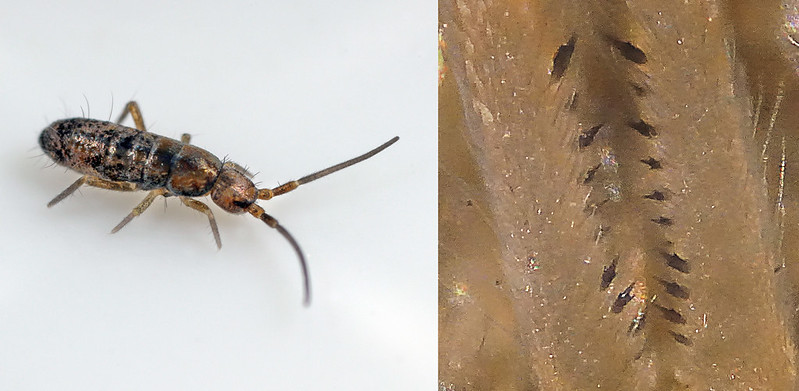
After the first (mild) frost of the season I had a local trip to Narborough Bog. Because of the frost I only sampled under the trees by the river, a sheltered spot. This is one of the wettest places in Leicestershire, frequently under water for a month or more in winter when the adjacent River Soar overflows, but on this occasion, in spite of a day of light rain previously, soil under logs and sheltered from direct rainfall was still dry and powdery. Springtails were limited because of the conditions, but there were lots of Orchesella cincta present, and quite a few Tomocerus minor. Looking at these, several seemed to have a banded appearance. I still find it impossible to differentiate between T. vulgaris and T. minor by eye, so I checked them all and they all had tridentate spines on the dens, confirming that they are indeed Tomocerus minor:

Tomocerus minor


Wednesday, 10 October 2018

29.09.18 - Warren Hills

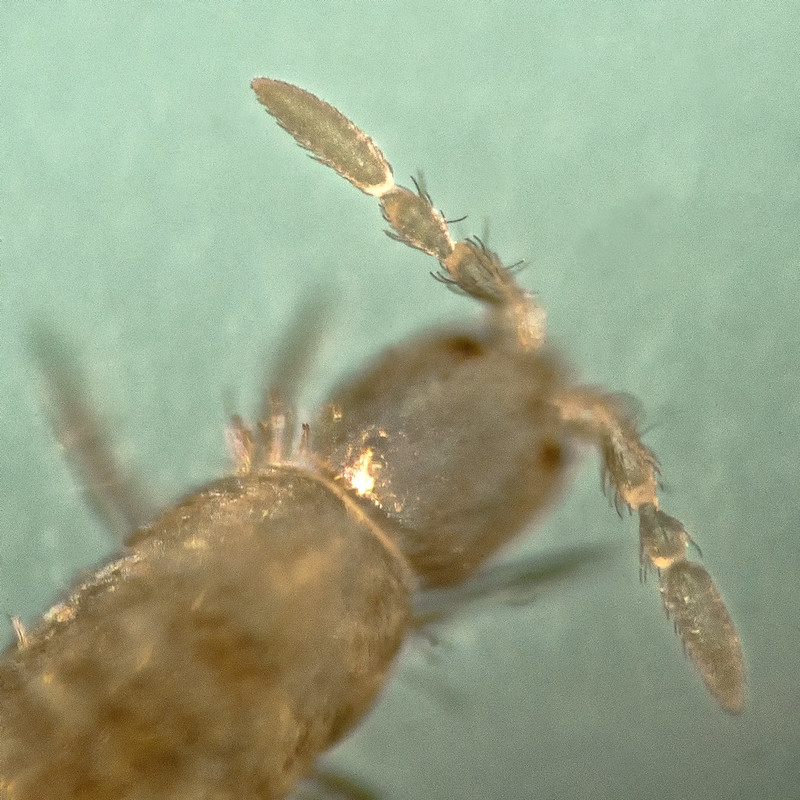
Dicyrtomina saundersi


A quick trip to Warren Hills, my first visit since the reserve was closed due to a firs earlier in the summer. Thankfully, the regeneration is proceeding well, although it has undoubtedly been held back by the low rainfall. I only sampled from the heather which was pretty dry but turned up plentiful Entomobrya nicoleti and E. nivalis, together with a couple of Dicyrtomina saundersi. The photo shows the characteristic change at the joint of sections 2 and 3 of the antennae in this species.


Saturday, 6 October 2018

Pseudosinella alba

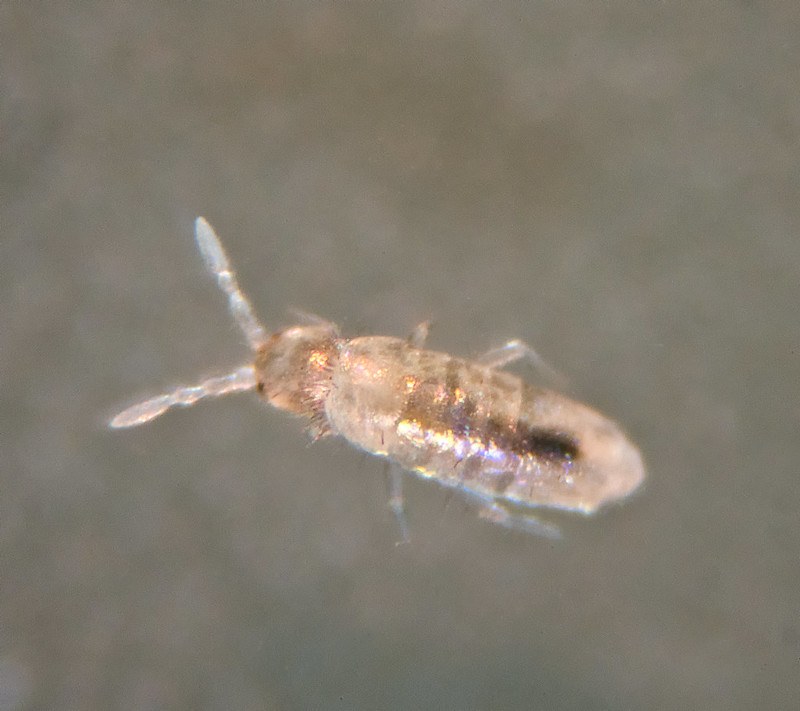
Pseudosinella alba is widespread and very common in leaf litter, soil and organic matter throughout the UK. Each eye is comprised of two ocelli which are close together in a single spot of pigment on either side of the head - difficult to resolve unless the pigment has been cleared. The claw has prominent teeth and the body is covered in scales, also present on the dens. The mucro has two teeth. Of the six UK species of Pseudosinella, the other common non-coastal UK species Pseudosinella immaculata is blind. Pseudosinella alba can be distinguished from the similar species Heteromurus nitidis because in Heteromurus, abd4 is less than 2 times the length of abd3 whereas in P. alba abd4 is much longer than abd3.

Pseudosinella alba

Pseudosinella alba

Sunday, 30 September 2018

22.09.18 - A Walk In The Woods

Entomobryomorpha


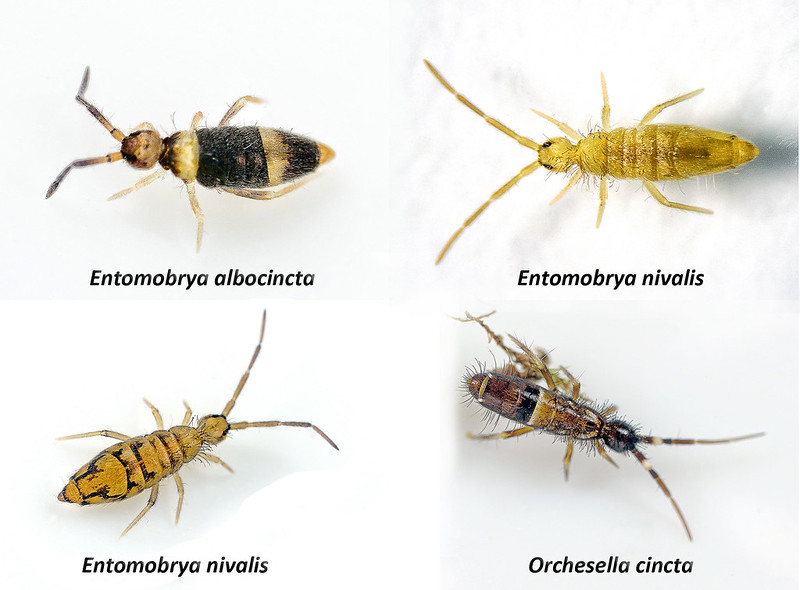
I made a return visit to an under recorded site I last visited in April. After the rain, springtails were more abundant than previously, and I found many specimens of each of the above species, with the exception of Entomobrya albocincta (one specimen), which never seems to be very abundant. I wasn't able to find any globular species however, which was a slight surprise.

Wednesday, 26 September 2018

Heteromurus nitidus

A distinctive pale springtail, common in areas rich in organic matter.

Abd4 less than twice as long as abd3, body covered in roundish scales:

Heteromurus nitidus

Heteromurus nitidus

Antennae divided into 5 sections (ant1a/b division difficult to see), ant5 annulated; empodium 80% as long as the claw:

Heteromurus nitidus

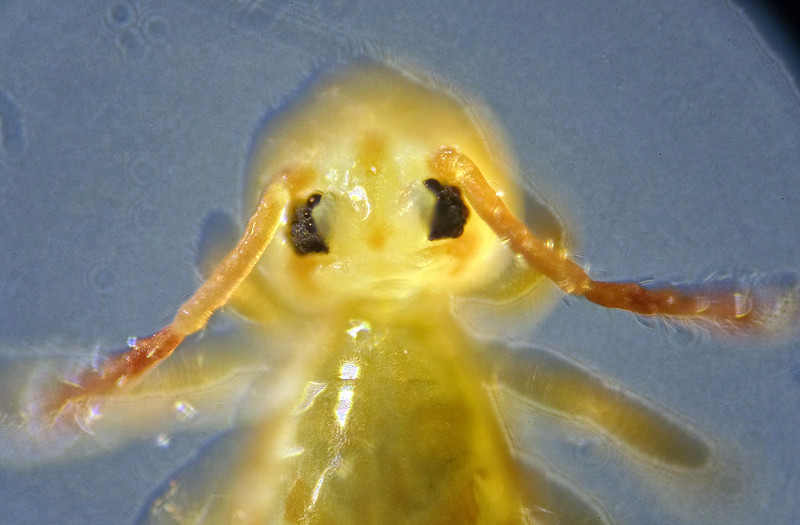
Single reddish-brown ocellus:

Heteromurus nitidus


Monday, 24 September 2018

Towards a VC55 Springtail Atlas

Cann, AJ (2018) Towards a VC55 Springtail Atlas. Leicestershire Entomological Society Newsletter, 60: 1-4.

Click for larger images:


Friday, 21 September 2018

Go to sleep, go to sleep, go to sleep little springtail

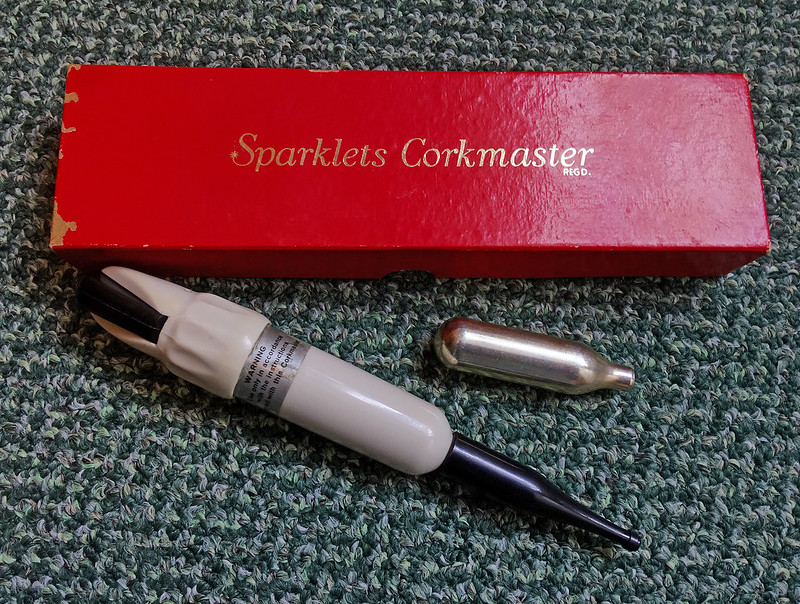
Someone recently gave me a tip - the Sparklets Corkmaster. These gizmos are no longer manufactured but they were intended to remove corks from wine bottles using CO2 from the standard 8g bulbs.

Sparklets Corkmaster

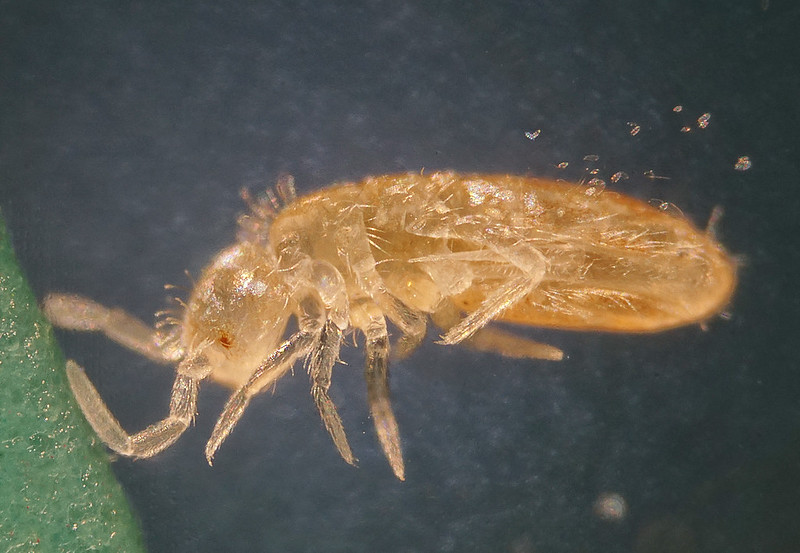
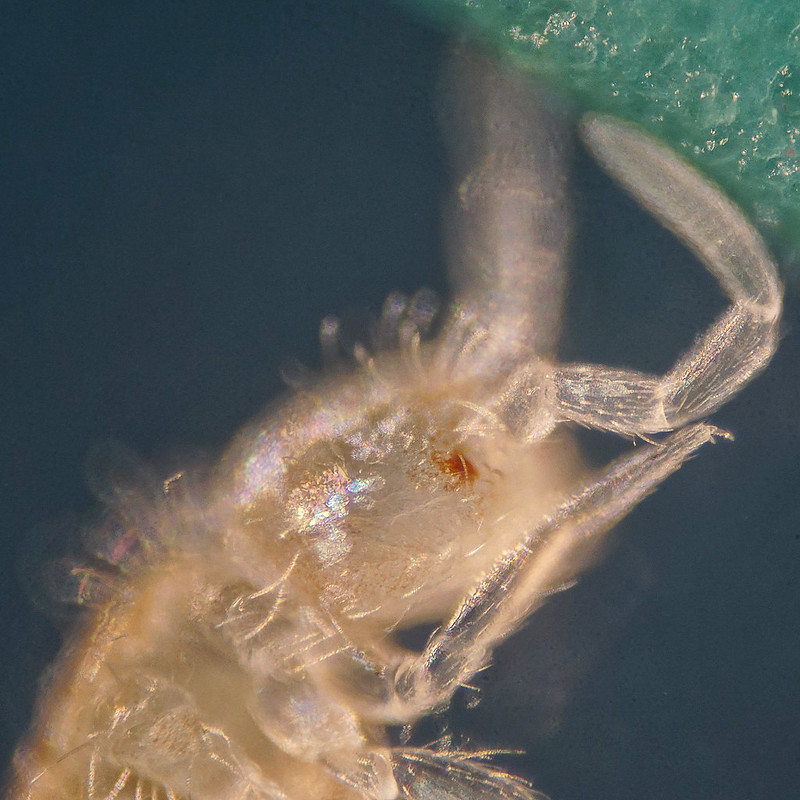
They can be picked up cheaply on sites such as eBay and are by far the most convenient devices I have ever found for insect anesthesia. Having said which, I could find nothing in the literature about using CO2 to immobilize springtails, and given that soil arthropods might be expected to be resistant to lower O2 levels, I was a bit doubtful, so I gave it a try. And it worked quite well - poot the springtail into a small pot, give them a squirt of CO2 from the Corkmaster, wait for them to have a snooze and then you have some time to take nice in vivo photos before they are fully awake and mobile again. Exactly how long seems to depend on the species. Tomocerus minor seemed to wake relatively quickly, but there was still time to take high magnification images:

Tomocerus minor