Wednesday, 25 July 2018

The Collophore

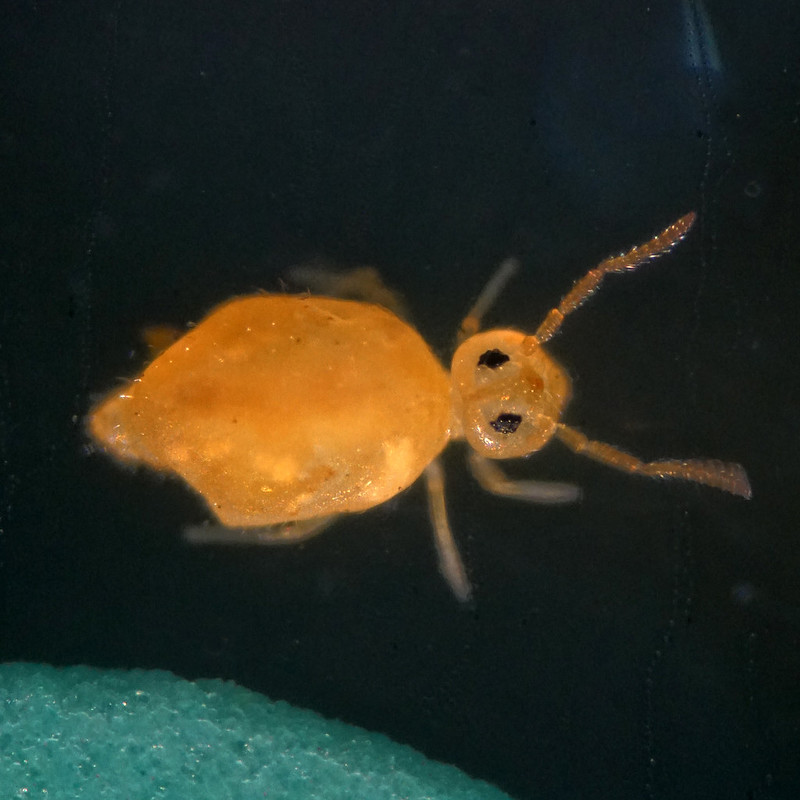
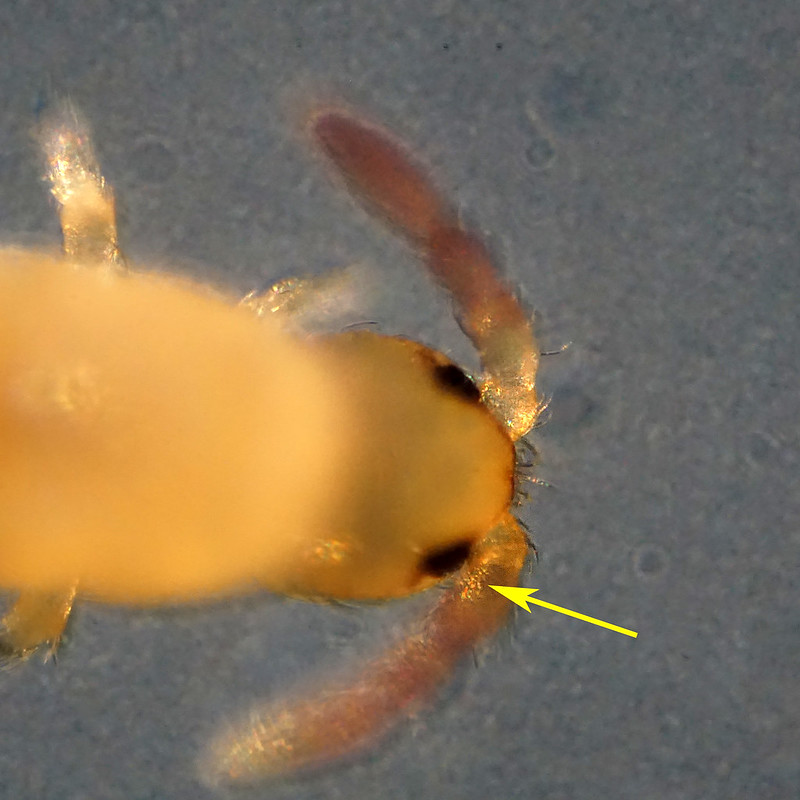
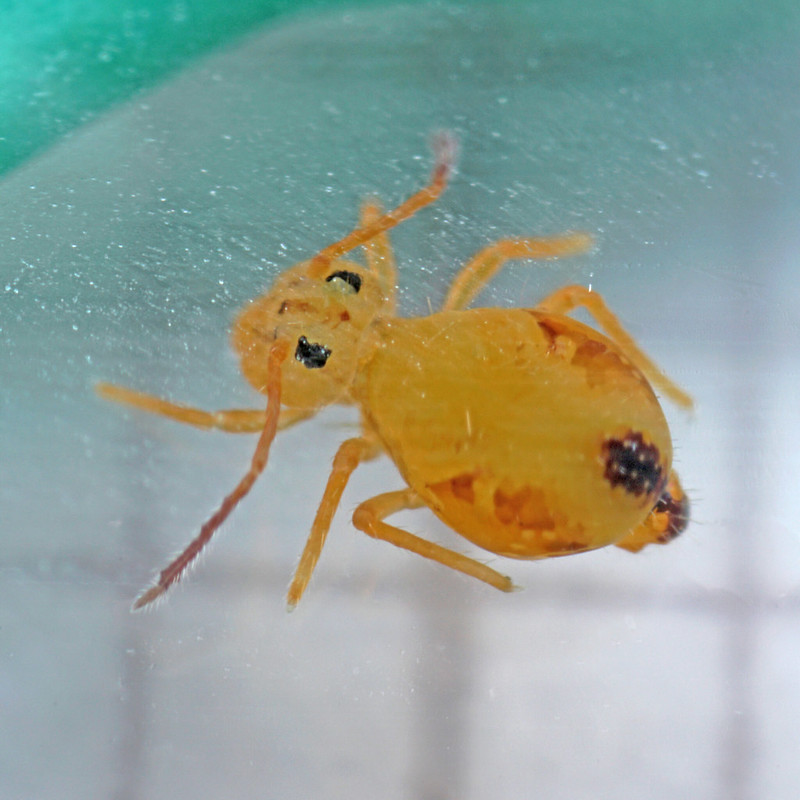
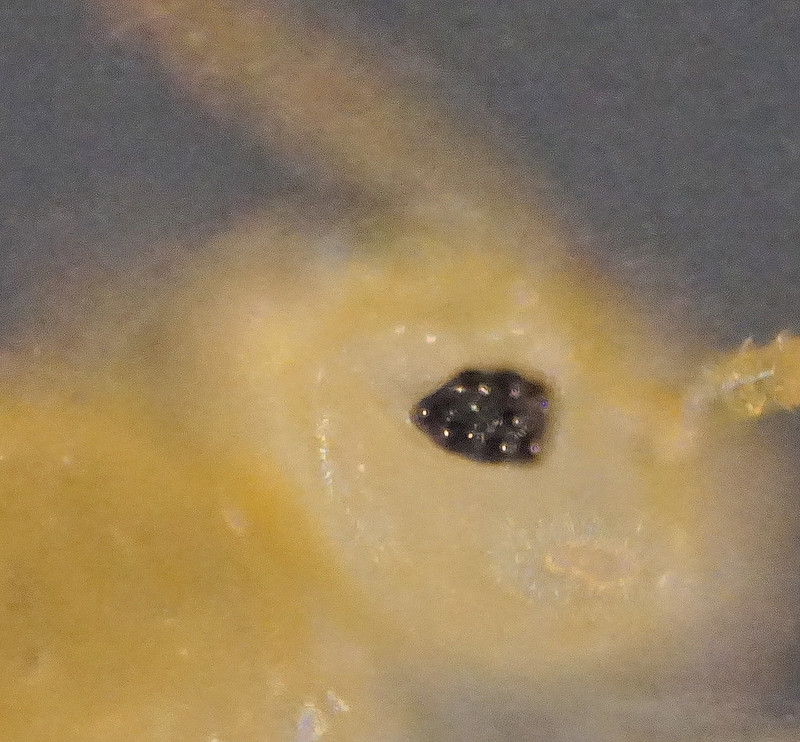
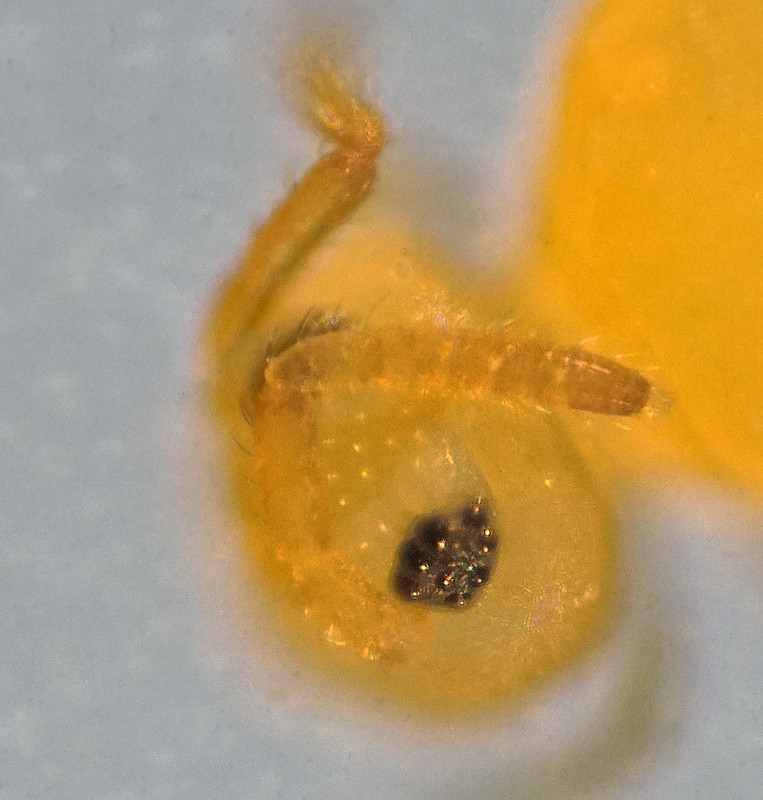
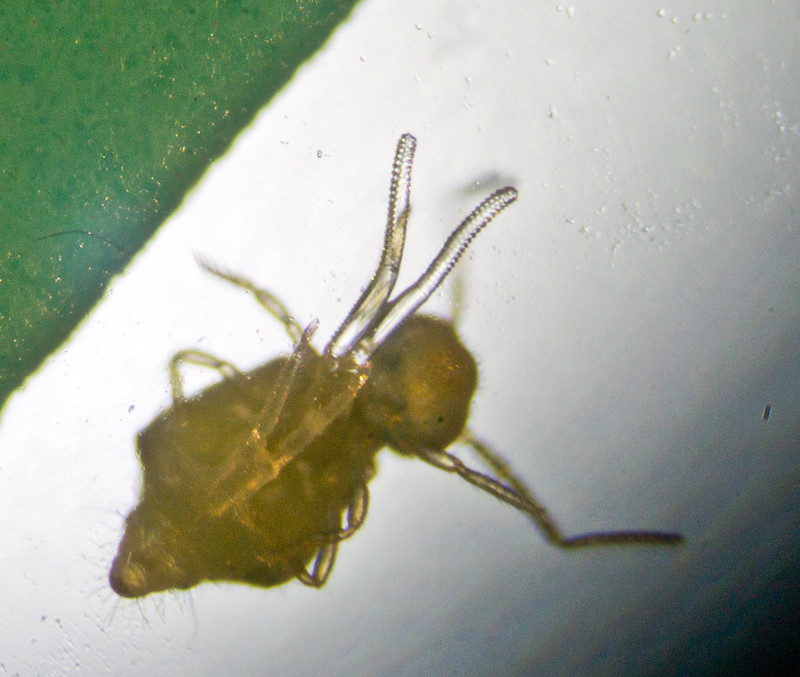
Heterosminthurus bilineatus - collophore

The collophore is the tube-like structure on the ventral side of the first abdominal segment of the body of springtails - it's what gives this group their name. Interestingly enough, although there are springtails without springs, as far as I'm aware there are no springtails without a collophore.

The collophore is used for in osmoregulation - water intake and excretion. In addition, the tip of the collophore carries mechano- and chemoreceptors which allow the animal to sense its environment. The collophore is actually a tubular pouch usually terminating in a bilobed vesicle, hence when fully extended the tip is forked (it is derived from a modified pair of abdominal appendages). At rest the collophore is contained within the body of the springtail but by contracting muscles and exerting hydrostatic pressure on the vesicle the springtail can evert the tube in order to drink. The collophore also works in opposition to the furcula (the spring) and can be used to control the direction in which the animal jumps (Favret, C., Tzaud, M., Erbe, E.F., Bauchan, G.R., & Ochoa, R. (2015) An Adhesive Collophore May Help Direct the Springtail Jump. Annals of the Entomological Society of America, 108(5), 814-819). In at least some globular springtails the long prehensile vesicles are coated with an adhesive substance that permits the springtail to right itself when on its back.

Tuesday, 17 July 2018

14.07.18 - Let The Hard Times Roll

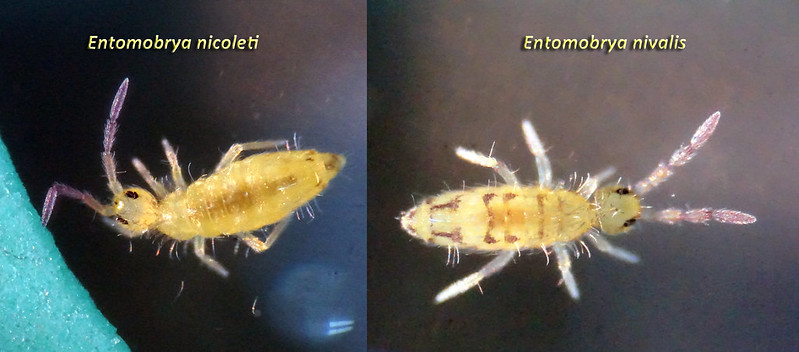
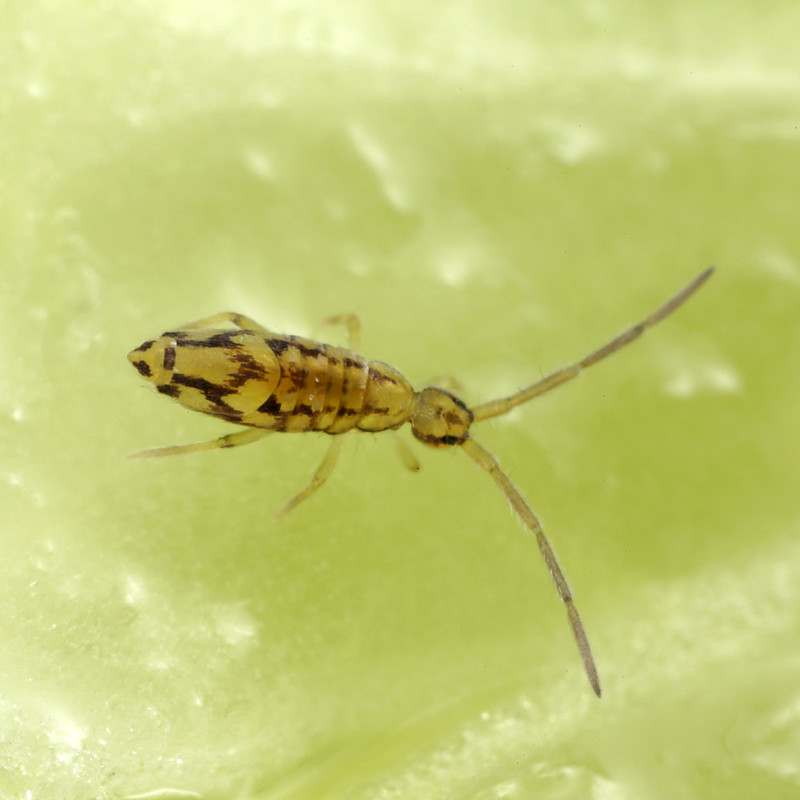
Recording at Herbert's Meadow, I also attempted to look for springtails. Unlike a few days previously, I wasn't able to start sampling until after 9am. Everything was bone dry so I concentrated on sweeping vegetation in the shade. After half an hour I'd only found two springtails, one Entomobrya nicoleti and one Entomobrya nivalis:

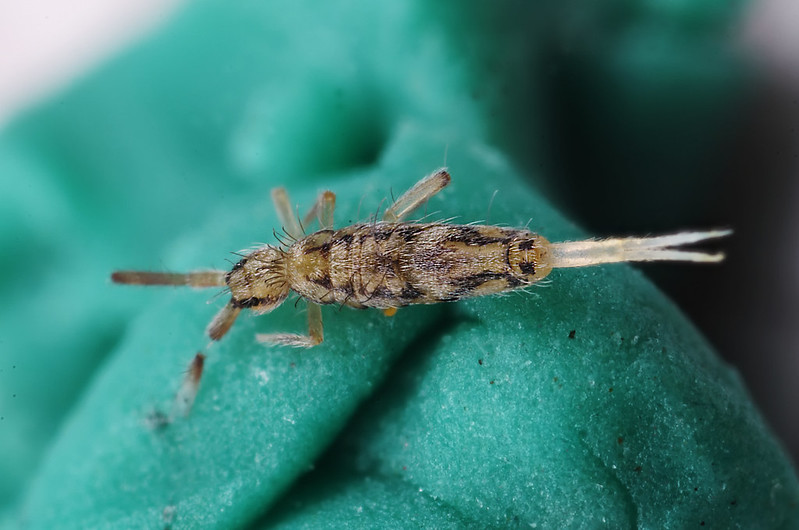
Entomobrya

These tough arboreal species are clearly the last to go in dry conditions. However, the Ulverscroft brook still had an inch or so of water flowing, so on the way back I also sampled from vegetation along the banks, and from liverworts and mosses on stones in the stream. Small beetles and spiders were abundant, and I thought I'd found a few globbies, but on closer examination, they all turned out to be tiny spiders or mites. This cannot be due to humidity which was locally high (the mosses were damp), so must be related to temperature.

So where are all the springtails? In aestivation as dormant (diapause) eggs in which embryonic development is delayed until moisture increases and temperatures fall. It will be interesting to see how quickly populations recover when this 50 year drought ends.

"Species of Collembola adapted to periodic drought have been found in Australian and Mediterranean ecosystems, as well as in the Antarctic where desiccation occurs due to the extreme cold. Some of these desiccation-resistant species are encountered in temperate European arable ®elds, in particular Lepidocyrtus spp., Pseudosinella spp., Isotomurus palustris, I. viridis, I. notabilis, Sminthurus aureus and S. viridis. Our study found evidence for the existence of desiccation-resistant stages only in S. viridis amongst this list of Collembola. Other species which have previously been found aestivating did not hatch out under our experimental set-up, despite being common in the yields from which the samples were taken (e.g. Lepidocyrtus spp., I. palustris, I. viridis, I. notabilis). Previous studies in Europe have found that the populations of some Collembola were not detrimentally affected by dry periods (e.g. Entomobrya nivallis)."
Alvarez, T., Frampton, G.K., & Goulson, D. (1999) The effects of drought upon epigeal Collembola from arable soils. Agricultural and Forest Entomology, 1(4), 243-248.


Sunday, 15 July 2018

12.07.18 - The Drought Continues

The East Midlands in now in the worst drought for several decades. Not surprisingly, springtails are thin on the ground (which is absolutely bone dry). Part of our local churchyard is managed to encourage wildlife, so I turned out at 6am before it warmed up. There was no dew - all the vegetation was completely dry - but sweeping long grasses (choosing the few remaining green patches) yielded a lot of Entomobrya intermedia:
Entomobrya intermedia

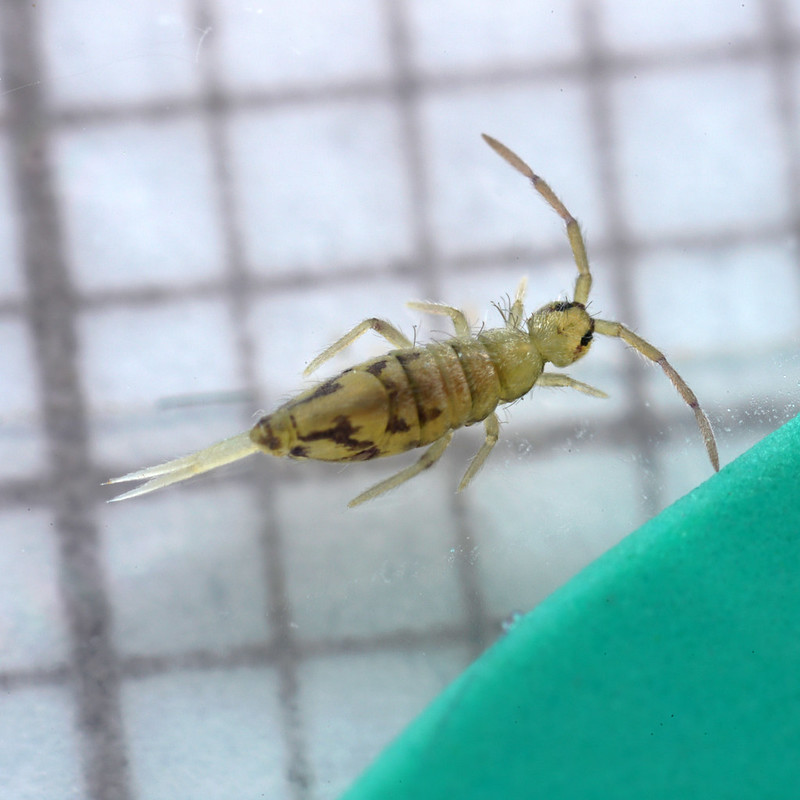
There was also a single Entomobrya nicoleti:
Entomobrya nicoleti


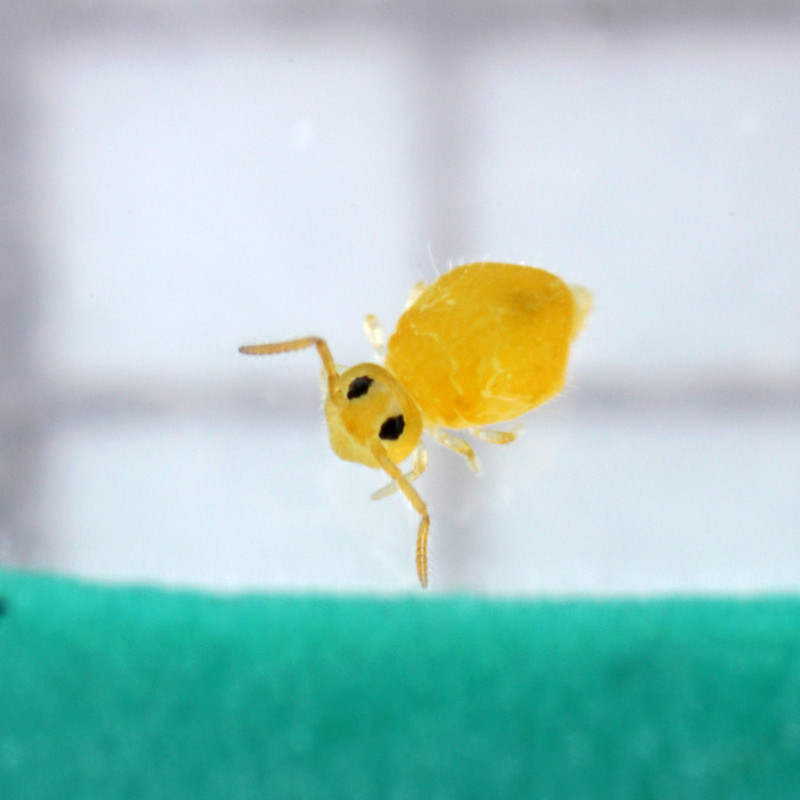
Deuterosminthurus pallipes was also abundant:
Deuterosminthurus pallipes


Not a big haul but good considering the drought.


Tuesday, 10 July 2018

06.07.18 - Launde Big Wood

On a short trip to Launde Big Wood recording butterflies I also sampled springtails, which have never been recorded here before. The conditions were hot and very dry (no dew in the morning) so I only sampled by sweeping vegetation.

Deuterosminthurus pallipes was the most abundant species:
Deuterosminthurus pallipes


Entomobrya nivalis was also quite frequent:
Entomobrya nivalis


There were a small number of Lepidocyrtus lignorum:
Lepidocyrtus lignorum

Lepidocyrtus lignorum antennae


I also found one Dicyrtomina minuta:
Dicyrtomina ornata


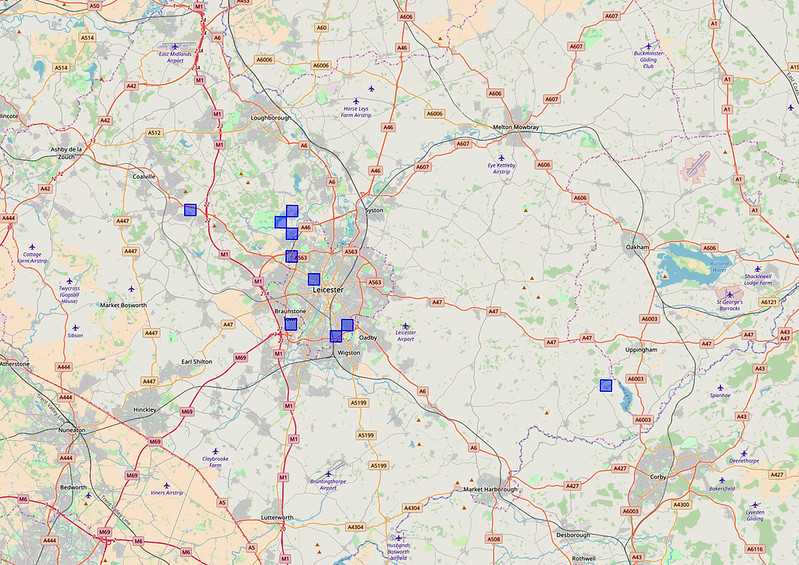
More dots on the map for Leicestershire springtails.

Lepidocyrtus

General characteristics:
Adb4 more twice as long as abd3; most species have blue pigmentation but this is only clearly visible in natural light and easily lost in alcohol-preserved specimens. Presence or absence of scales on legs and antennae are an important character in this group but these can be very difficult to see (especially confirming their absence) so exercise caution. 
Lepidocyrtus Key

Pale species; Th2 not prominent:
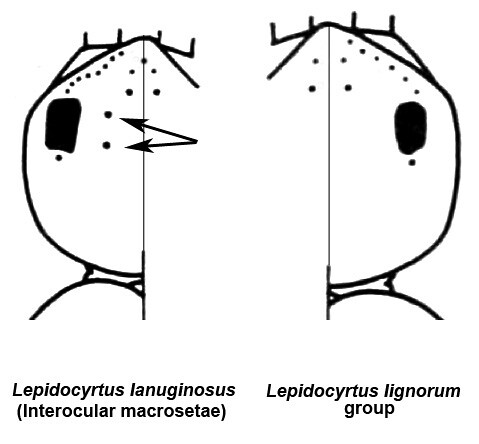
  • Lepidocyrtus lanuginosus: predominantly pale with traces of blue pigment on the head, thorax and legs; no scales on the legs or antennae; interocular macrosetae present.
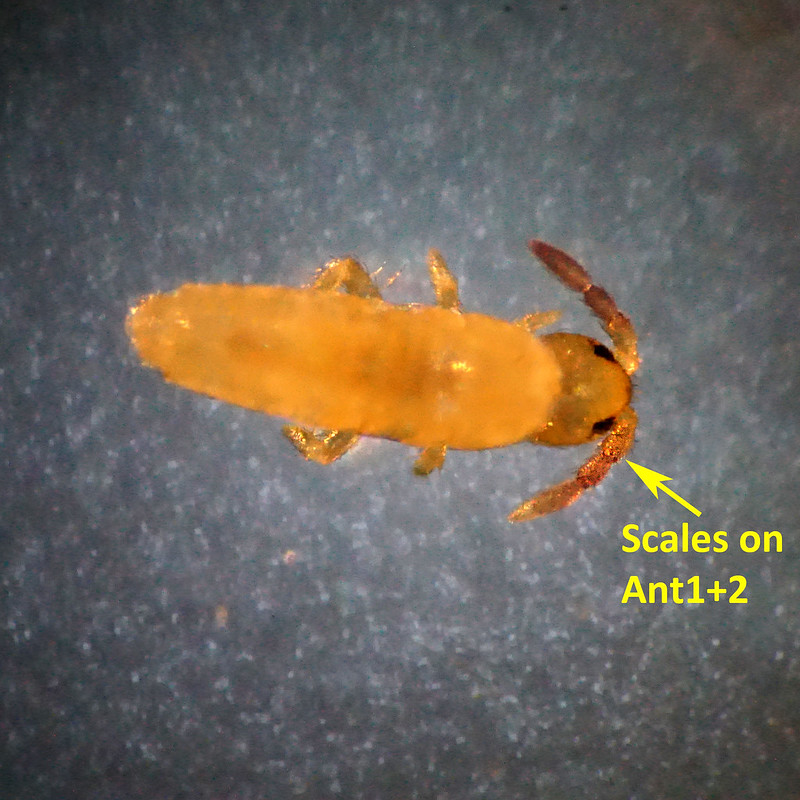
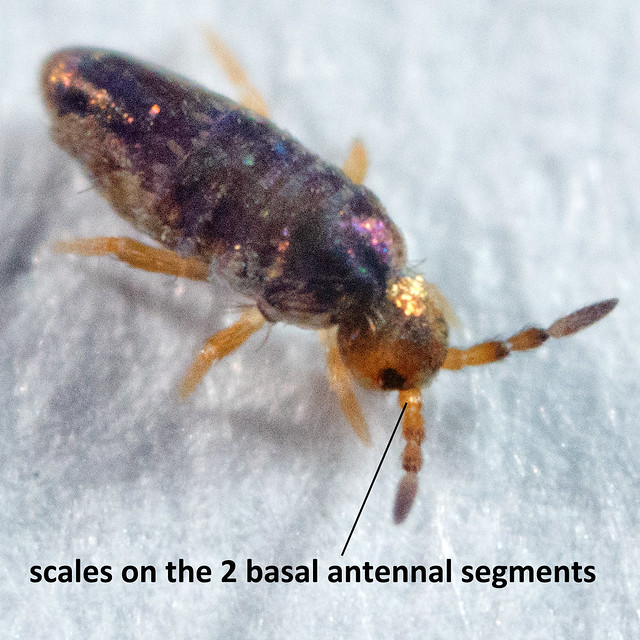
  • Lepidocyrtus lignorum: predominantly pale with faint traces of blue pigment on the head, thorax and legs; scales present on the legs and ant1+ant2, no scales on ant3+ant4 (c.f. L. curvicollis); eyepatch roundish (less elongate than other species); no interocular macrosetae:

Lepidocyrtus

Lepidocyrtus lignorum: angle between head and body relatively straight, >=90 degrees, scales on the 2 basal antennal segments and legs, no scales on ant3 and ant4, eyepatch roundish (less elongate than other species):

Lepidocyrtus lignorum

Lepidocyrtus lignorum antennae


Blue/violet pigmented species; Th2 prominent to varying degrees:

  • Lepidocyrtus curvicollis: a pale species with traces of pigment on the head, thorax and legs; Th2 overhangs the head dorsally - head tucked under thorax; scales are present on the legs, and on ant1-4 (like L. paradoxus).
  • Lepidocyrtus cyaneus: blue pigment on the head, thorax, abdomen and legs (less obvious in artificial light), no scales on legs or antennae. Note that the blue pigment of L. cyaneus can only be seen in descaled specimens as the blue is not an iridisation colour of the scales but an intrinsic colour of the naked (descaled) skin. Interocular macrosetae present.
  • Lepidocyrtus violaceus: strong blue pigment on the head, thorax, abdomen and legs; scales on the legs and ant1+ant2, no scales on ant3+ant4; no interocular macrosetae.
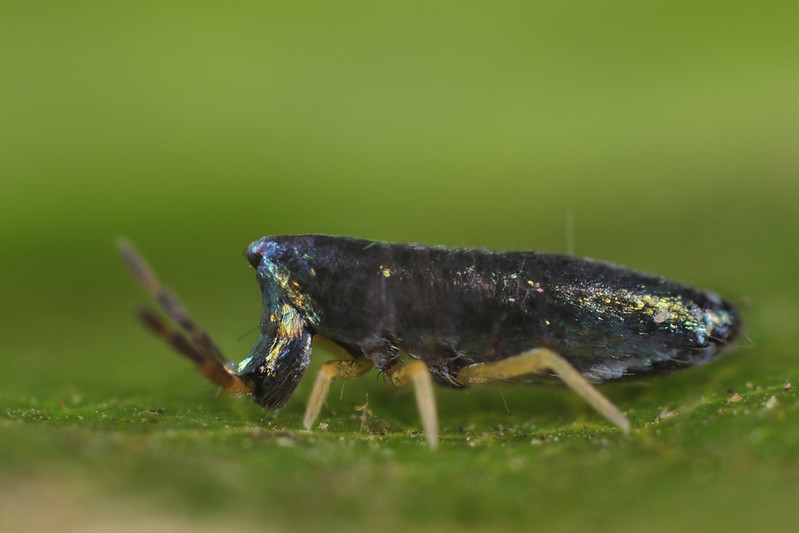
  • Lepidocyrtus paradoxus (absent from UK?): dark body, pale legs; Th2 very prominent, angle between head and body <90 degrees and scales on the 2 basal antennal segments and legs.


Lepidocyrtus cyaneus: blue pigment on the head, thorax, abdomen and legs (less obvious in artificial light), no scales on legs or antennae. Note that the blue pigment of L. cyaneus can only be seen in descaled specimens as the blue is not an iridisation colour of the scales but an intrinsic colour of the naked (descaled) skin. Interocular macrosetae present:

Lepidocyrtus cyaneus


Lepidocyrtus violaceus: strong blue pigment on the head, thorax, abdomen and legs, scales on the legs and on the first (ant1) and second (ant2) segments of the antennae, but NOT on ant3 and ant4:

Lepidocyrtus violaceus

Lepidocyrtus violaceus


Lepidocyrtus paradoxus: angle between head and body < 90 degrees, scales on the 2 basal antennal segments and legs. Photo by Marie Huskens:
Lepidocyrtus paradoxus

Sunday, 1 July 2018

17.06.18 - Billa Barra

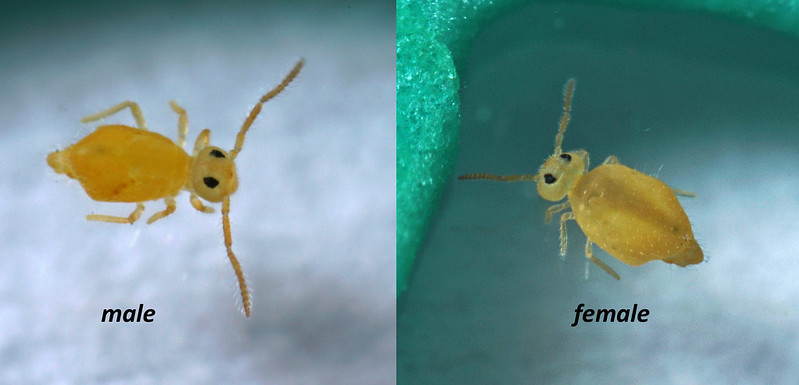
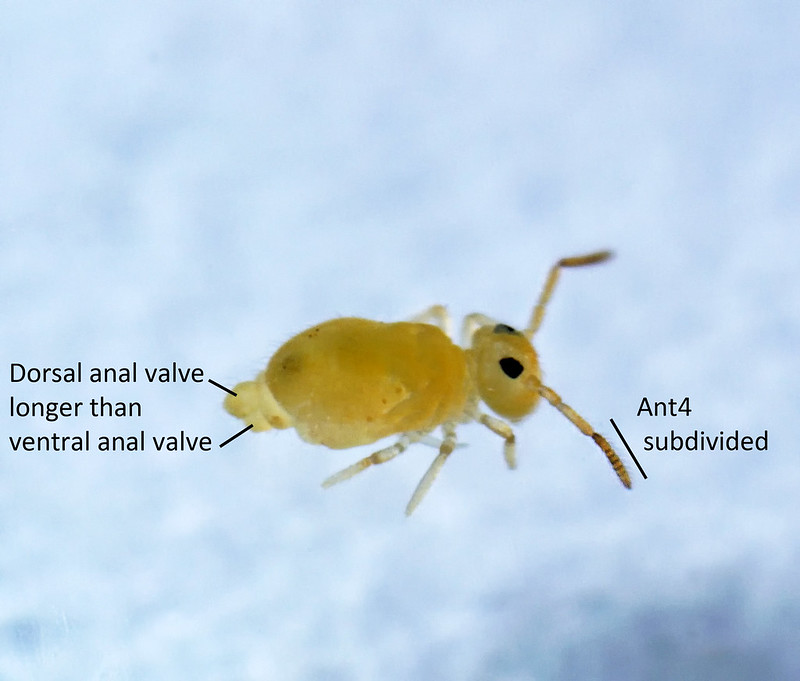
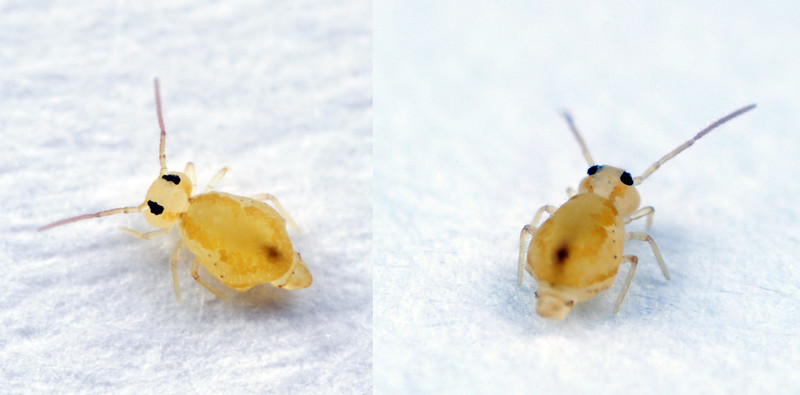
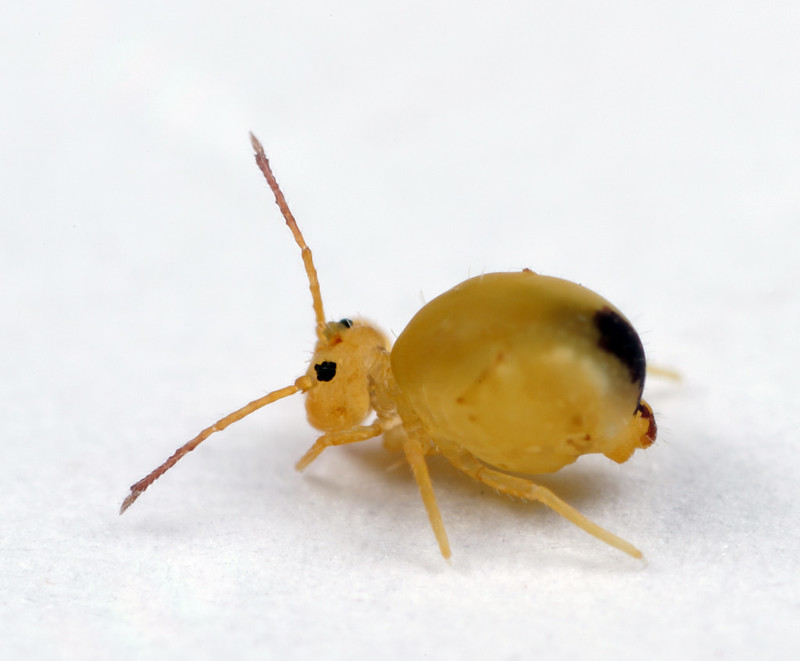
Although it had been very dry for the past month I was hopeful that rain over the previous 24 hours would mean more springtails. In the event, sampling from wet vegetation proved to be quite tricky. I didn't not find any springtails on Gorse, which was still quite dry, but there were lots on the grass. In the field, I thought I had found Sminthurus viridis but on closer examination, these proved to be aphids! Only one species was present, Deuterosminthurus pallipes (form repandus) - this is by far the predominant arboreal species at present, seemingly undeterred by warm dry weather.

Deuterosminthurus pallipes

Deuterosminthurus pallipes

Ocelli [3 (B C H) - 1 (D) - 4(A E F G)]:
Deuterosminthurus pallipes ocelli


Tuesday, 26 June 2018

Towards a VC55 Springtail Atlas

A few other counties (Shropshire, Lancashire) have ambitious and well-advanced plans to build county atlases of springtails. There are presently no such plans for VC55 (Leicestershire and Rutland), but we do have a secret weapon that the other counties do not have - NatureSpot! In thinking about building a species atlas, there are a few problems which occur to me:

Tools
While there are good free mapping tools available, they require skills which I do not have and realistically will not be able to develop. However, the NatureSpot Explore All Records page provides a simple way of generating maps based on the NatureSpot (=iRecord) dataset, and this is what I have used to derive the maps below. There are a few problems with the Explore tool as it is presently configured, e.g. you can't drill down to individual records by clicking on the map (although all the individual records are listed, with submission evidence, e.g. photos). [UPDATE: my mistake, the NatureSpot maps are clickable - click on the "?" icon then on the square to see the record.] However, it seems to me that this is a viable way to generate an atlas. The only viable alternative that I can see would be the NBN Atlas maps (which are clickable). The NBN maps include a much bigger dataset than NatureSpot, including all the records from the former Collembola Recording Scheme (approximately 10,000 records covering Great Britain and Ireland for 359 species, collected between 1808-2008). However, having read what Steve Hopkin had to say about the accuracy of this dataset, I'm inclined to stick with the contemporary NatureSpot records. It costs a significant amount of money to keep NatureSpot (a registered charity) online and to develop features such as the Explore All Records page. Please make a small donation to keep us going: http://www.naturespot.org.uk/support_naturespot

Coverage
I have two major problems with coverage - geographical and species groups. For a single private individual, VC55 is a pretty big patch, and without more boots on the ground it is not going to be possible to get systematic coverage of the whole vice county throughout the seasons. Springtails are likely to remain Cinderella species and I can't imagine that I would ever be able to attract the public engagement that the Hoverfly Recording Scheme or Butterfly Conservation have done. I'm not sure what can be done about this problem. Another problem is my ignorance of the Poduromorpha, something I need to work on. Cute and photogenic though the globbies may be, I can't ever pretend to have generated a representative atlas without better taxonomic coverage.

Phenology (cyclic and seasonal natural phenomena in relation to climate)
It is only in recent months that I have become aware of the significance of phenology to Collembola, and this just multiples the geographic coverage problem. (Another thing the NBN maps have going for them are the nice phenology charts.)

BUT - having thought about the downsides, what do we have?


VC55 Springtail Atlas (all species, June 2018):
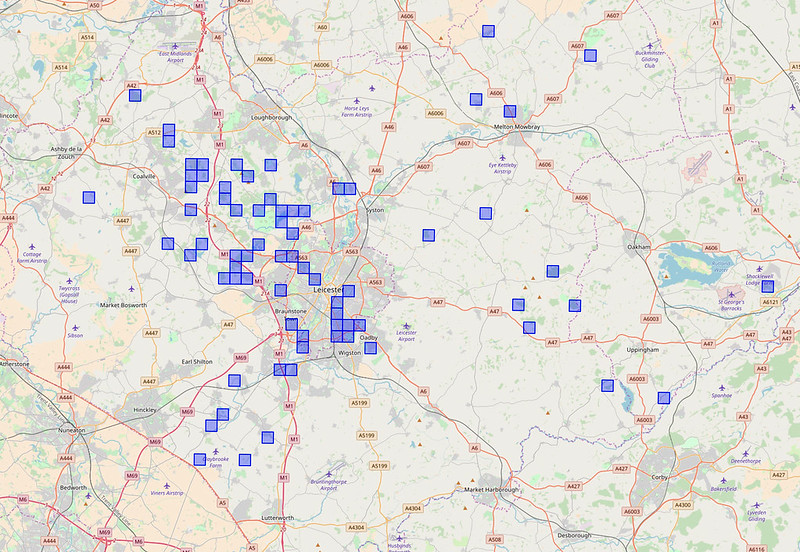
VC55 Springtail Atlas
This isn't as bad as it seems, the coverage reflects the overall pattern of recording in VC55, discussed here.


Single species, e.g. Orchesella cincta:
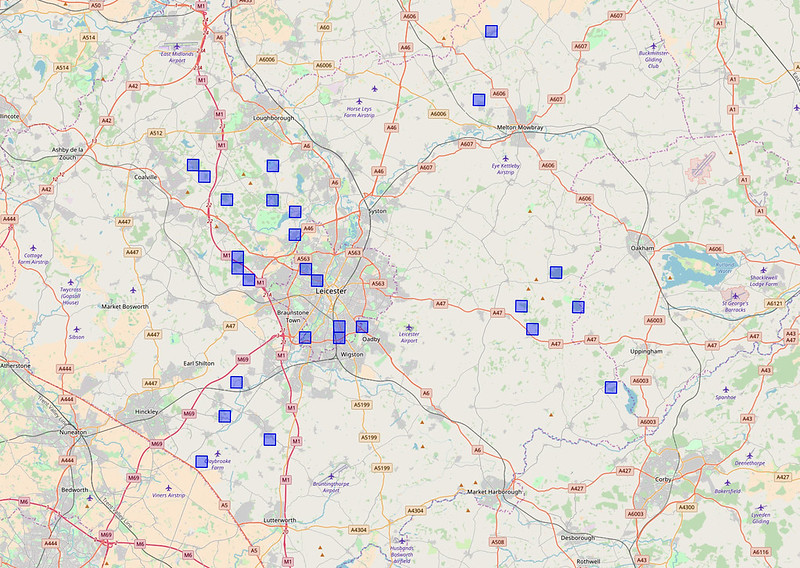
Orchesella cincta


Single genus: Deuterosminthurus spp:
Deuterosminthurus


Although they are not clickable, the maps are zoomable to get detailed coverage, e.g. Deuterosminthurus species:
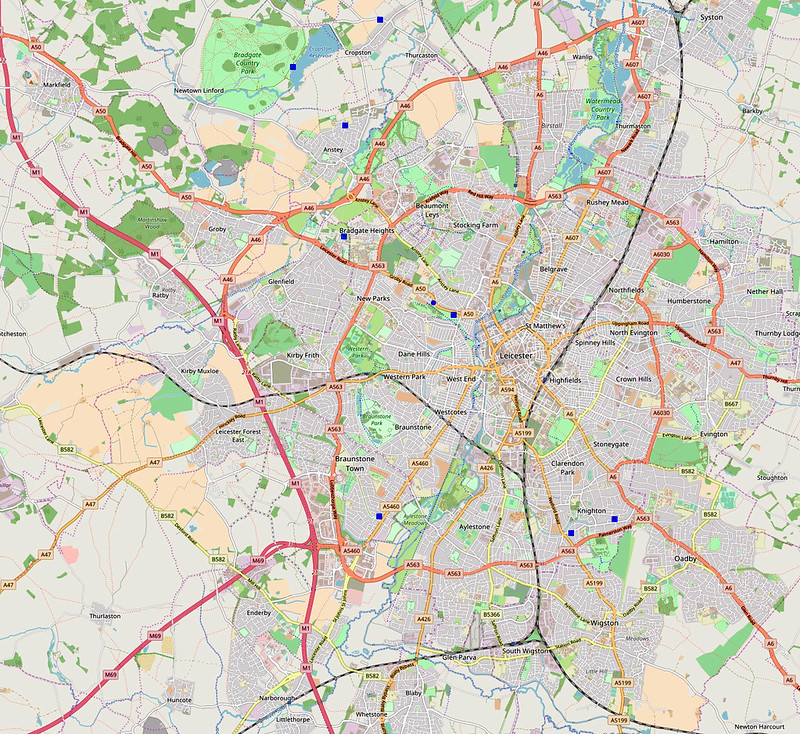
Deuterosminthurus zoom


DISCLOSURE:
I am a trustee of NatureSpot, registered charity 1138852.

Acknowledgements:
My gratitude to the hard working NatureSpot team and our developer John Van Breda for making it possible for me to even consider this.
Friday, 22 June 2018

14.06.18 - Owston

As part of a private visit to Owston Wood I did a little bit of springtail hunting. At first, I couldn't find anything at all, a reflection of the very dry conditions. Brushing tree trunks didn't yield anything but eventually I managed to find springtails in some very dry terrestrial moss. Orchesella cincta was quite abundant as was Lepidocyrtus lignorum.

Sweeping herbaceous vegetation was much more productive, giving many specimens of Heterosminthurus bilineatus:

Heterosminthurus bilineatus


However, there stars of the show were several Dicyrtomina minuta, my first VC55 record of this species:

Dicyrtomina minuta


Saturday, 16 June 2018

16.06.18 - Bradgate Park

Springtails have been in short supply for the last few weeks as we had the driest May for many years, but after a bit of rain this morning I was hopeful of my chances today. After manning the NatureSpot stand at the Bradgate Park Wildlife Weekend, I strolled back through the park and did a bit of sampling. Sweeping the grass didn’t yield anything, but the Bracken proved more productive. There were several Entomobrya intermedia (here seen tucking into a juicy slice of cucumber):

Entomobrya intermedia

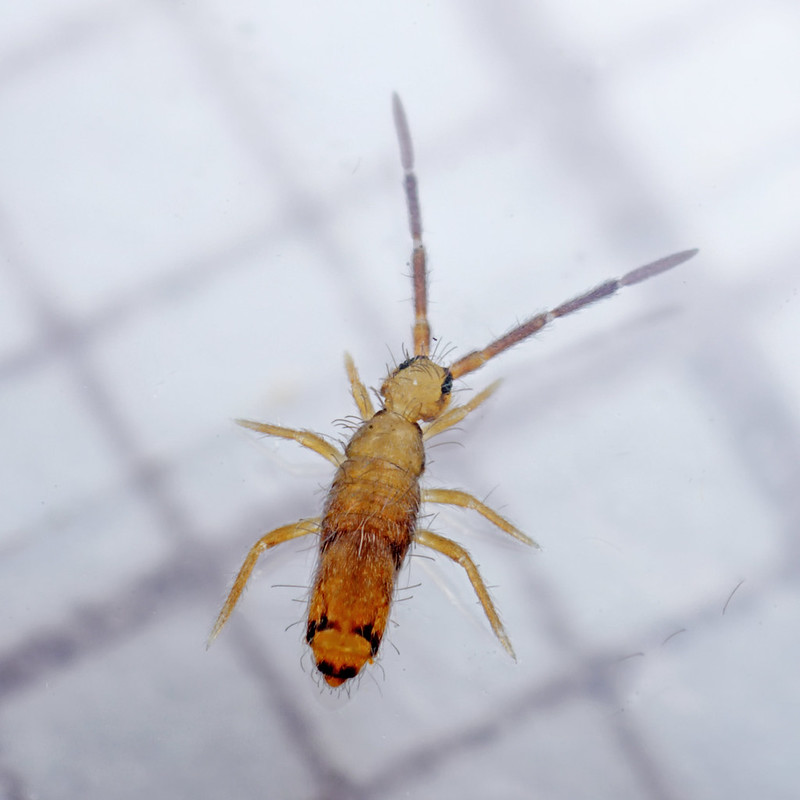
and lots of small golden springtails, which initially caused me a bit of head scratching:

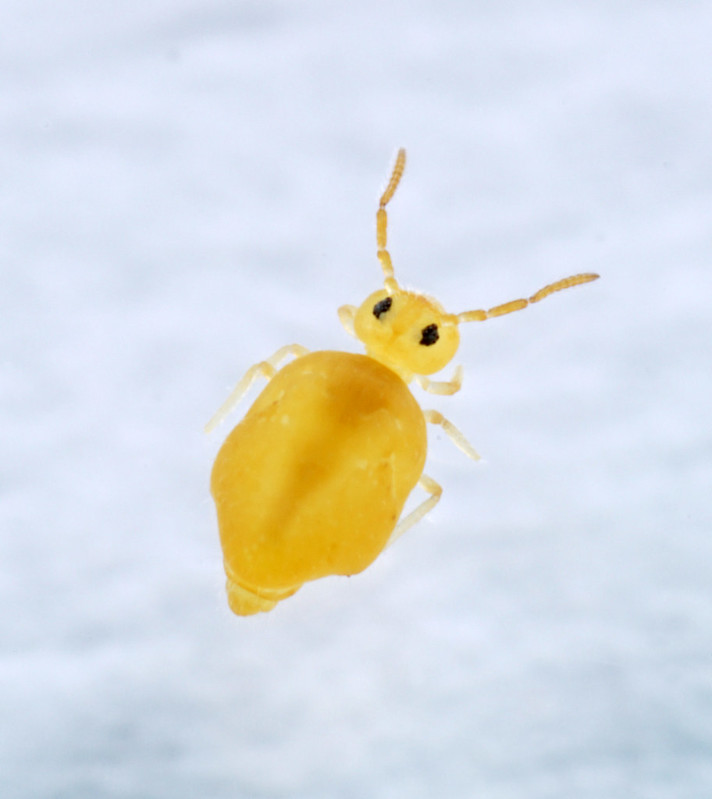
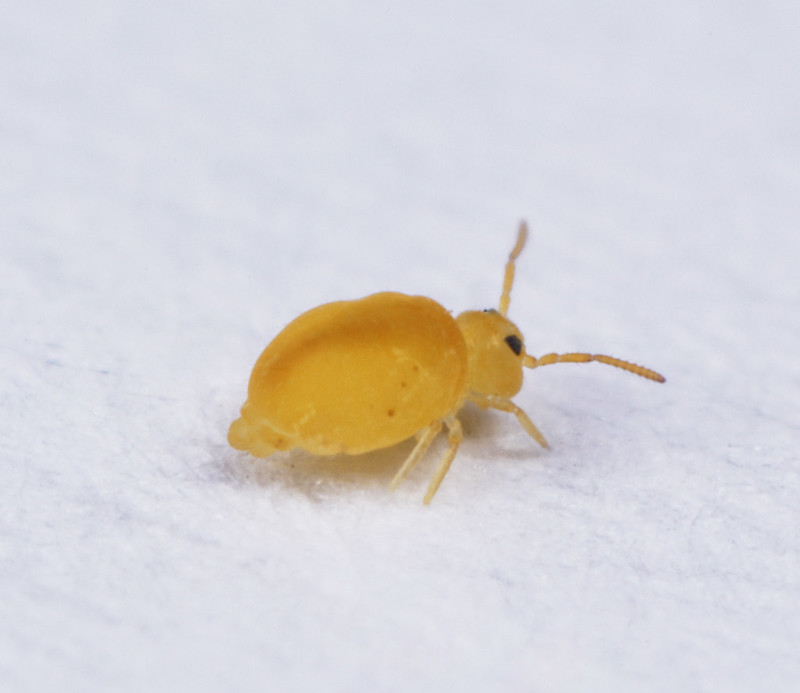
Deuterosminthurus pallipes

Deuterosminthurus pallipes


It wasn't until I looked closer at the arrangement of the ocelli on the eye patch that the penny dropped - this characteristic arrangement of 3-1-4 ocelli instantly says Deuterosminthurus pallipes - in this case, the yellow form repandus which is so common in this area:

Deuterosminthurus pallipes Ocelli